aceas

Geomorphology beneath the deep blue sea

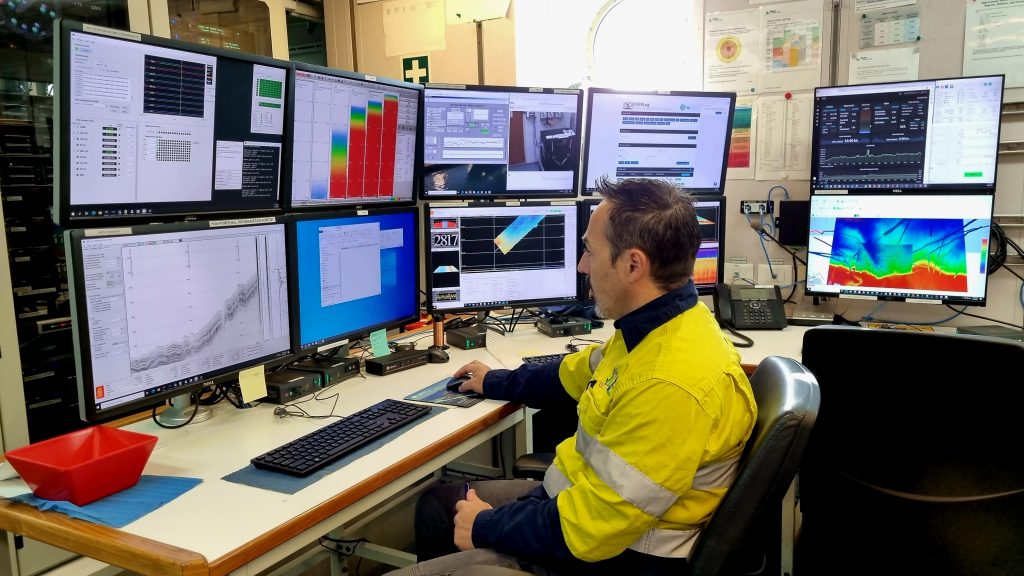
Geomorphology beneath the deep blue sea By Rachel Nanson and Michal Wenderlich, Geoscience Australia Fig 1. One of RV Investigator’s geophysicists, Francisco Navidad, continually monitors and records incoming data. On the 7000 km transit south to Antarctica and then in the study area of Cape Darnley, the CSIRO research vessel (RV) Investigator’s technical staff and science team have […]

Geomorphology beneath the deep blue sea Read More »
Plankton in the oceans

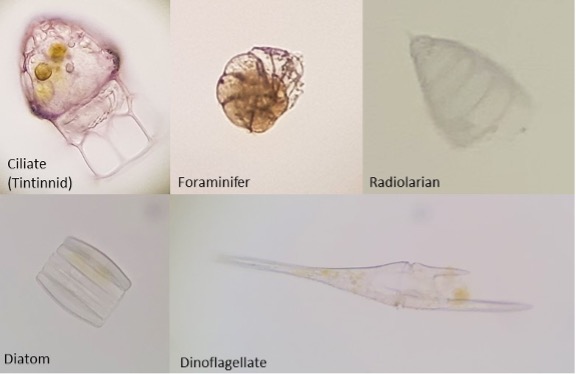
Examples of microfossils that we use to study how the marine environment has changed over time. On board the research vessel (RV) Investigator there are several researchers on the expedition who are taking water and sediment samples to study ‘plankton’. Plankton means that they can’t swim against a current, most plankton are tiny, but some are large

Plankton in the oceans Read More »

Paleoceanography: Plumbing the depths of the past to inform our future

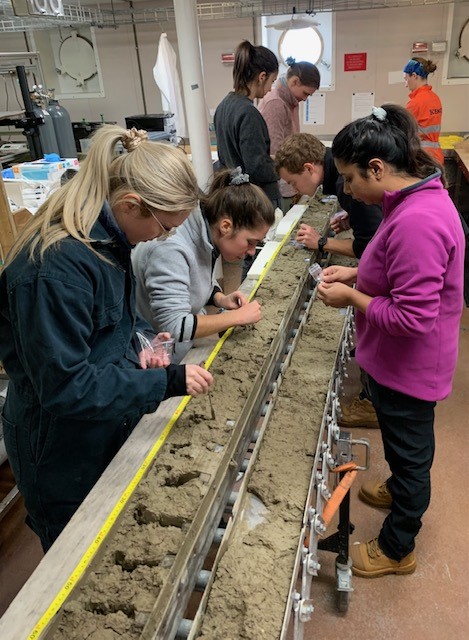
Team onboard RV Investigator sampling a kasten core (Image: Helen Bostock) By Tom Williams (UTAS) and Helen Bostock (UQ) To understand our changing climate today and improve predictions about future climate we need to have long climate records to compare to. But instrumental data only reach back a century, and we don’t have much data

Paleoceanography: Plumbing the depths of the past to inform our future Read More »

Plan A to Z

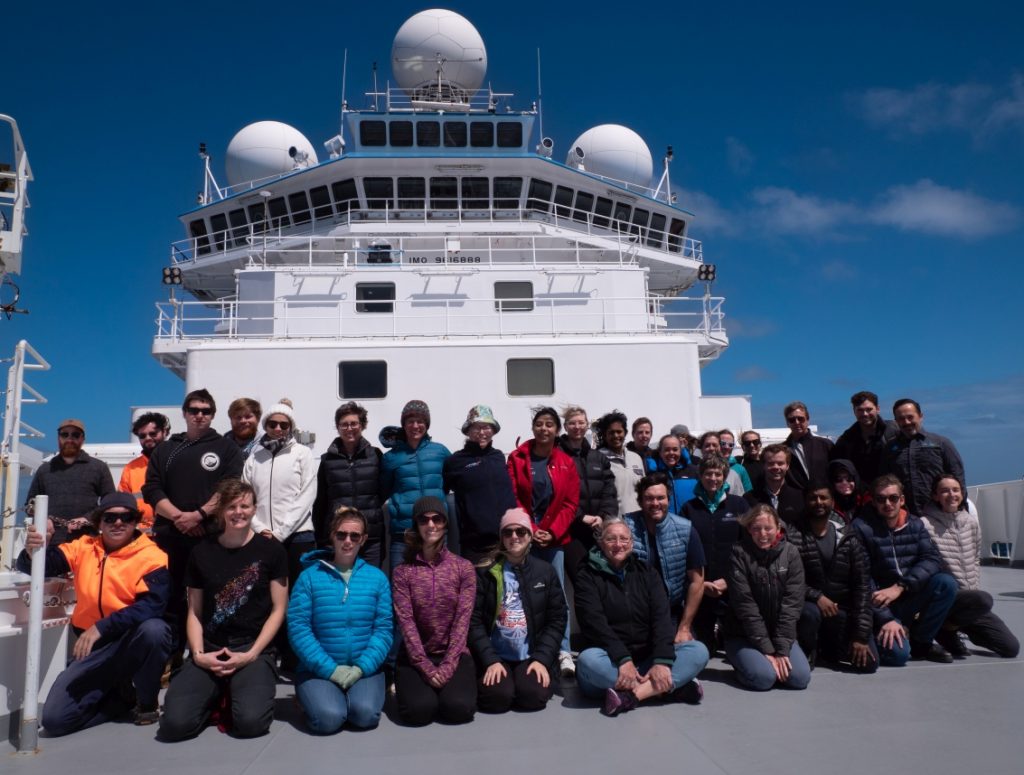
Plan A to Z By Dr Alix Post The team on board CSIRO’s RV Investigator. Photo credit: Aero Leplastrier. Just over a month ago, our team set out on CSIRO’s research vessel (RV) Investigator with great anticipation of the planned science and the discoveries that we might make, after months (and years) of detailed planning. However, as

Plan A to Z Read More »

Southern Ocean holds deep clues to ancient carbon tipping points

Southern Ocean holds deep clues to ancient carbon tipping points The Amundsen Sea from aboard RV Polarstern. Photo: Katharina Hochmuth. Researchers have found a long-searched for giant carbon reservoir buried in the Southern Ocean between Tasmania and Antarctica. The reservoir is the result of a dramatic carbon drawdown 34 million years ago that transitioned Earth

Southern Ocean holds deep clues to ancient carbon tipping points Read More »

Deep ocean currents around Antarctica headed for collapse, study finds

Deep ocean currents around Antarctica headed for collapse, study finds Under a high emissions scenario, the collapse would stagnate the bottom of the world’s oceans. Photo credit: 66 north on Unsplash The deep ocean circulation that forms around Antarctica could be headed for collapse, say scientists. Such decline of this ocean circulation will stagnate the bottom of the

Deep ocean currents around Antarctica headed for collapse, study finds Read More »

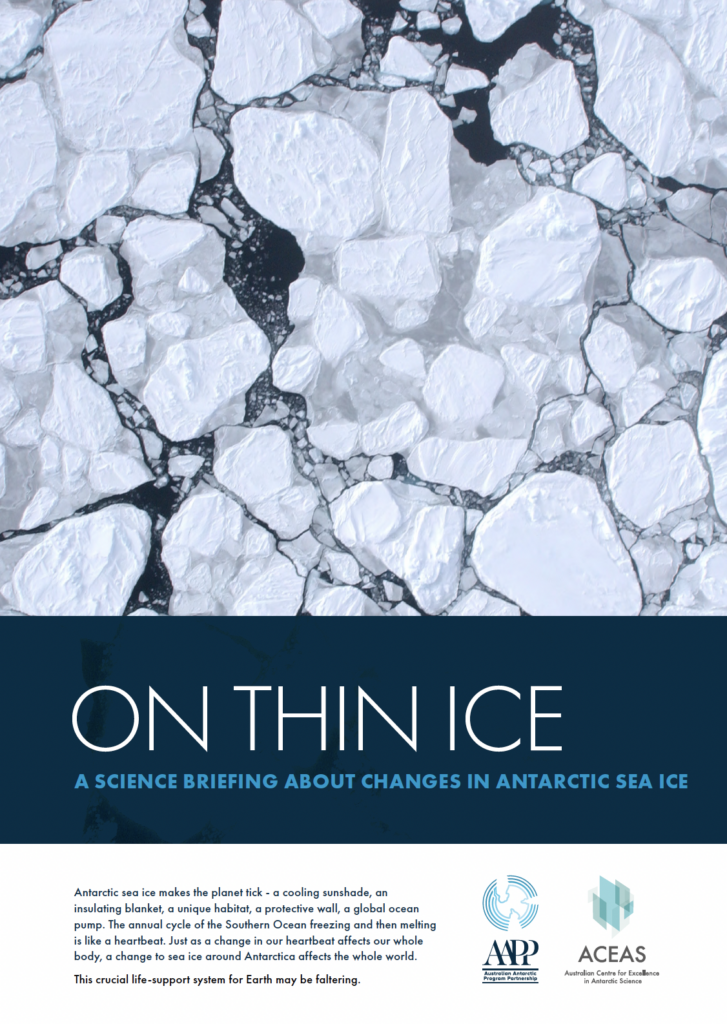
ON THIN ICE: a science briefing about changes in Antarctic sea ice

On Thin Ice: A science briefing about changes in Antarctic sea ice The Australian Antarctic Program Partnership (AAPP) and the Australian Centre for Excellence in Antarctic Science (ACEAS) have released a report on sea ice changes in Antarctica. Antarctic sea ice provides many services for our planet. It is a cooling sunshade, an insulating blanket, a unique habitat,

ON THIN ICE: a science briefing about changes in Antarctic sea ice Read More »

Deep Antarctic ocean currents have slowed in the past three decades

Deep Antarctic ocean currents have slowed in the past three decades The slowdown in Antarctic circulation reduces oxygen levels across the world’s deep seas. Photo: Tom Williams. Researchers have found that the deep ocean circulation around parts of Antarctica has slowed by 30 per cent since the 1990s, reducing oxygen levels across the world’s deep

Deep Antarctic ocean currents have slowed in the past three decades Read More »