The Early Career Researcher (ECR) committee acts as a voice for all ECRs in ACEAS, including students and postdocs. We provide support for people in their research and development by communicating our needs to the ACEAS management and organise ECR events.
About Claire:
Claire is a PhD student at the Australian National University interested in the physics of the ocean near Antarctica and in the Southern Ocean. She completed a Bachelor of Philosophy at the ANU in 2021, where her Honours project investigated topographic hotspots of upwelling in the Southern Ocean and their physical mechanisms. She has also spent time at the University of Sydney researching eddy contributions to global ocean heat transport. In her PhD, she is studying ice-ocean interactions near Antarctica and their implementation in ocean models.
Anita Butterley
PhD Candidate, UTas
About Claire:
Claire is a PhD student at the Australian National University interested in the physics of the ocean near Antarctica and in the Southern Ocean. She completed a Bachelor of Philosophy at the ANU in 2021, where her Honours project investigated topographic hotspots of upwelling in the Southern Ocean and their physical mechanisms. She has also spent time at the University of Sydney researching eddy contributions to global ocean heat transport. In her PhD, she is studying ice-ocean interactions near Antarctica and their implementation in ocean models.
Annika Oetjens
PhD Candidate, UTas
About Annika:
The aim of my PhD project is to quantify the biological pump in Southern Ocean regions of natural iron fertilization. Phytoplankton growth is the cornerstone of the oceans’ biological carbon pump – an important mechanism for transporting carbon into the deep ocean. In the Southern Ocean, this pump is weakened by low levels of dissolved iron – an essential nutrient for photosynthesis. However, there are several regions that experience natural iron fertilization, where large scale phytoplankton blooms are frequently observed. These include (1) island wakes such as downstream in the Antarctic Circumpolar Current from the Kerguelen plateau, Crozet Island and South Georgia Island; (2) the seasonal ice zone and (3) places impacted by hydrothermal vents. Biogeochemical (BGC) Argo floats can now be used to look in detail at the fate of biogenic material produced in the euphotic zone. We will apply and adapt proven methods to calculate the characteristics of the biological pump in Southern Ocean regions of natural iron fertilization.
By improving our understanding of the biological carbon pump my PhD project contributes to ACEAS program 1.
Tobias Stål
Research Associate, UTas
About Tobias:
I study how Antarctica's response to the changing climate depends on solid Earth properties and processes. In my role at ACEAS, I investigate new ways to gain insight into how geology interacts with ice sheets and glaciers. Such insights are derived from geophysical and geological data using novel computational and statistical tools. Integrating data from satellites, airborne instruments, and seismology with qualitative observations in glaciology and geology provide technical as well as semantic challenges. Those challenges can be addressed with the broad expertise in ACEAS; multivariate questions call for interdisciplinary efforts.
I am based at the University of Tasmania School of Natural Sciences, Physics. In this environment, I have the opportunity to get inspired by colleagues using relevant and advanced analytical and computational tools to address similar problems in different settings.
Currently, I am working on instrumentation and field preparations to study the ice-bedrock interface as well as deeper structures. I am also developing new methods to study the large-scale tectonic configuration of the Antarctic interior and derive implications for subglacial heat and glacial isostatic adjustment.
David Green
Research Associate, UTas
About David:
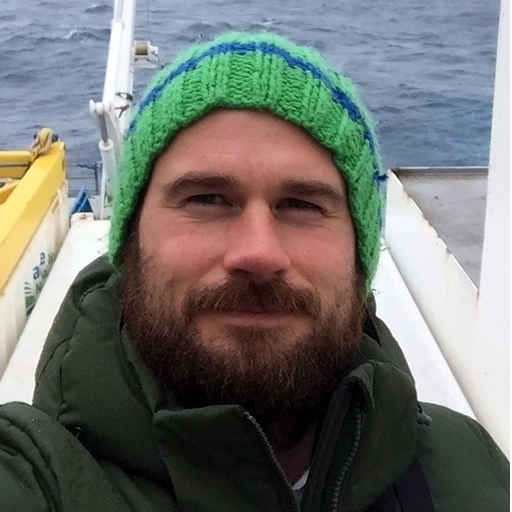
I am a Research Associate at the Institute for Marine and Antarctic Studies (IMAS) with a keen interest in how ecosystems will respond under climate change. I have a background in marine predator foraging ecology, particularly focused on seabirds and seals. This all began in temperate ecosystems (South Africa) where I undertook my honours and master’s degrees studying the foraging ecology of coastal seabirds and how these species responded to changes in the abundance of commercially important prey species. However, over the years since then my research has shifted progressively southwards and I have now accumulated considerable field time in the Subantarctic working on field studies spanning numerous species of seabirds and seals. Much of my work in this vein has explored spatial ecology questions linking predator foraging strategies to the biophysical environment and prey distributions. I look forward to expanding on this research within my current role at ACEAS; one of my key research themes being linking predator foraging strategies with the distribution and availability of their prey.
Bajrang Chidhambaranathan
PhD Candidate, UMelb
About Bajrang:
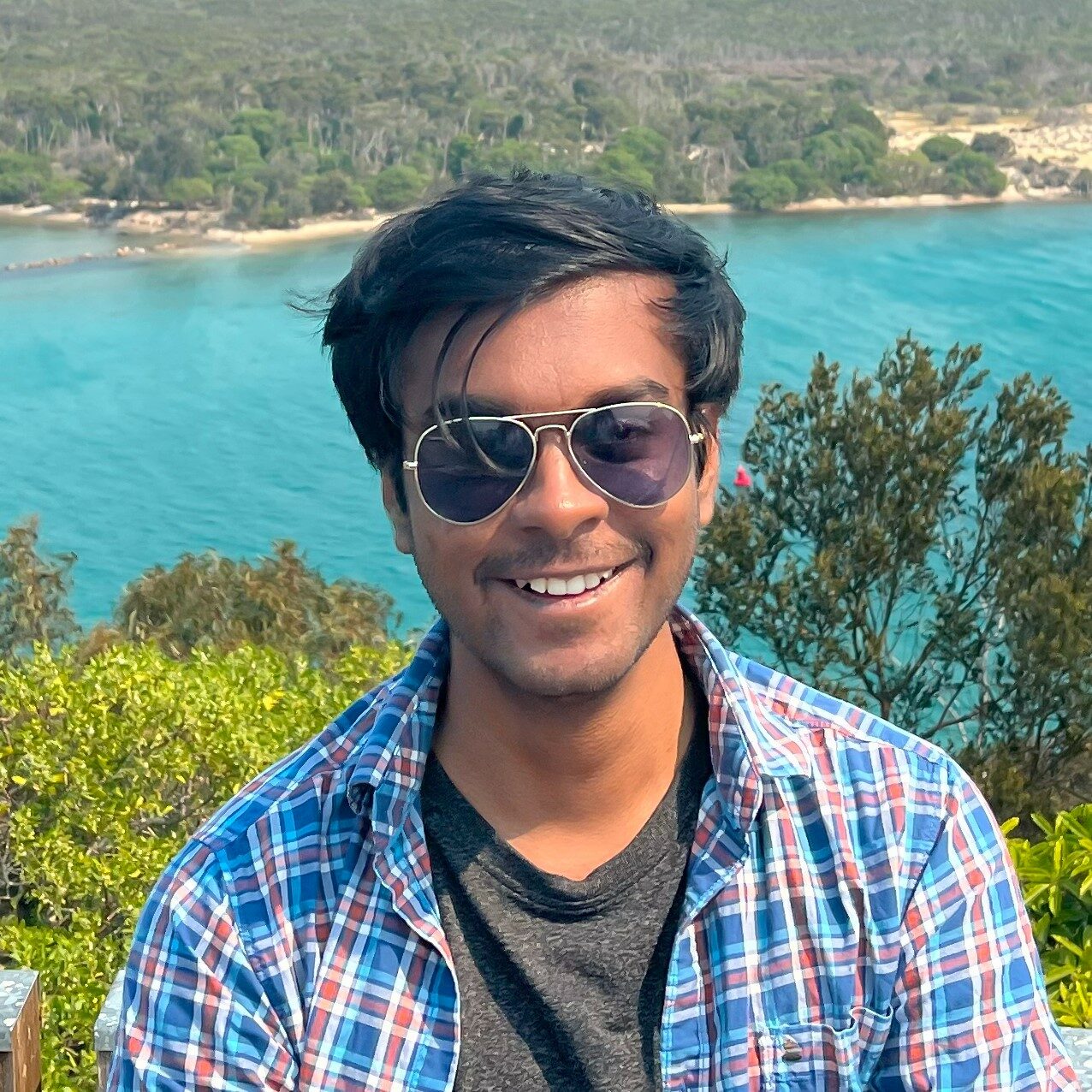
I am a PhD student at the University of Melbourne, enrolled in the Faculty of Engineering and IT. My doctoral research is centered on geophysical fluid dynamics, with a specialization in areas such as rotating horizontal convection, overturning circulation, and the formation of ocean gyres. Prior to embarking on my PhD journey, I earned my Integrated BS-MS degree from the Indian Institute of Science Education and Research, Mohali. My major was in Physics, and I also pursued a minor in Atmospheric Sciences during my undergraduate years. For my Master's thesis, I delved into the intricacies of understanding extreme precipitation events in the Central Indian Region. My fascination with physical oceanography was ignited during my internships, where I had the opportunity to contribute to projects that explored the diurnal and seasonal dynamics of the mixed layer in the Bay of Bengal.