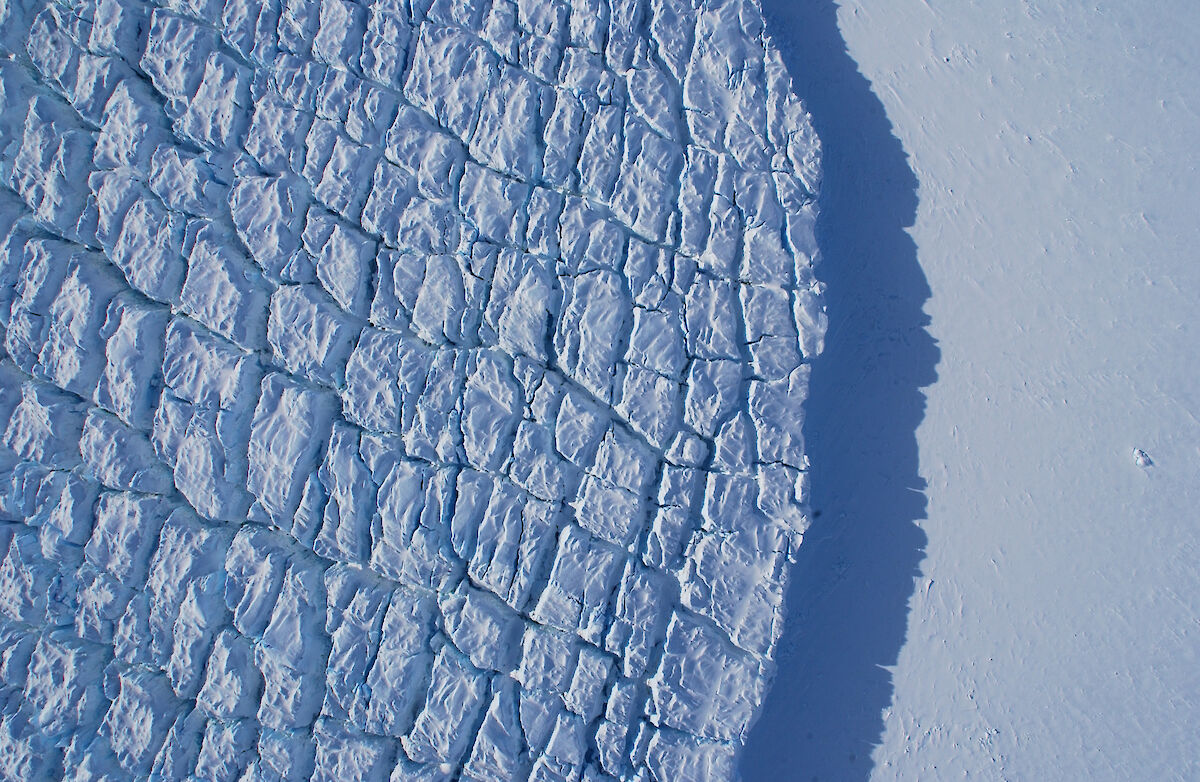
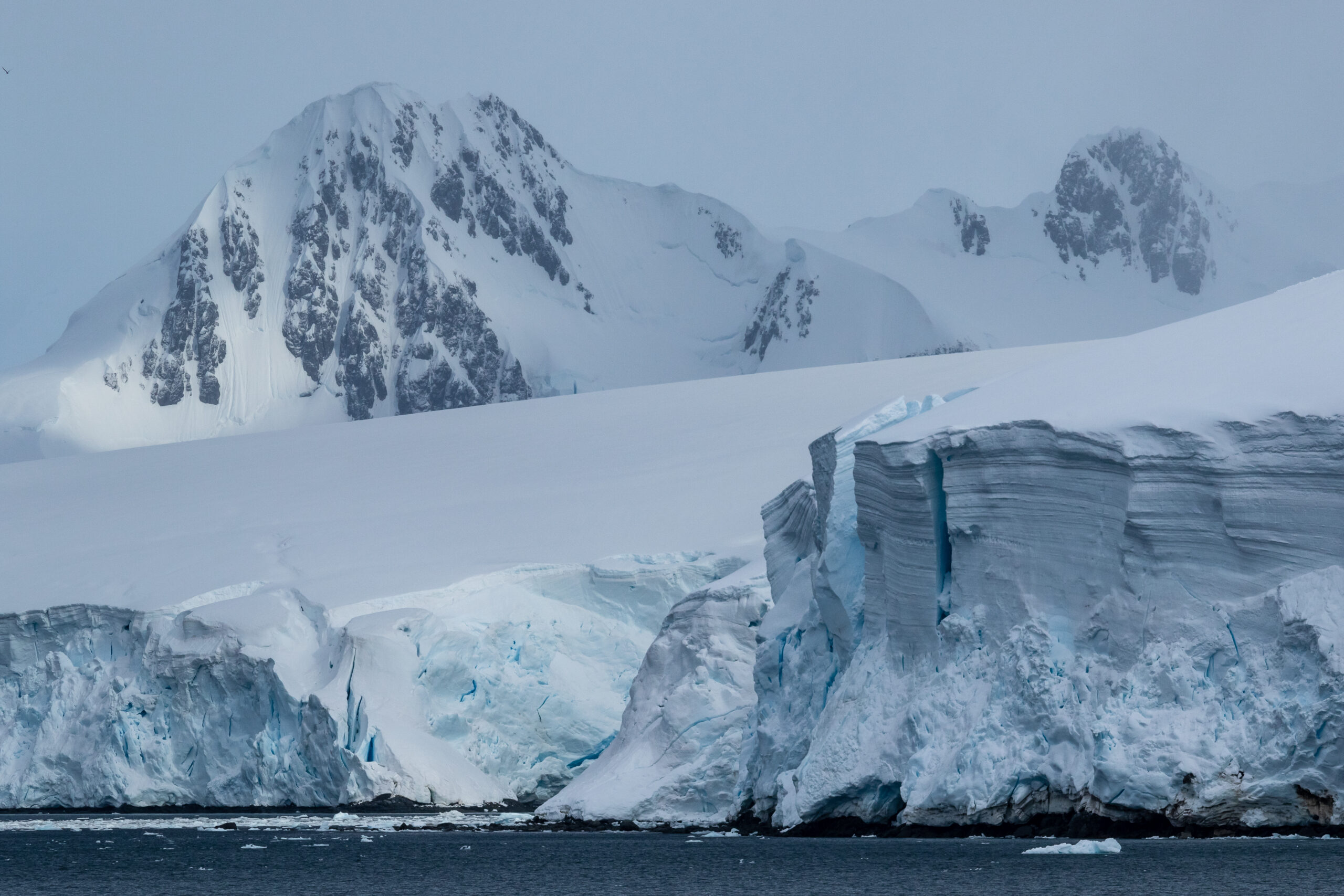
Melting Antarctic ice reveals hidden secrets deep within the Earth
New research led by scientists in the United States, with contributions from Australian Centre for Excellence in Antarctic Science (ACEAS) Chief Investigator, Professor Matt King from the University of Tasmania, has helped resolve a long-standing mystery about the Earth's interior beneath West Antarctica, while improving scientists' ability to forecast future ice-sheet change and sea-level rise.
Published today in Science, the new study used satellite observations, GPS measurements, gravity data and advanced computer modelling to investigate how the Earth's mantle beneath Antarctica responds to ice loss. It found that a three-dimensional model of the Earth’s interior that explains global geological processes that occur over millions of years can also explain today’s observations in Antarctica that are driven by very different forces.
As glaciers and ice sheets lose mass, the immense weight pressing down on the Earth's crust is reduced. In response, the bedrock beneath slowly rises, much like a mattress springing back after a heavy weight is removed.
In parts of West Antarctica, rapid ice loss is causing the bedrock to rebound remarkably quickly, with some areas rising by as much as five centimetres a year. Understanding the processes occurring deep beneath the ice has been a significant question scientists have been working to resolve.
"This study is really taking advantage of a natural experiment provided by the sad reality of rapid glacier melt," said Professor Matt King. "It's trying to reconcile different views of the Earth."
"There is obviously only one Earth. But people who study very long timescales – say changes happening over millions of years – have a particular model of the Earth and people who study short-term processes have a different model of the Earth, and they don't necessarily always agree. This study brings those different takes together.”
"Because we know how much ice is melting and how much the bedrock is uplifting in response, it acts as a probe, where we can understand more about the interior properties of the Earth."
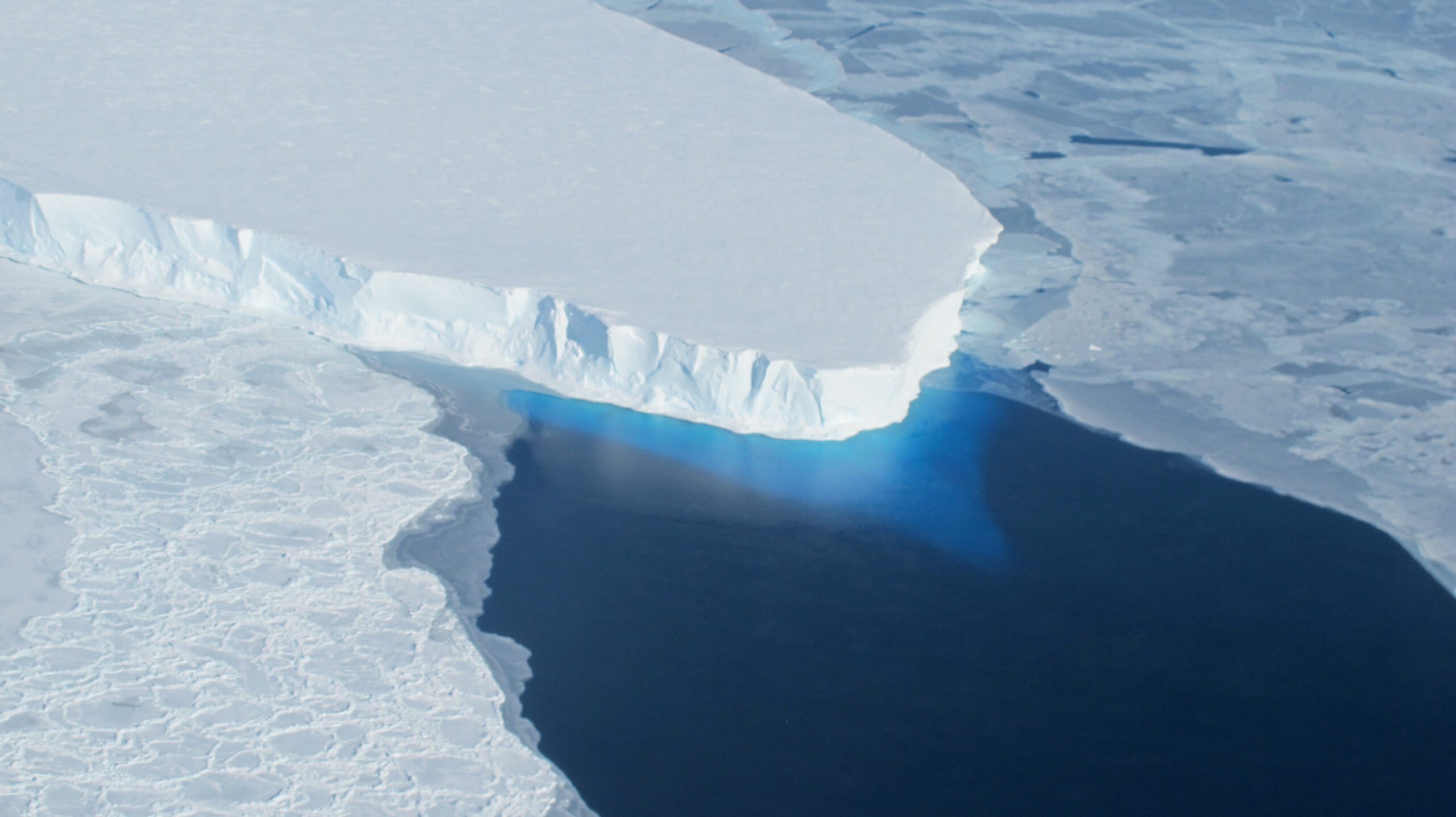
Pine Island, at left, and Thwaites glaciers in West Antarctica have recently averaged ice elevation losses of 6 meters per year in places. Source: NASA's Goddard Space Flight Center.
Looking beneath the ice
The upper mantle lies beneath the Earth's crust and extends hundreds of kilometres into the planet's interior. Although it is made of solid rock, it flows extremely slowly over time.
Scientists cannot directly observe the mantle beneath Antarctica, so they must infer its properties using indirect measurements.
“Jules Verne’s Journey to the Centre of the Earth was a few hundred metres below the surface. We're talking about a depth of more than 100 kilometres below the surface,” said Professor King.
“So, the only way we can understand the interior properties of the Earth is through surface observations like seismology, or through GPS measurements of the changing shape of the Earth, combined with computer models.”
By introducing a three-dimensional model, the team of scientists were able to reconcile the long timescale and short timescale views of the Earth, while also matching GPS measurements of bedrock uplift and satellite measurements of gravity changes across West Antarctica.
Antarctica is not one uniform continent
Although Australian Antarctic research often focuses on East Antarctica, West Antarctica provides a unique opportunity to observe Earth's interior processes unfolding in real time.
West Antarctica sits above a warmer, geologically younger and more dynamic mantle than East Antarctica. There are active volcanoes in parts of West Antarctica and those warmer rocks deform more easily and respond much faster when the weight of ice is removed.
“The mantle in West Antarctica is hotter,” said Professor King. “Just like when you heat up honey, that makes the mantle move faster and rebound more quickly when you remove ice from the surface of the Earth."
By contrast, East Antarctica is much older, colder and more stable.
"The mantle there responds really slowly and we're talking thousands to tens of thousands of years for it to respond to changes in ice loading," he said.
Because ice loss and bedrock uplift are occurring so rapidly in West Antarctica, processes that would take millennia to observe elsewhere can be measured within a single scientific career.
"West Antarctica, in the next century, will have the biggest impact on sea levels globally and impact on ocean circulation," Professor King said.
"In West Antarctica, we can observe change in fast forward. What would've taken a thousand years in East Antarctica, we can see happening over a decade."
The amount of ice flowing from Thwaites Glacier in West Antarctica has doubled in the span of three decades. Source: NASA Earth Observatory images by Lauren Dauphin, using Landsat data from the U.S. Geological Survey.
Why it matters for future sea-level rise
The research has two important implications for future sea-level rise.
Firstly, it improves scientists' ability to measure how much ice Antarctica is currently losing. Satellite observations detect both changes in the ice and changes in the Earth beneath it, making it essential to separate the two signals.
"If there's mass moving in the solid Earth, that can distort the measurements from satellites, and so we need to be able to remove those changes in order to get accurate ice changes from the satellites," Professor King said.
Secondly, and perhaps most significantly, the findings hold important clues for understanding the future of Antarctica's ice sheet melt. When the bedrock rises beneath a glacier, it can help lift the ice away from warm ocean water, slowing the rate at which glaciers retreat.
"It acts as a really important brake to sea-level rise," he said. "In some climate scenarios, it will slow ice-sheet retreat by many decades."
However, Professor King cautioned that this natural process cannot fully compensate for rapid warming and while uplift helps slow ice-sheet retreat it cannot prevent it under high-emissions scenarios.
With the United Nations Environment Program recently projecting that global temperatures are on track to rise by 2.8°C by 2100 under current policies, he stressed that rapidly reducing global greenhouse gas emissions to net zero remains the safest path to avoid the most severe consequences of Antarctic ice loss over the coming centuries.
Citation & link to paper
dePolo, D. L., Yuan, T., King, M. A., & Zhong, S. (2026). Geodetic observations in West Antarctica reveal geodynamically consistent 3D mantle viscosity. Science, 394, 752–757(2026). DOI:10.1126/science.aeh5525
Stay connected
For more Antarctic news and stories, subscribe to our mailing list here.