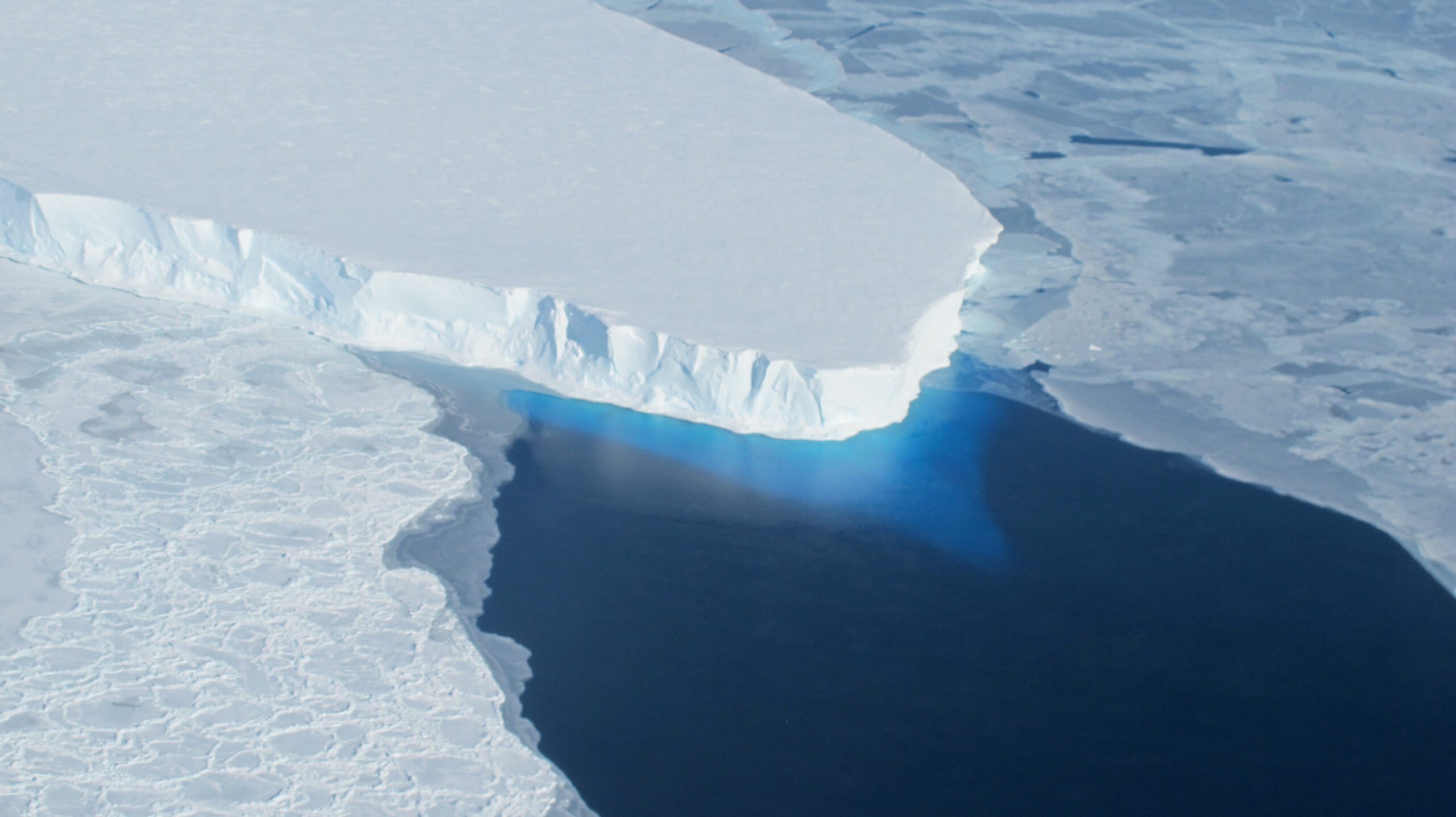
Hidden landscape beneath East Antarctica's "sleeping giant" revealed in new study
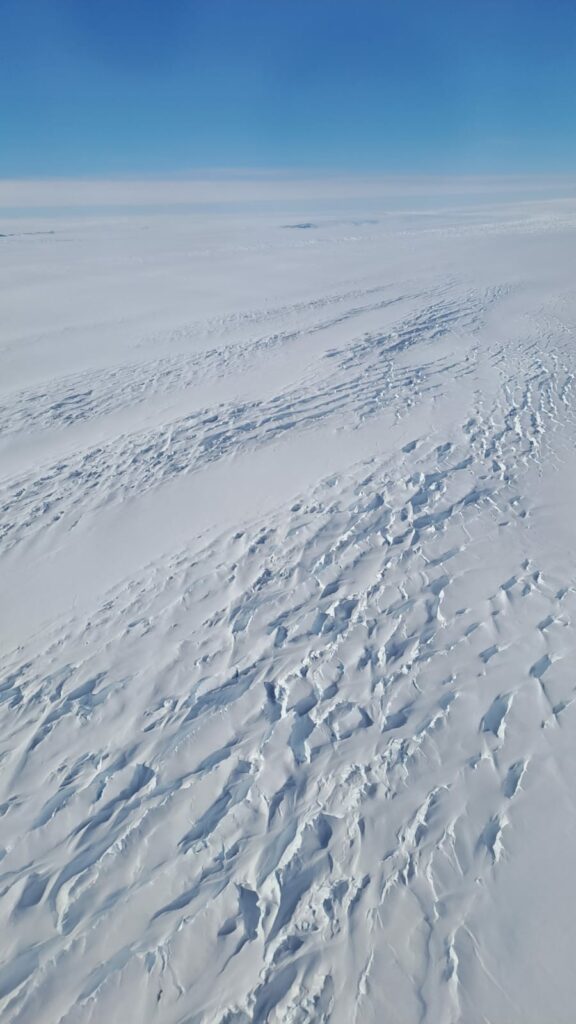
New research led by former Australian Centre for Excellence in Antarctic Science (ACEAS) postdoc Dr Mareen Lösing has revealed the landscape hidden beneath East Antarctica's "sleeping giant", the Denman Glacier, may be far more rugged and complex than previously thought, providing new insights into how the glacier may respond to future climate change.
Published in The Cryosphere, the study combines airborne surveys, gravity measurements collected directly on the glacier during the Denman Terrestrial Campaign, and advanced computer modelling to map the bedrock hidden beneath kilometres of ice.
The results suggest that rather than a single smooth trough, the glacier sits above a rugged landscape of deep depressions, steep slopes and rocky ridges that existing Antarctic bed maps may not fully capture.
Why Denman matters
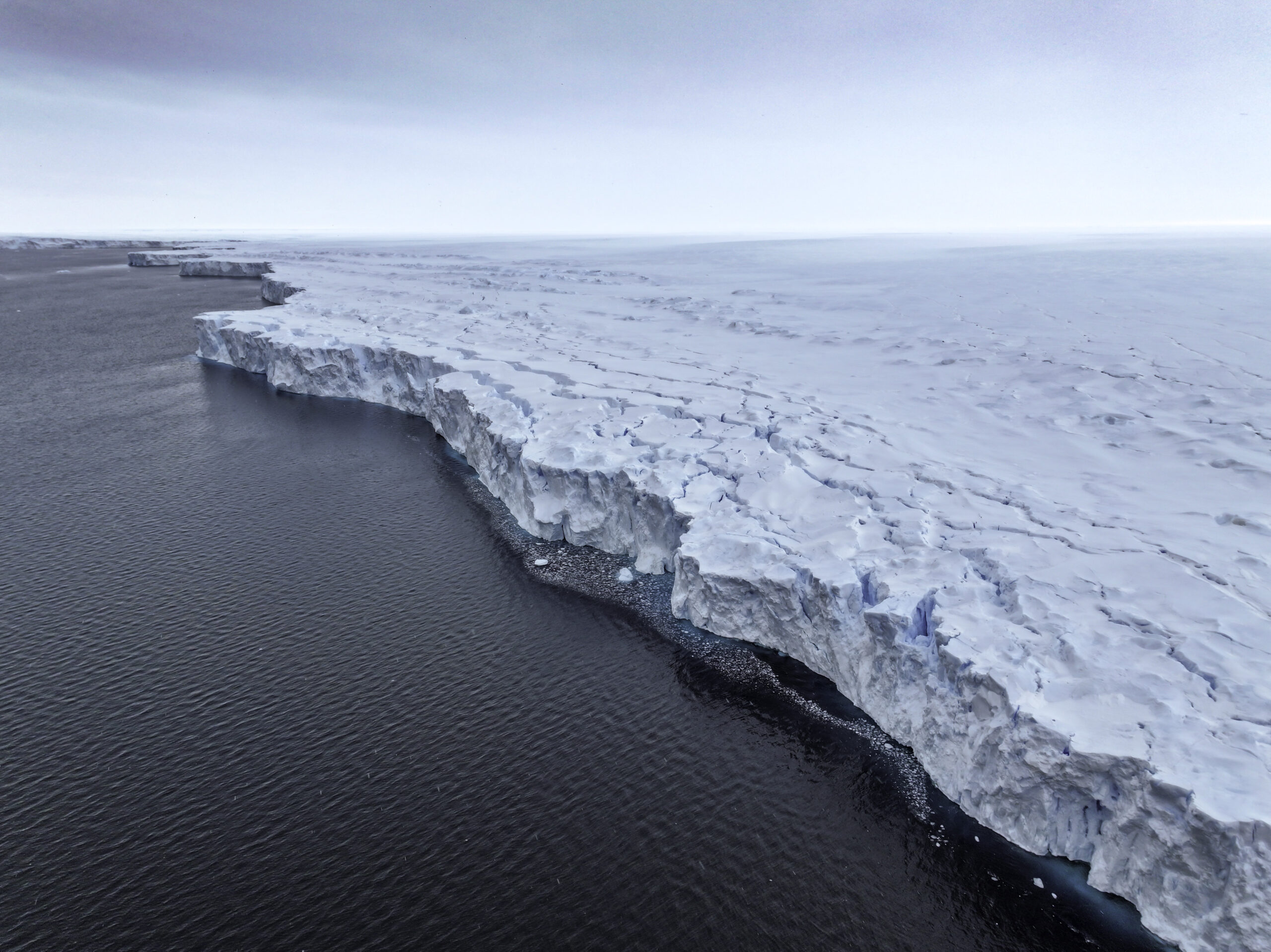
The Denman Glacier has become a focus of international scientific attention because of its size and vulnerability.
The glacier contains enough ice to contribute around 1.5 metres of global sea-level rise if its ice were lost to the ocean. Scientists have also observed significant thinning and changes in the glacier in recent decades.
"The Denman Glacier is one of the most dynamic glaciers in East Antarctica," said Dr Lösing.
"It holds a global sea-level equivalent of about 1.5 metres, which is significant. We've also seen substantial thinning in recent years."
Scientists are particularly interested in the glacier because previous studies suggested it sits within an extraordinarily deep trough, potentially up to 3,500 metres below sea level, making it the deepest known canyon on continental Earth. The shape of this hidden landscape helps determine how ice flows and how vulnerable the glacier may be to warming ocean waters.
Looking beneath the ice using Earth’s gravity field
Mapping the bed beneath Antarctica is notoriously difficult.
Researchers typically rely on ice-penetrating radar mounted on aircraft. But Denman Glacier's deep and steep-sided trough creates unique challenges, with radar signals often struggling to capture the deepest sections.
"The deeper troughs are actually some of the hardest places to measure," said Dr Lösing.
"When the trough is very steep, the radar signal can scatter off the sides, making it difficult to see the ground beneath."
To help overcome these limitations, the team turned to gravity measurements.
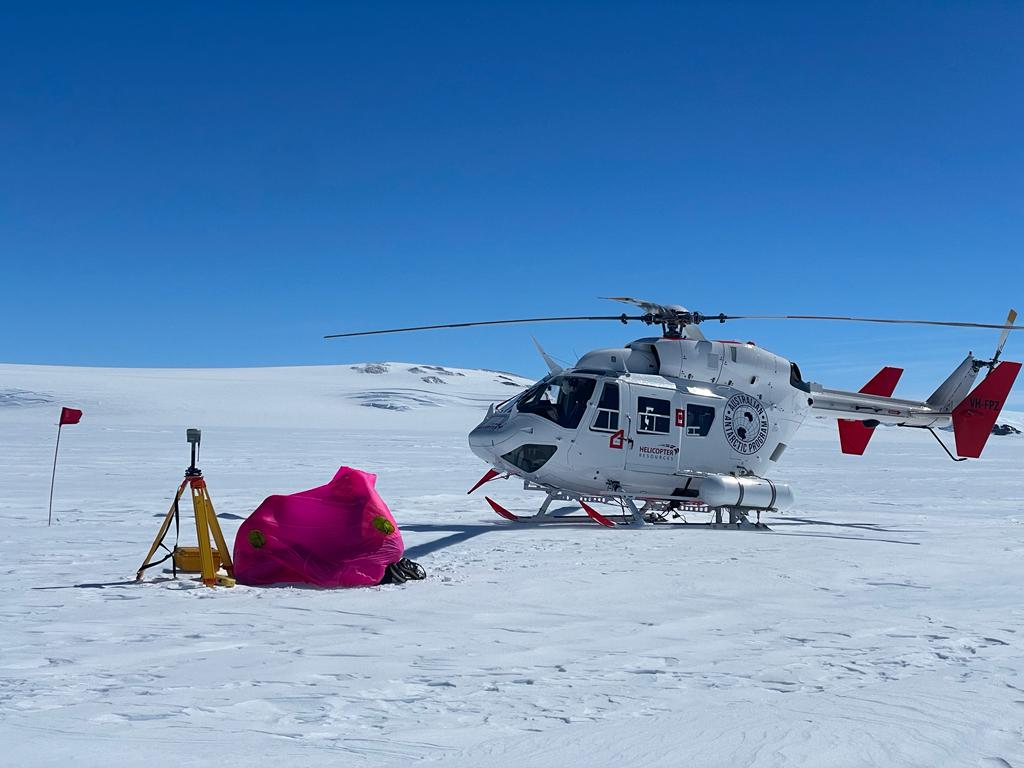
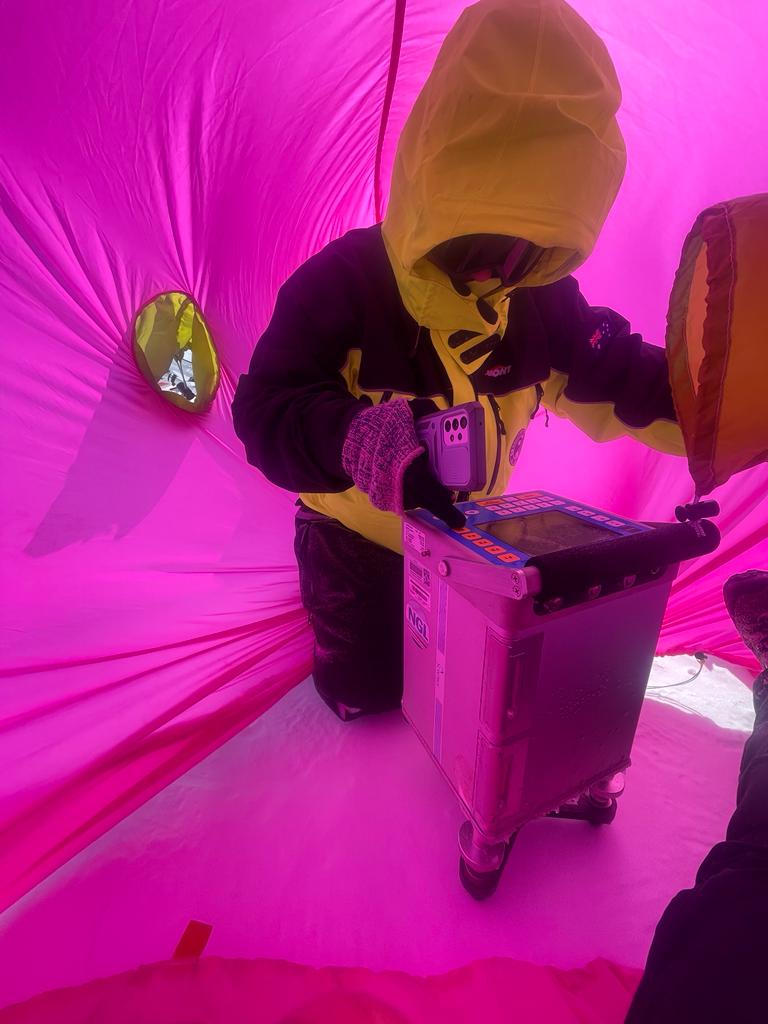
Tiny variations in Earth's gravity field can provide clues about the shape and structure of landscapes hidden beneath the ice. During the Denman Terrestrial Campaign, Dr Lösing and colleagues collected gravity measurements directly on the glacier, providing an independent way to investigate what lies below the surface.
The work required highly specialised equipment and precise positioning measurements in one of the world's most remote and challenging environments.
A more varied picture emerges
The study found that the hidden landscape beneath Denman Glacier is likely much rougher and more varied than previously represented in large-scale Antarctic maps.
"With this study, we wanted to get a more realistic picture of what the landscape beneath Denman Glacier could look like, and better understand the uncertainties that exist," said Dr Lösing.
“We found that it is a bit more rugged and rough than previous methods suggested. We see more ridges and troughs across the region, and that information is important for ice-sheet modelling."
In several areas, the researchers found evidence that the sides of the trough may be steeper than previously thought. The modelling also revealed features extending beneath the floating ice shelf that had not appeared clearly in previous reconstructions.
Rather than producing a single map of the hidden landscape, the researchers generated hundreds of possible solutions. This allowed them to quantify uncertainty and identify which features appear most consistently across the different models.
"By providing a range of possible landscapes, we can better quantify uncertainty in the topography and improve confidence in predictions of future change," said Dr Lösing.
Clues to the glacier's future
Understanding the shape of the landscape beneath the ice is critical because bedrock topography strongly influences how glaciers behave.
The findings reinforce concerns that Denman Glacier remains vulnerable because it occupies a deep trough that slopes inland, potentially allowing warm ocean water to access parts of the glacier that are grounded below sea level.
At the same time, the newly identified ridges and other rugged features suggest the glacier's future may be more complicated than previously understood. Some of these features could influence how ice flows or act as natural barriers that slow the inland movement of warm water.
"Our results suggest that Denman is still as vulnerable as we suspected," said Dr Lösing.
"But they also reveal the possibility of stabilising ridges that weren't visible in previous models. Confirming whether those features exist, and how important they are, will require more data."
The researchers say additional radar and gravity surveys will be needed to refine understanding of the glacier and the seafloor beneath its ice shelf.
Piecing together the Denman puzzle
The study adds to a growing body of ACEAS research emerging from the Denman Terrestrial Campaign, including a recent paper led by Dr Maria "Coti" Manassero – which Dr Lösing was also a co-author on – focussed on magnetotellurics, a technique that uses naturally occurring variations in Earth's electric and magnetic fields to distinguish between ice, rock, sediments and water below the surface.
While the two studies arrive at somewhat different interpretations of the trough’s depth in places, both show it deepening westward. Some of the possible bed profiles in Dr Lösing’s ensemble also show shallower ridges between deeper sections along the transect, a pattern consistent with Dr Manassero’s magnetotelluric interpretation. Dr Lösing said this reflects the challenges of investigating one of Antarctica's most remote and least understood regions using different geophysical techniques.
"Each method has its own strengths and limitations," said Dr Lösing.
"We're trying to understand a landscape that's buried beneath kilometres of ice, so it's not surprising that different datasets can give us slightly different answers."
Dr Lösing and Dr Manassero are now exploring ways to continue collaborating in future studies, combining gravity, magnetotelluric, seismic and other datasets, with the aim of building a more complete picture of the Denman Glacier system and what lies beneath the ice.
Citation & link to paper
Lösing, M., Aitken, A., Field, M., MacKie, E., & Li, L. (2026). Gravity topography modeling of the Denman Glacier region using a geostatistical approach. The Cryosphere, 20, 5629–5652 (2026). DOI:10.5194/tc-20-5629-2026.
Stay connected
For more Antarctic news and stories, including updates about our Denman research, subscribe to our mailing list here.