Australian-led team delivers crucial Antarctic ice-sheet projections for global sea-level estimates
An international team led by Australian scientists has submitted a collection of Antarctic ice-sheet simulations to inform the Intergovernmental Panel on Climate Change’s Seventh Assessment Report.
The projections were presented to ISMIP7, the international project that collates and analyses ice-sheet projections for the IPCC.
The simulations will help set the next global estimate of how much Antarctica will add to sea-level rise this century, and the sea-level change that is faced by Australia and its Pacific Island nation partners.
The team is led by Australian Centre for Excellence in Antarctic Science Chief Investigator Dr Chen Zhao, an ARC DECRA Fellow at the University of Tasmania’s Institute for Marine and Antarctic Studies and researcher with the Australian Antarctic Program Partnership.
“ISMIP7 brings together ice-sheet modelling groups from around the world to produce the next generation of ice-sheet projections. Our team is helping quantify how different climate scenarios and ice-sheet processes shape Antarctica’s contribution to sea-level rise,” Dr Zhao said.
The submission comes as governments prepare for COP31, the United Nations Framework Convention on Climate Change conference in Antalya, Türkiye, from 9 to 20 November.
How much Antarctica will add to sea-level rise, and how fast, is an area of increasing concern for Australia and the Pacific Island nations.
“As global leaders gather at COP31 to discuss climate pathways, understanding Antarctica’s response to continued warming has never been more important,” Dr Zhao said.
Dr David Gwyther of the Australian Antarctic Program Partnership at the University of Tasmania and the Australian Antarctic Division was part of the team that produced the simulations.
“Antarctica is one of the largest uncertainties in future sea-level rise, and ocean melting beneath the floating ice shelves is the part we understand least,” Dr Gwyther said.
“Our simulations will test how much the choice of melt physics matters for the whole continent, in unprecedented detail.”
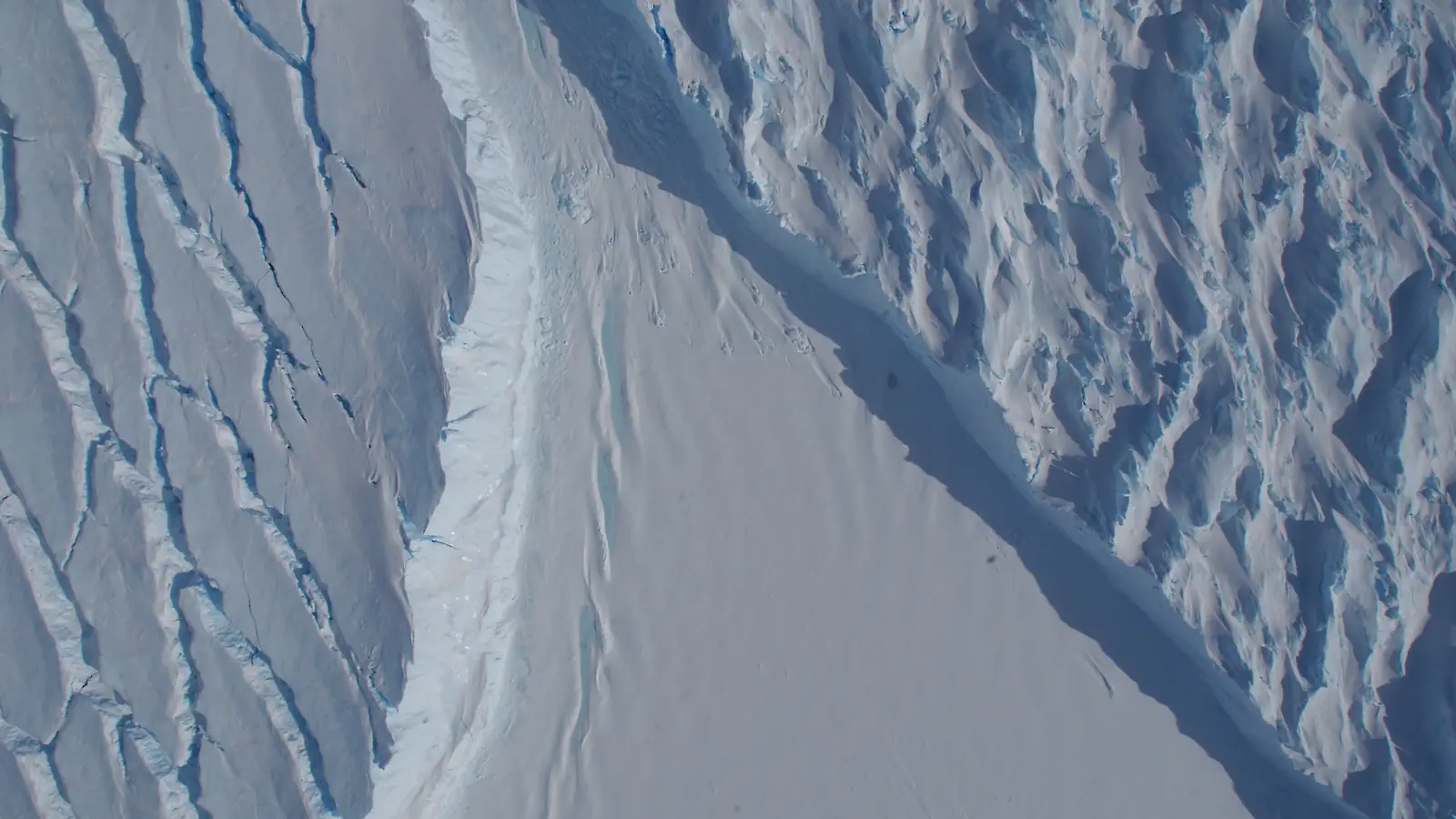
The floating ice shelves that fringe Antarctica hold back the grounded ice behind them. Warm ocean water melts the shelves from below, and as they thin, the ice behind them flows faster into the sea. Models differ in how they calculate that melting, and the Australian simulations were designed to show how much the melt physics matters in modelling outcomes.
The work was done as part of a collaboration using Setonix, operated by Pawsey, a national high-performance computing centre in Perth, Western Australia, and LUMI, Setonix’s sister system, operated by CSC – IT Center for Science in Finland. The team’s contribution will form one of two from Australia.
The full set of results will be published with the other ISMIP7 groups from around the world in the coming year, in time for the IPCC's Seventh Assessment Report.
The next step, supported by the Department of Foreign Affairs and Trade in a collaborative project with France titled "From Ice to Islands", will turn the projections into sea-level information for Australia and the Pacific Island nations to inform decision-makers.
The team is: Chen Zhao (Institute for Marine and Antarctic Studies, Australian Centre for Excellence in Antarctic Science and Australian Antarctic Program Partnership, University of Tasmania); Rupert Gladstone (Arctic Centre, University of Lapland); Thomas Zwinger (CSC – IT Center for Science); Eliot Jager (Institute for Atmospheric and Earth System Research, University of Helsinki); Yu Wang (Institute for Climate & Sustainable Growth, University of Chicago); David Gwyther (Australian Antarctic Program Partnership, University of Tasmania, and Australian Antarctic Division); Ben Galton-Fenzi (Australian Antarctic Division, Australian Antarctic Program Partnership and Australian Centre for Excellence in Antarctic Science, University of Tasmania); Ann Kristin Lund Johansen (Australian Antarctic Program Partnership, University of Tasmania).
This news item was first published by the Australian Antarctic Program. Read the original article here.
Stay connected
For more Antarctic news and stories, subscribe to our mailing list here.