The invisible engineers of the Southern Ocean: a story from a drop of seawater
By Amaranta Focardi, University of Technology Sydney, and Joline Lalime, Sea2SchoolAU
Did you know that a single drop of seawater can contain millions of microbes? Much like the miniature universe hidden inside a marble in Men in Black, an entire world exists beyond what our eyes can see.
Within a single drop from the Southern Ocean live countless microscopic organisms, including bacteria, viruses, and tiny algae, collectively referred to as microbes. Among them, phytoplankton, tiny single-celled photosynthetic algae form the foundation of the marine food web. During short Antarctic summers, they bloom rapidly, using sunlight and carbon dioxide to produce oxygen and organic matter.

Though invisible to the naked eye, these microbes are critical for the functioning of the marine ecosystem, as their role goes beyond being food for larger organisms. Much of the organic material they produce enters a microscopic exchange. Phytoplankton release organic compounds into the water, which bacteria consume. In return, bacteria recycle nutrients that phytoplankton need to keep growing. Together, these microbes regulate marine biogeochemical processes, the continuous movement of essential elements like carbon, nitrogen, and phosphorus between living organisms, that influence the functioning of the whole marine ecosystem.
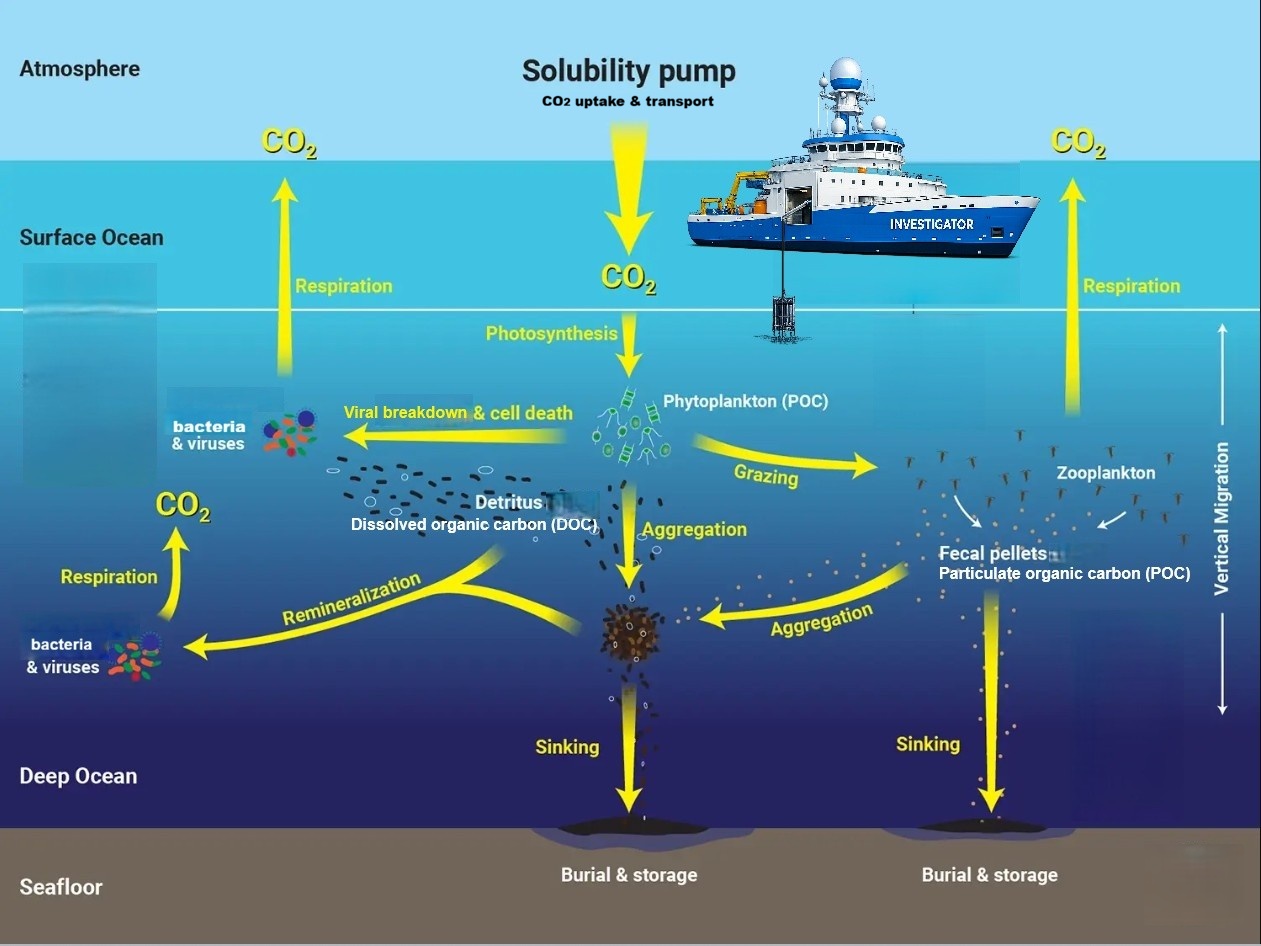
This constant recycling forms what scientists call the ‘microbial loop’. Through countless interactions, carbon is either recycled in surface waters, respired back to the atmosphere, or transformed into particles that sink into the deep ocean. In this way, microbes play a critical role in removing carbon dioxide from the atmosphere and locking it away in ocean depths for centuries or longer.
Tiny grazers, such as single-celled protists, feed on bacteria and small phytoplankton, transferring energy upward through the food web. These grazers are eaten by larger zooplankton, including krill, which form a crucial link between microscopic life and iconic Antarctic animals. Seabirds, fish, penguins, seals, and whales ultimately depend on this microbial foundation, meaning the largest animals in the Southern Ocean are supported by interactions occurring at the scale of a single drop of seawater.
Viruses are also essential players in this hidden world. By infecting microbes, they prevent any one group from becoming too dominant. When infected cells burst, nutrients are released back into the water, keeping energy circulating through microbial pathways. In some cases, remnants of these cells clump together and sink, contributing to carbon storage in the deep ocean.
These networks extend far below the surface. As organic matter sinks, different microbial communities continue to transform it, linking surface productivity near ice shelves to long-term carbon storage in the deep ocean.
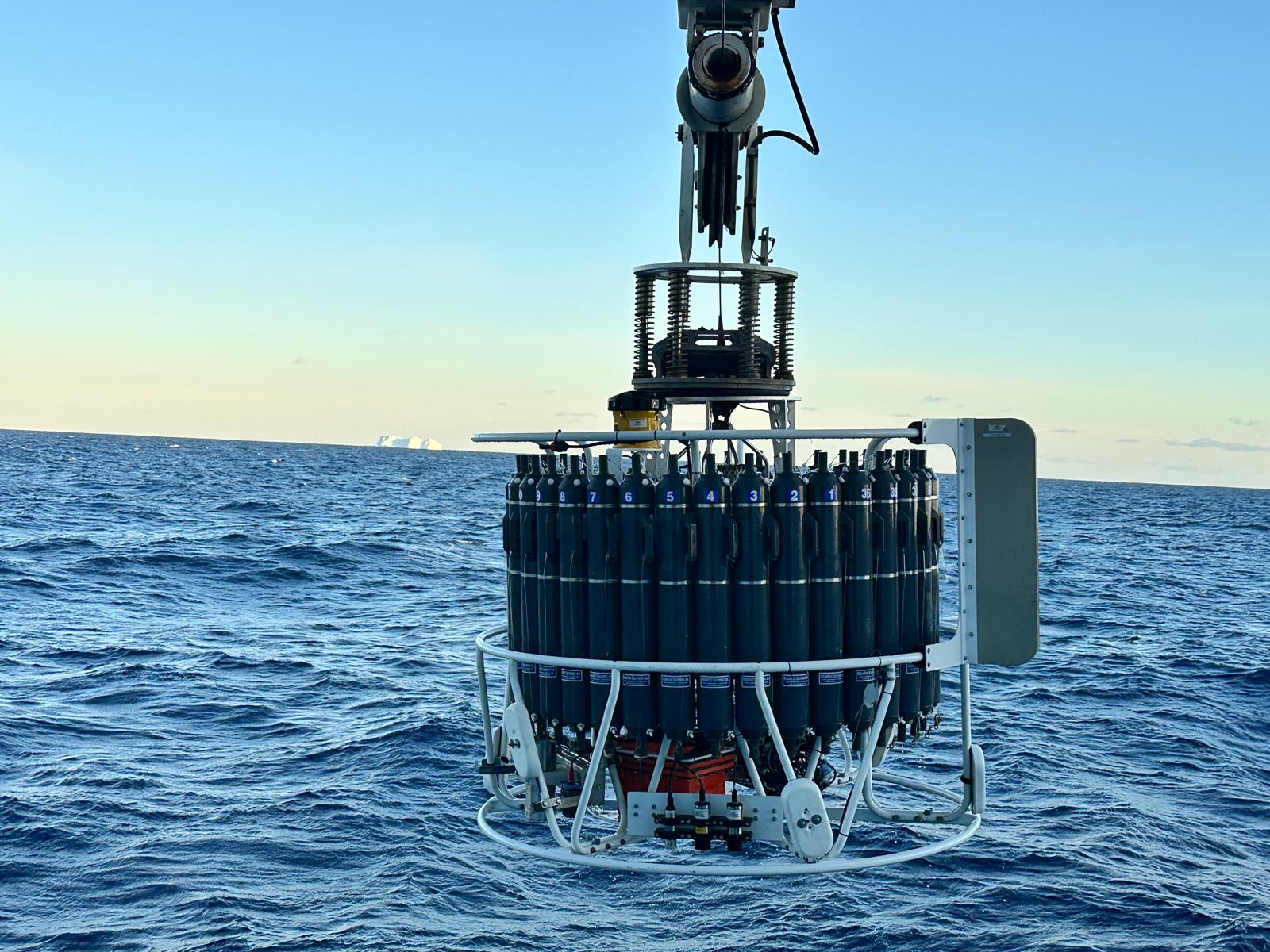
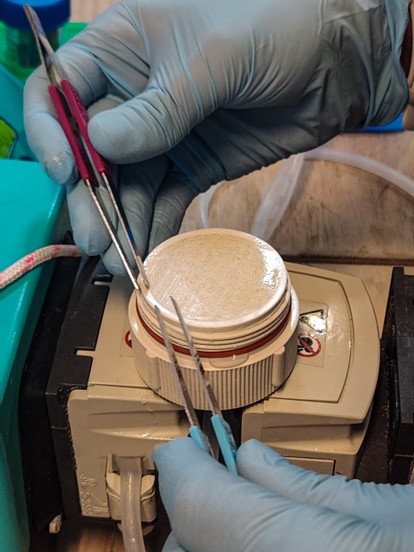
Researchers on CSIRO research vessel (RV) Investigator take water samples at various depths using Niskin bottles on the previously mentioned CTD (Conductivity Temperature Depth) instrument and also from the ship’s underway seawater sampling system. This collects seawater from a scientific drop keel lowered metres below the ship’s hull. These samples are filtered to collect microbial cells, from which DNA is extracted to reveal the diversity of communities inhabiting these remote and extreme environments.
As Antarctic ice shelves melt, this delicate system is beginning to change. Freshwater input alters ocean current and nutrient availability, reshaping microbial interactions and hence those same pathways through which carbon moves. Understanding these invisible engineers is essential for predicting how the Southern Ocean, and the global climate it helps regulate, will respond to a warming world.
In one of the harshest environments on Earth, it is not size or strength that sustains life, but countless microscopic interactions quietly shaping the Southern Ocean, one drop of seawater at a time.
Join us on the expedition
The IMAS-led research on the expedition will be showcased through blogs released through the Australian Centre for Excellence in Antarctic Science and can be followed on social media at Sea2SchoolAu Facebook, Instagram, LinkedIn and the CSIRO Voyage (IN2026_V01) Page
This voyage is supported by the Australian Research Council Special Research Initiatives Australian Centre for Excellence in Antarctic Science (Project Number SR200100008), the Australian Research Council's Discovery Projects funding scheme (DP250100886), the COOKIES GEOTRACES process study GIpr13, Horizon Europe European Research Council (ERC) Frontier Research Synergy Grants; the Italian National Antarctic Program (CNR:DSSTTA) and Securing Antarctica’s Environmental Future (SAEF) (Project Number SR200100005) and by a grant of sea time on RV Investigator from the CSIRO Marine National Facility (MNF).
Top header image: ACEAS/IMAS scientists and CSIRO staff during COOKIES voyage preparations in Hobart (Image Credit: CSIRO/Fraser Johnston)


