COOKIES wrap up: 55 Days in the Southern Ocean
By Dr Linda Armbrecht, Australian Centre for Excellence in Antarctic Science/Institute for Marine and Antarctic Studies (University of Tasmania) and Joline Lalime, Sea2SchoolAU
Fifty-five days in the Southern Ocean is long enough to lose track of which day it is, but not long enough to lose your sense of awe. Departing on 2 January 2026, the Cook Ice Ecosystems and Sediments (COOKIES) Voyage has now come to an end. CSIRO research vessel (RV) Investigator arrived back in Hobart, Tasmania on 25 February 2026, having travelled a massive 6,534 nautical miles. The outcomes are a mixture of hard data, numerous samples, vivid memories, and the quiet satisfaction of the insightful research accomplished during the voyage.

The voyage was driven by three core scientific goals, all focused on understanding how life in the Cook Glacier region has responded to change. First, the team is reconstructing how marine ecosystems have shifted over the past one million years, with particular attention to warmer periods that may offer clues to our future. Second, they are investigating how seafloor biodiversity and genetic patterns connect to ocean productivity and the advance and retreat of the ice sheet. Finally, by examining the geological setting and past ocean conditions, the team aims to understand what has shaped the distribution of marine life in this remote Antarctic region. Together, these objectives help build a long-term picture of how ecosystems respond to climate change – and what that might mean for the Southern Ocean ahead.
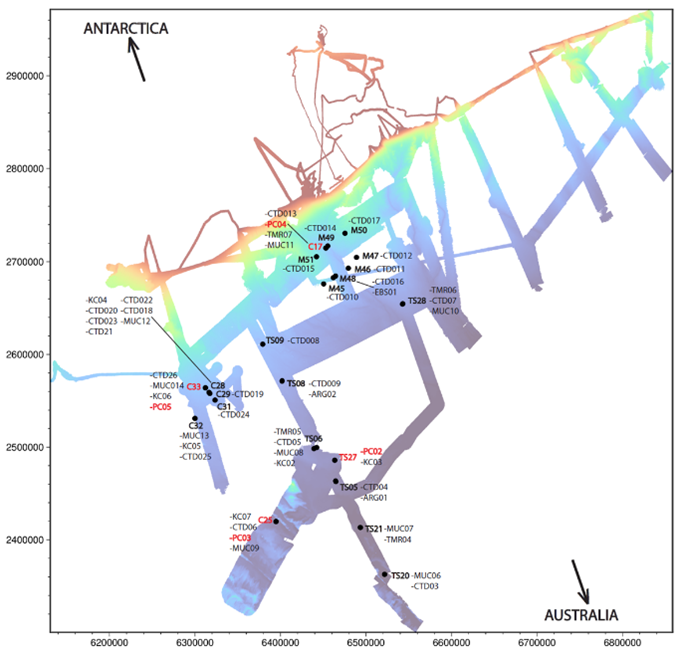
Data collection began with continuous multi-beam sonar mapping and sub-bottom profiling along our transit, capturing high-resolution images of the seafloor beneath the vessel. Because less than 30% of the global seabed has been mapped in detail, each nautical mile surveyed adds valuable new bathymetric and seabed backscatter data (sediment structure), expanding our understanding of ocean floor structure and composition. The Acoustic Doppler Current Profiler (ADCP) was continuously measuring water velocity to understand ocean currents and the magnetometer was towed during every possible transit between sites to provide information on Earth’s magnetic field.
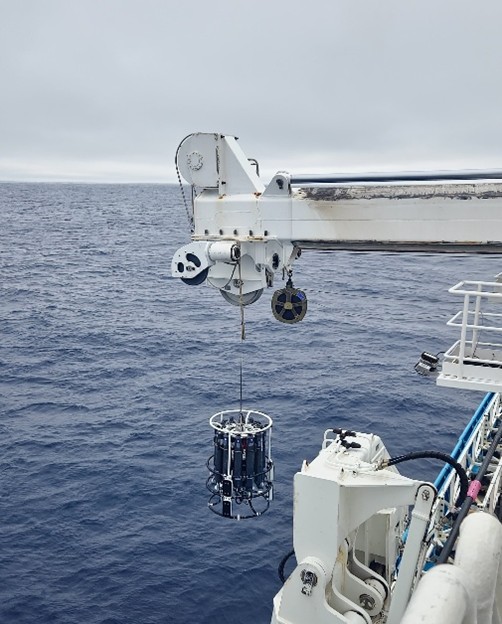
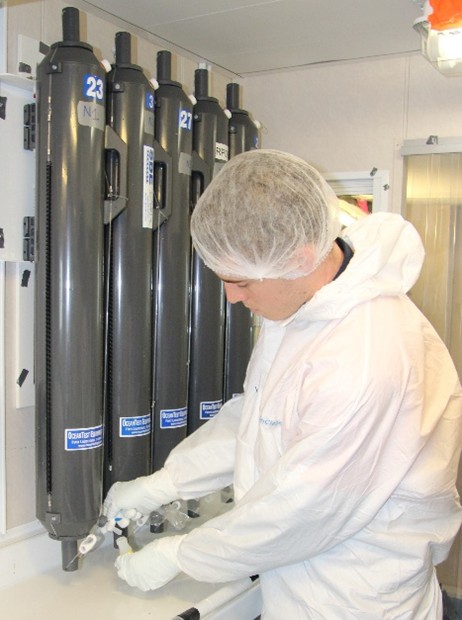
The first of the trace metal rosette deployments (TMR) occurred shortly after departure on the third day of the voyage. Over the course of the voyage, the skilled crew and CSIRO technical staff retrieved twelve multi-cores, thirteen Kasten cores and five piston cores. These exceeded our expectation for the voyage and over 10,000 samples were taken for analyses such as sedimentary ancient DNA (sedaDNA), microfossils, grain size and geochemistry. Each core type provides cylinders of sediment that act like history books of the ocean floor with the shorter multi-core revealing a few hundred-year-old sediment and preserves the fragile sediment-water interface, while the piston core provides sediments up to millions of years old, piercing up to 24 metres into the ocean seafloor. On the 17th of January, the team achieved the record retrieval of a piston core for RV Investigator at 20.5 metres!
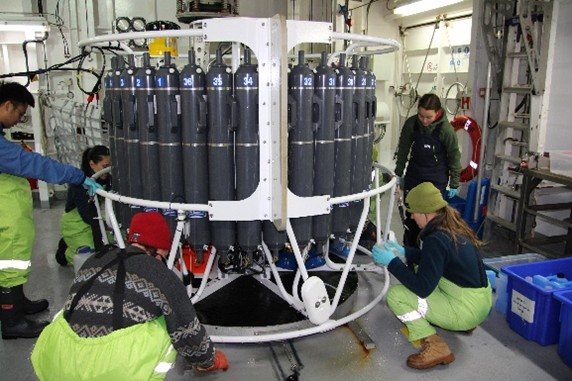
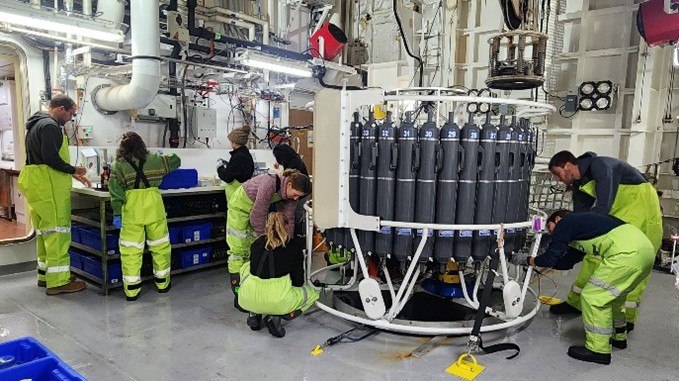
Underway water sampling also commenced shortly after RV Investigator departed from Hobart with over one hundred and thirty underway water samples for plankton, environmental DNA (eDNA), microbes and diatoms taken providing a real-time biological snapshot of the ocean surface layer across thousands of nautical miles. They also provide information on impacts of temperature change on ocean productivity. In addition, thirty-eight CTD (conductivity, temperature and depth instrument) casts provide a comprehensive, high-resolution vertical profile of the ocean's physical, chemical, and biological properties from the surface to the sea floor. When analysed this data supports the current scientific understanding of the ocean consisting of several layers, some of which may be in ‘pockets’, but all creating various habitats due to differences in, physical properties such as salinity, light, oxygen and nutrient availability. In addition to twelve Trace Metal rosettes deployed to understand the fundamental chemical, biological, and physical processes driving the ocean.
Working in the remote waters adjacent to the Cook, Ninnis and Mertz Ice Shelves – and later near the Dibble Ice Shelf – the scientific team set out to understand how this dynamic Antarctic margin has evolved through time and how it may respond to future change. But the region itself dictated the rhythm of the voyage. Sea ice conditions shifted slowly, but constantly, with forecasts updated daily and floes moving under the influence of wind and currents. Plans to deploy instruments at carefully selected sites were often revised – sometimes two or three times in a single day. New stations were selected, mapping priorities adjusted, and new coring locations identified as the ice dictated access. Success in this environment depended not only on scientific precision, but on flexibility, rapid decision-making and close coordination between the bridge, ice analysts, crew, CSIRO technical staff and the research teams.
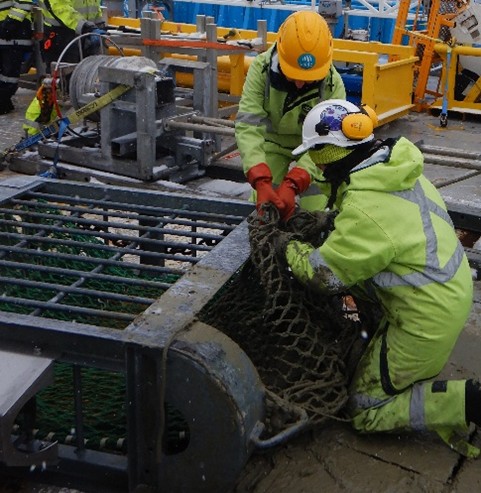
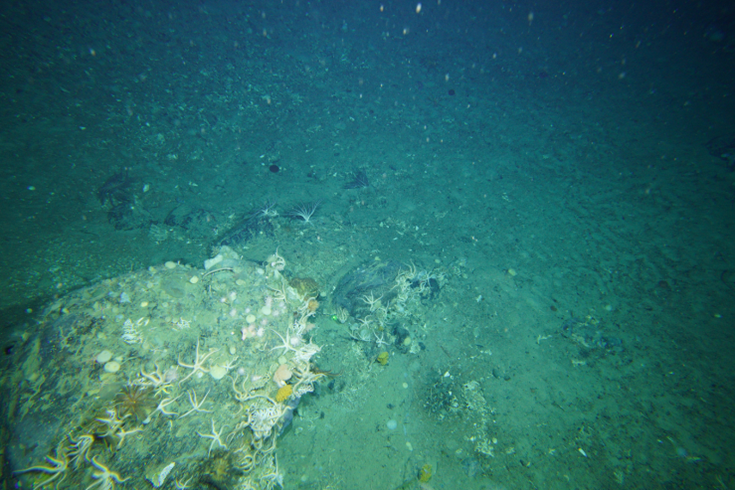
Ecological surveys were conducted on the Dibble Ice Shelf, approximately 150 nautical miles to the west. By the end of the time over the shelf, eighteen deployments of the deep tow camera surveying benthic ecosystems rarely observed by humans and eight benthic sled operations were completed. The delay accessing the shelf limited the number of deep tow camera and sled deployments. However, researchers were still able to document approximately four hundred organisms from thirteen benthic sled operations for DNA analysis and captured more than 10,000 still images alongside hours of deep-tow footage.
The numbers matter. They represent years of analysis to come – ancient DNA sequencing, microfossil identification, trace metal chemistry, geophysical interpretation. Each core has been photographed, described, subsampled and had sections prepared for long-term storage and future analysis. Water samples have been filtered with the filter stored to be analysed or were analysed for oxygen and nutrients on the voyage, with other analysis of collected samples to be completed back at various laboratories. Fieldwork is only the beginning; laboratory work by the researchers, current and future students will now carry the story forward.
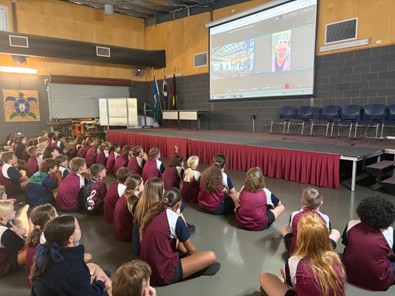
Parallel to the science program, Sea2SchoolAU connected classrooms directly to the voyage. Live outreach sessions were delivered during weekdays to suit school timetables. Forty-seven individual live sessions were delivered over 30 days to 25 schools across five countries – Australia, Germany, Italy, the United Kingdom and Portugal – engaging almost 2,000 students in real time. In partnership with the Great Barrier Reef Marine Park Authority Reef Guardian Schools program, a further 800 students participated in the virtual ‘on board’ experience.
Students did not simply watch; they asked questions, met scientists and crew, saw sediment cores sampled, and stood virtually on deck as icebergs drifted past or the sun rose over the Southern Ocean. The impact of those sessions does not stop with the bell at the end of the school day. Students carry the stories home. Teachers embed Antarctic science into their lessons. Families hear about CTDs and deep-sea cameras over dinner. The ripple effect moves outward into the broader community, carrying with it both understanding and excitement.
Life onboard balanced intensity with new friendships. Scientific sampling can run around the clock, but morale matters during nearly two months at sea. A fiercely contested table tennis tournament was coordinated, and a darts competition drew unexpected talent. The halfway party marked a psychological milestone – a reminder that time was moving even when the horizon looked the same. Evenings often ended with movies played in the lounge and popcorn and ice cream consumed, a small ritual of normality in a landscape defined by ice and open water.
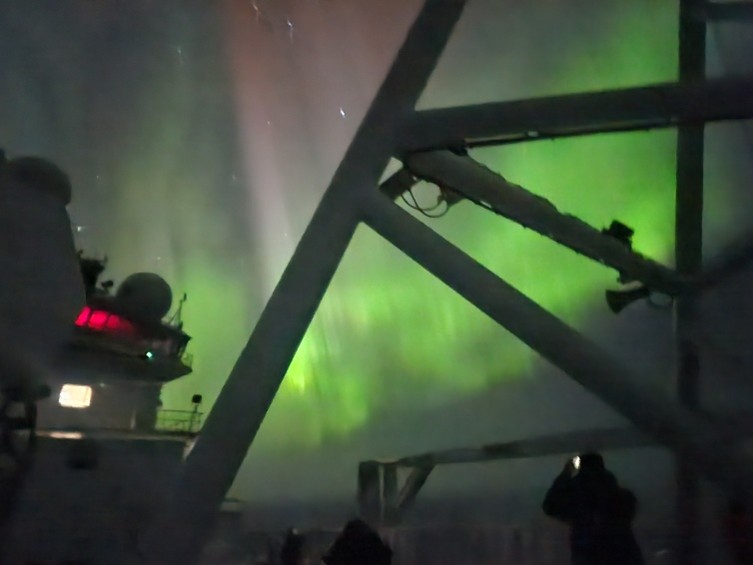
Twice, the sky put on a performance of its own. The Aurora Australis first appeared as a faint green arc, almost uncertain. It faded, then returned stronger, sweeping across the sky in luminous ribbons that pulsed and shifted engulfing the ship as it flowed around us. Team members were woken for this special occasion. Standing on the deck of RV Investigator in the Southern Ocean alters perspective – it felt as though we were within it.
Wildlife threaded through the voyage. Humpback whales, singularly or up to six in a pod surfaced in the swell, their blows briefly visible against the cold air, similar to our breath as it condenses on exhale. Fewer but faster Antarctic minke whales kept pace with the ship for up to 15 minutes, then moved off into the depths. Some were able to spot a blue whale, however, they were so fast that it was just those fortunate enough to be on the Bridge. Albatrosses (Sooty, Light-mantled and Black-browed) carved arcs above the waves, accompanied by petrels and prions riding the wind with effortless precision. One morning, a small raft of Adélie penguins passed the bow – compact, purposeful, navigating the same waters the ship was mapping.
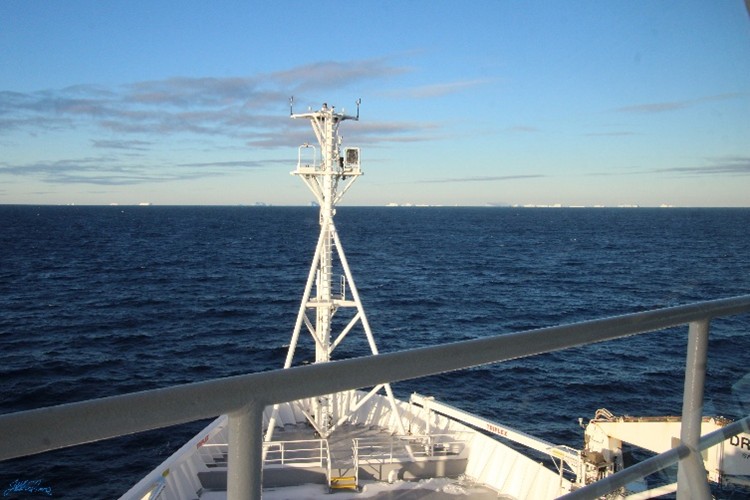
And after 62 degrees south there were icebergs. Icebergs on the horizon. Icebergs close enough to reveal fracture lines and shades of impossible blue. At one point, approximately a dozen grounded icebergs stood in a line, monumental and unmoving, sculpted by ocean and time. Others drifted past, reshaping as they calved, edges collapsing into the sea leaving trails of ice debris in their wake. Great weather brought sunny days and outside time. Fog compressed the world to a small circle around the vessel. For the most part, the seas were kind – a welcome concession in a region known for indifference.
The COOKIES voyage has concluded its field chapter. The sediment cores are secured. The samples are catalogued. The data drives are full. Now begins the longer, quieter phase of interpretation and discovery. The Southern Ocean has offered its secrets; it is up to the researchers to read and interpret them carefully. In classrooms across several countries, students are still talking about ocean depths, sediment, whales, icebergs and life aboard RV Investigator – and the researchers who went south to find answers.
Join us on the expedition
The IMAS-led research on the expedition will be showcased through blogs released through the Australian Centre for Excellence in Antarctic Science and can be followed on social media at Sea2SchoolAu Facebook, Instagram, LinkedIn and the CSIRO Voyage (IN2026_V01) Page.
This voyage is supported by the Australian Research Council Special Research Initiatives Australian Centre for Excellence in Antarctic Science (Project Number SR200100008), the Australian Research Council's Discovery Projects funding scheme (DP250100886), the COOKIES GEOTRACES process study GIpr13, Horizon Europe European Research Council (ERC) Frontier Research Synergy Grants, OGS – Istituto Nazionale di Oceanografia e di Geofisica Sperimentale, Securing Antarctica’s Environmental Future (SAEF) (Project Number SR200100005) and by a grant of sea time on RV Investigator from the CSIRO Marine National Facility (MNF).
Top header image: ACEAS/IMAS scientists and CSIRO staff during COOKIES voyage preparations in Hobart (Image Credit: CSIRO/Fraser Johnston)

