Charting change in East Antarctica – DMV Voyage Report now available
The Australian Centre for Excellence in Antarctic Science (ACEAS) is proud to announce the release of the Denman Marine Voyage (DMV) Voyage Report. The report documents the groundbreaking marine science expedition to the Denman Glacier region in East Antarctica.
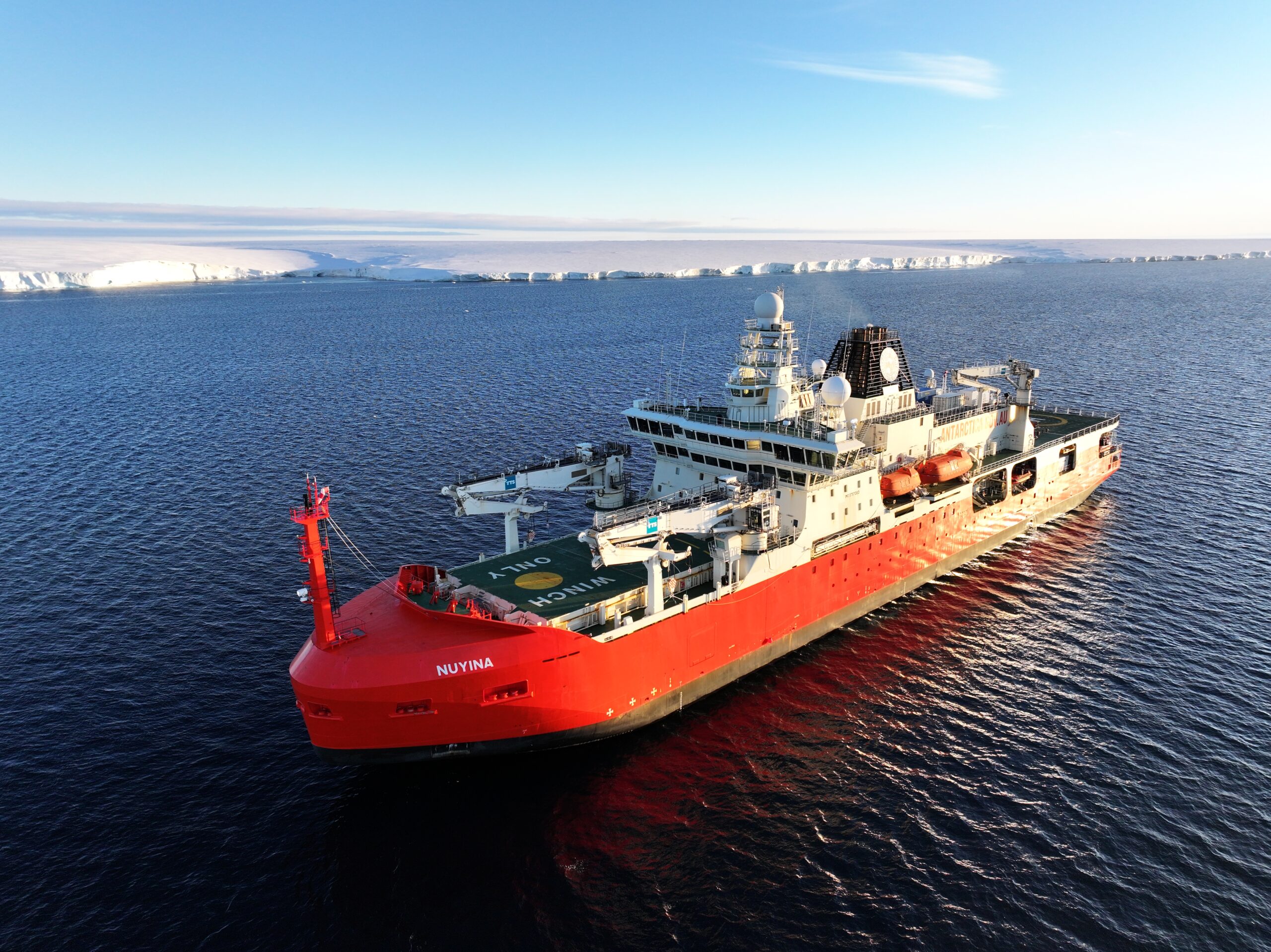
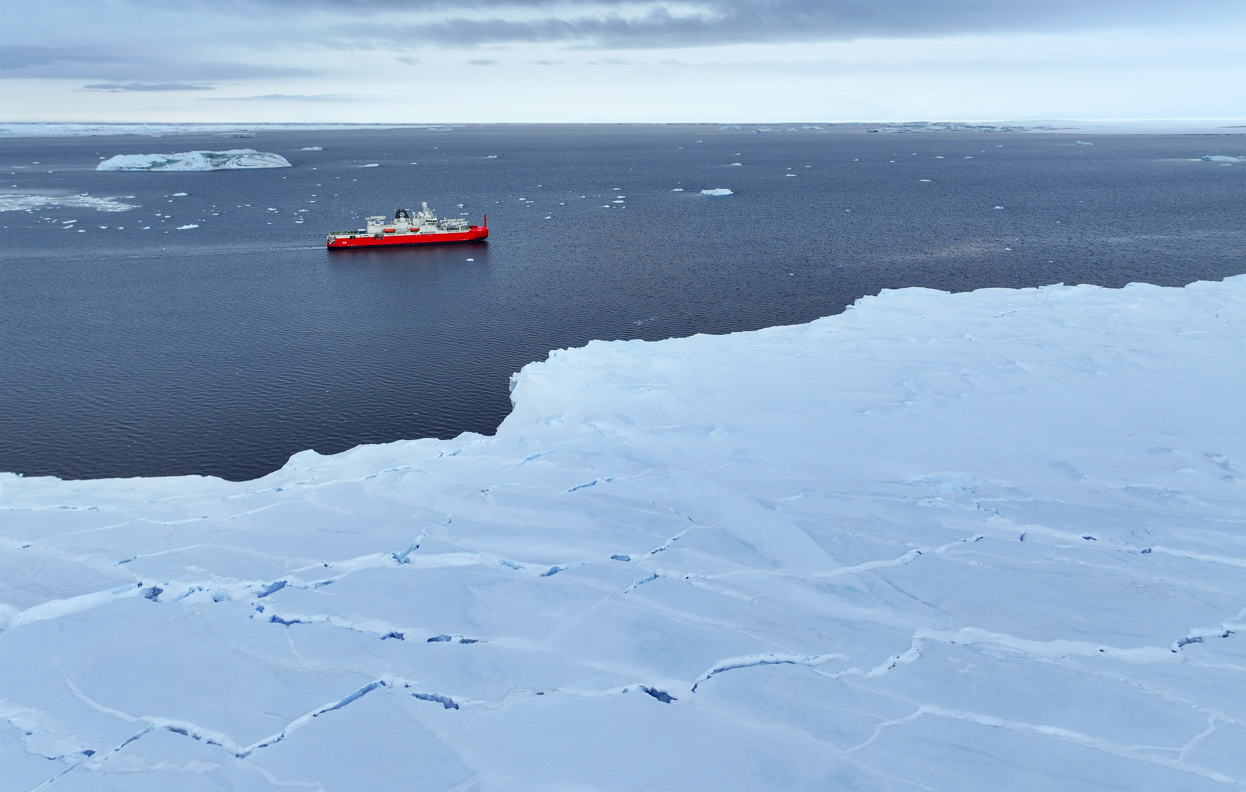
The DMV, conducted aboard Australia’s state-of-the-art icebreaker RSV Nuyina, marked a historic milestone as the first Australian marine scientific voyage to this remote and scientifically critical part of the Antarctic coastline. The voyage brought together more than 60 scientists from ACEAS, the Australian Antarctic Program Partnership (AAPP), Securing Antarctica’s Environmental Future (SAEF), and the Australian Antarctic Division (AAD) in a major collaborative effort to understand the drivers of change in one of the fastest-evolving glacial systems on Earth.
The Denman Glacier, sitting atop the deepest land trench on the planet, holds enough ice to raise global sea levels by 1.5 metres if fully melted. The DMV aimed to investigate the interactions between the ocean, atmosphere and ice that are accelerating this melt. Over two months, researchers deployed oceanographic instruments, collected sediment cores, mapped the seafloor and studied marine ecosystems to build a comprehensive picture of the glacier’s vulnerability and its broader environmental impacts.
Lead author Jim Trihey (University of Tasmania) said the report captures the scientific achievements, logistical challenges and collaborative spirit of the voyage.
“The DMV was a rare opportunity to study one of the most remote and scientifically important regions of East Antarctica,” he said. “This was my first time on an icebreaker, and for many of my colleagues it was their first time in Antarctica, making the experience even more extraordinary.”
ACEAS Director Professor Matt King (University of Tasmania) emphasised the significance of the voyage in the Centre’s broader research agenda.
“Getting to the Denman Glacier was a core element of the original ACEAS proposal,” he said. “It’s one of the trickiest places to reach, but with RSV Nuyina we saw the opportunity and knew we had to go. This voyage is a major step forward in understanding how the glacier and ice shelf are changing the nearby ocean – insights that are vital not just for Australia, but for the Asia-Pacific region and the world as we prepare for the impacts of sea-level rise.”
Read the full DMV Voyage Report
Read the full DMV Voyage Report here.
Learn more about the DMV and its scientific goals
Learn more about the DMV here.