Antarctic algae research earns NZ’s stamp of approval
What might happen to microscopic algae living under Antarctic sea ice if light conditions change with climate change? A team of researchers from the Australian Centre for Excellence in Antarctic Science (ACEAS) collaborated with a team of global researchers to find out – and their work even inspired a New Zealand postage stamp.
Shedding a different light on life under the ice
Ice algae may be small, but their impact on the Southern Ocean is significant. As the base of the Antarctic food web, they support krill and other small grazers, which in turn sustain fish, seals, and whales. Understanding how they respond to changing light conditions supports improvements in polar biogeochemical models and helps scientists predict how the ecosystem will cope as the ice conditions change.
“These communities are not just critical food for juvenile krill – they’re part of the engine that drives the whole marine ecosystem and carbon storage in the Southern Ocean,” said ACEAS lead author Dr Emiliano Cimoli from the University of Tasmania. “If light conditions shift, which is anticipated with climate change, it changes the health and productivity of algae, and that can ripple through the food chain in unknown ways.”
Beyond their ecological role, Dr Cimoli also notes their ability to thrive in cold, dark, and saline environments which makes them a useful analogue for studying how life might exist in similar conditions on other icy worlds like Europa or Enceladus.
A colourful experiment
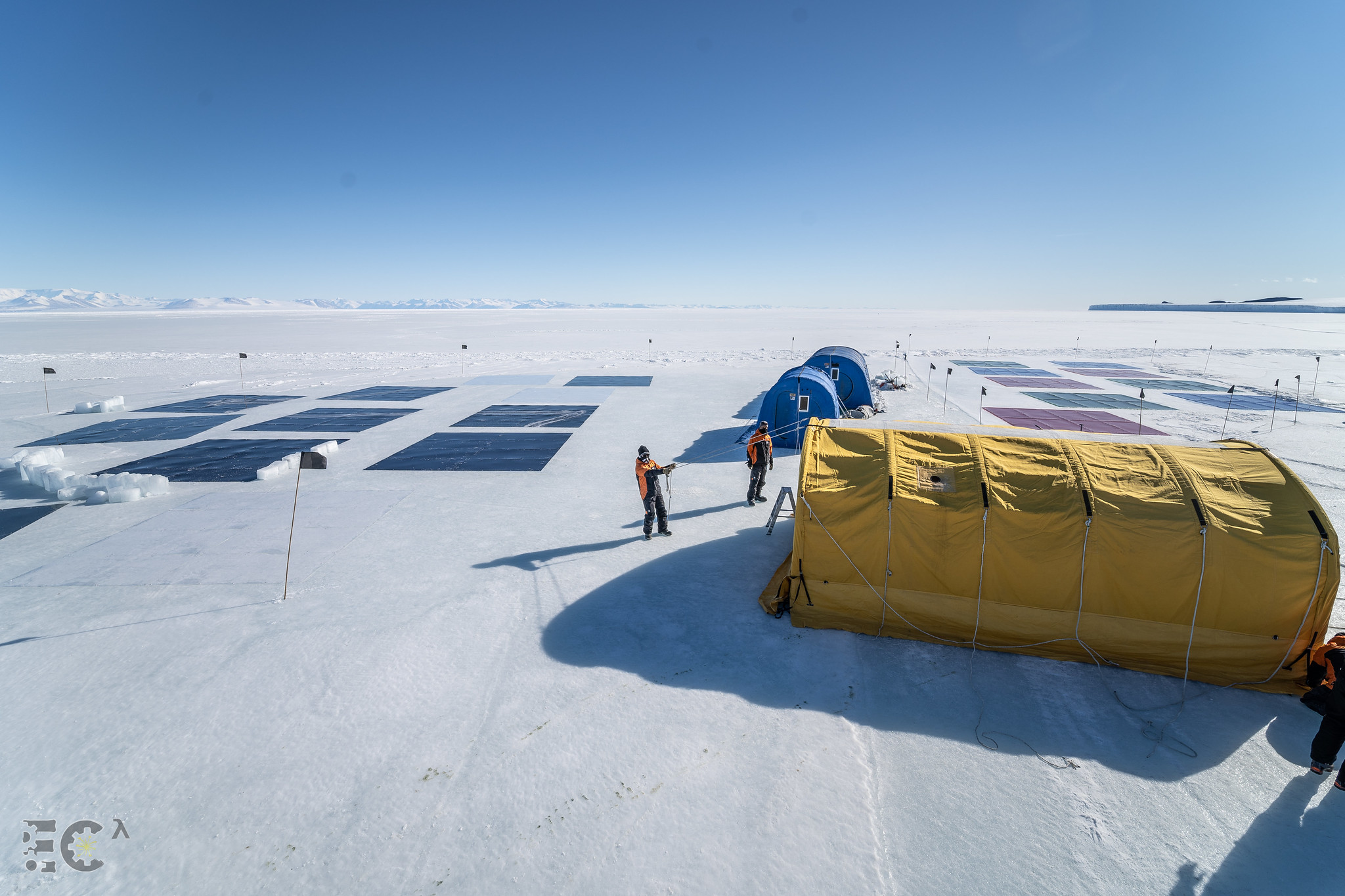
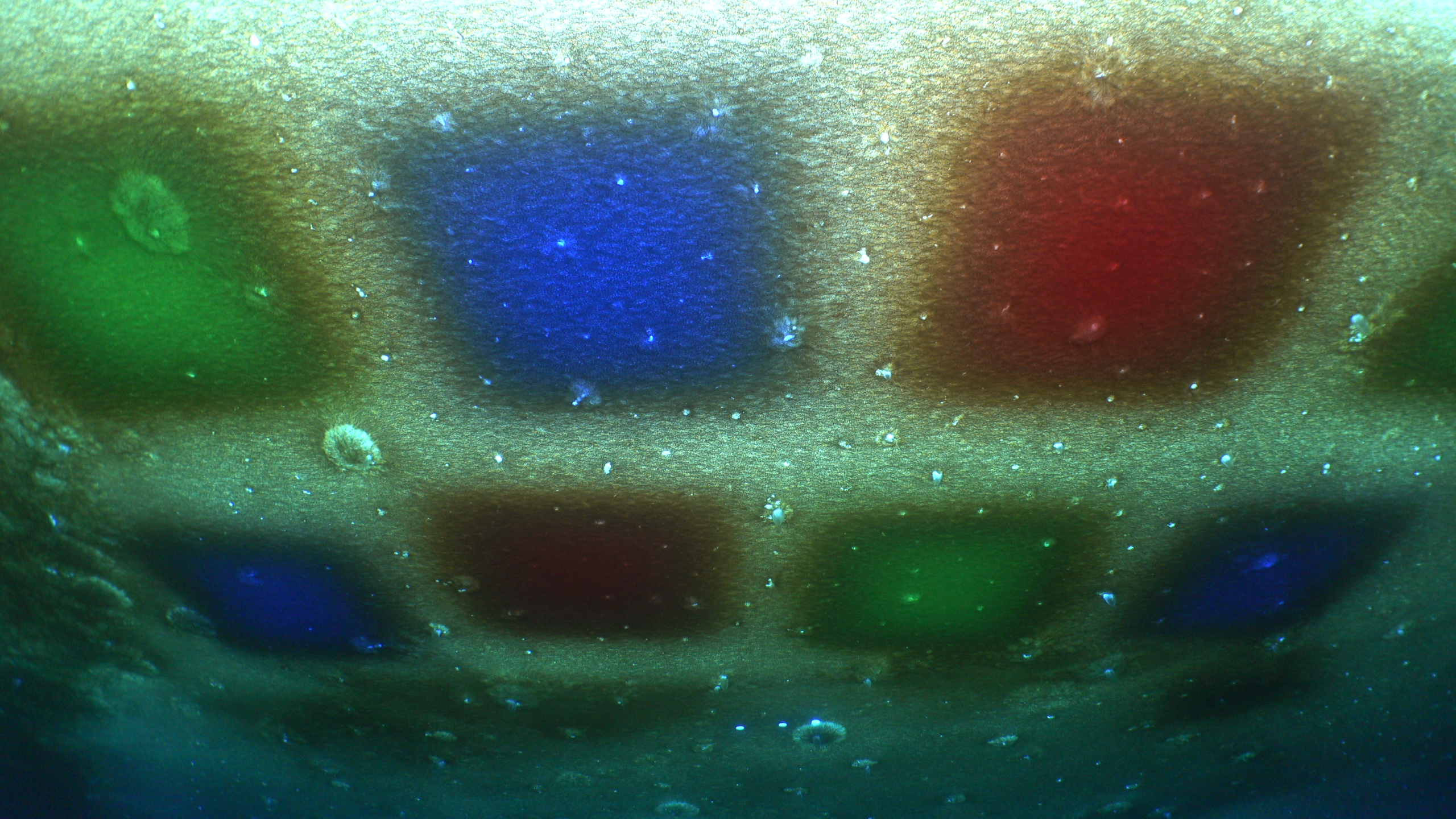
In 2019, the team installed coloured Perspex panels – red, green, blue, grey and black – on the sea ice at Cape Evans in East Antarctica. The red, green, and blue panels tweaked both the brightness and the color spectrum of the light – crucial for bacterial processes that rely on specific light wavelengths – while the black and grey panels adjusted only the light’s intensity, mimicking conditions such as heavier snow or thinner ice.
The results were striking. When light was reduced, algae concentrations shifted upwards into the ice, concentrating in the bottom few centimetres. Different colours of light also changed which species thrived, showing that changes in light 'spectral shade' or colour can reshape these communities.
Climate context
As Antarctica warms, snow cover and ice thickness might change, altering light conditions under the ice. Some regions may see less light due to heavier snow, while others may experience more light as ice thins. This research paper helps shed light onto how algae might respond to those shifts – knowledge that will help scientists predict future impacts on food webs and carbon cycles.
New ways to monitor life under ice
Traditionally, studying algae under sea ice means drilling through up to two metres of ice and melting samples – a slow and labour-intensive process. The team tested hyperspectral imaging, a technology that uses light to measure algae without drilling. It worked well, producing results that matched ice-core measurements of algal biomass and health, including chlorophyll-a levels and physiological indicators. This opens the door to autonomous sensors that could monitor changes year-round, feeding data into global observing networks.
“We developed optical techniques to track algal health without disturbing them,” Dr Cimoli said. “It’s a noticeable step towards monitoring these ecosystems remotely.”
From science to stamps
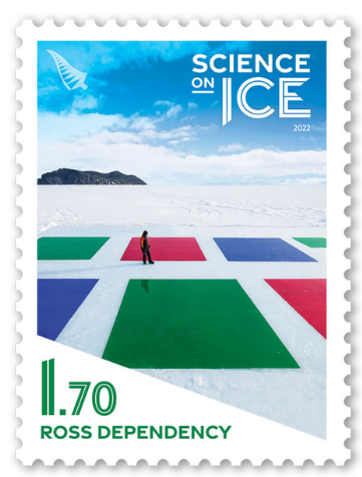
The project didn’t just make waves in science. In 2022, NZ Post released its Ross Dependency: Science on Ice stamp series, featuring Antarctic research – including imagery linked to this coloured-panel experiment.
“Seeing Antarctic science recognised in this way was truly rewarding,” Dr Cimoli said. “It’s a great example of international collaboration literally capturing all spectral 'shades' of life and light beneath the ice.”
Working together
This work builds on the legacy of the Antarctic Gateway Partnership (AGP) and the New Zealand Antarctic Research Institute (NZARI), whose support was critical to the original field campaigns. The current research team brings together collaborators from a range of institutions, including the Australian Centre for Excellence in Antarctic Science (ACEAS), the Institute for Marine and Antarctic Studies (University of Tasmania), the Australian Antarctic Program Partnership (AAPP), the Australian Antarctic Division (AAD), the Arctic Research Centre at Aarhus University, the Remote Sensing Research Group at the University of Bonn, and the School of Biological Sciences at Victoria University of Wellington.
Read the paper: Impact of experimental light regimes on Antarctic fast ice algal communities
Subscribe to our newsletter
For more Antarctic news and stories, subscribe to our mailing list here.