Sailing on the spectrum: an autistic perspective of life on a research voyage
By Rebecca Knight, University of Exeter, UK
In middle of the night, I jolt awake to the sound of a distant alarm. Is it an emergency? No, it's just one of the many everyday sounds of living on a ship. I'd wear earplugs but my subconscious clearly disapproves of them, and I always wake to find them clutched in my fists.
When I was offered a place on the CSIRO research vessel (RV) Investigator to Antarctica, I was both excited and nervous. It was a lifelong dream of mine to go on a voyage but also well outside my comfort zone. I was diagnosed with Autism a few years ago, but I still don’t feel like I’ve fully processed what it means for me. Seeing myself through that lens, I doubted if I would cope well in such a new situation, so I did what I always do when unsure – I researched the hell out of it! I found videos, articles, and spoke with as many colleagues who had worked at sea as possible. I realised how much overlap there was between this voyage and some of my most valued experiences, from working as a farmhand in a small team to overlanding across Central Asia with a group of strangers. I knew there would be struggles to navigate, but also that I might thrive. I accepted my place; next were the months of packing, an intensive medical and overpreparation!
I arrived in Hobart after the long journey from London, with my emotional support husband in tow and (probably) too many bags. As the airport transfer bus crossed the Tasman Bridge I saw RV Investigator for the first time, and everything finally felt real. I’d travelled over a few weeks before departure to [see more of Tasmania and] help with mobilisation – loading the ship with science gear and setting up the labs. I’m the only one from out of town involved, but I asked to join so I could meet colleagues and start to get familiar with the ship, all while still being able to go back to my hotel room for a break. My new shipmates put me at ease when they immediately make me feel included, and I received my first tour of the ship that wasn’t through a computer screen, making it much easier to picture what my life would be like on board for two months.
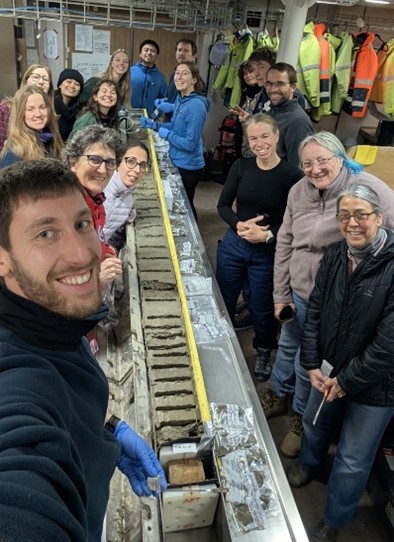
Once on board there were things I initially struggled with: constant noise, picking out the perfect clothes so that I didn’t overheat or chill to the bone, lack of private space during my shift (although at least I had a room to myself overnight!), analysis paralysis when picking a table to sit at when I walk into the mess, and frequent task switching to help with whatever work is top priority in any given hour. Initially, I felt off kilter when plans changed dramatically overnight. Now, I start every day by checking the operation plans from bed so I can better expect what the day has in store for me.

However, in other ways life on the ship has been perfect for me. Meal and break times provide a steady heartbeat to each day. I see the same faces from a small rotating cast and live in the same few rooms. I feel more and more at home. I find comfort in the signs with instructions and rules that are plastered on every wall – it’s not assumed that everyone knows how things work. Each member of our team brings different strengths, and I’m quickly looked to as the organised one. My need to be prepared pushes me to ask questions and make process maps that others also find helpful. Being curious is encouraged and we all love to learn about what science is being performed on board.
Sometimes everything gets a little overwhelming and I need to turn the music down in the shared lab or pop some noise cancelling headphones on (an essential on the packing list!), but everyone has always been really understanding. Reassuringly, I don’t feel alone in that experience; everyone has hit a point where they feel uncomfortable, whether it’s because of cold, noise, stress or fatigue. Over the weeks my shift-mates have become more like family. We live and work in such proximity that we have become in tune with each other’s needs. Everyone is always looking for ways to help, whether that’s by a bit of encouragement, helping hold something heavy, offering a better pair of gloves, or cheering up those feeling blue. This is key to our success in such an isolated and extreme environment. Due to the awareness we have developed, in many ways I feel my neurodivergence is better accommodated here than back on land.
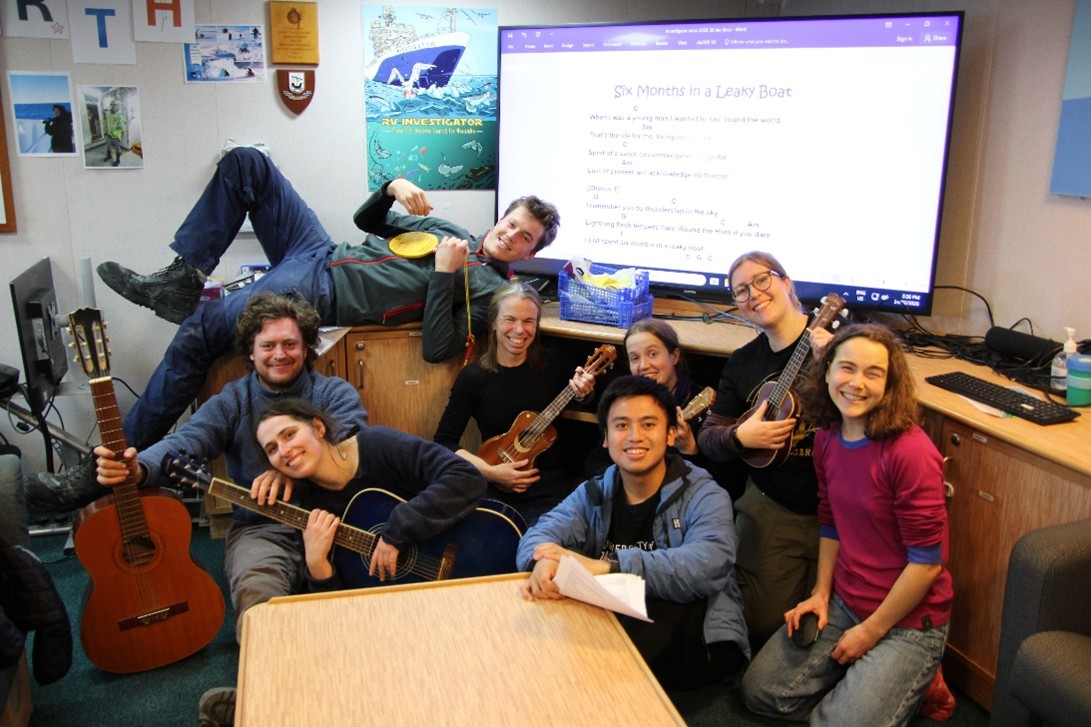
I can only speak from my own experience, but I have found a wonderfully supportive group at the edge of the world. I hope through sharing my story that I can normalise being neurodivergent in scientific field work and show that, though it may not suit everyone, being autistic shouldn’t necessarily hold anyone back from joining a research voyage. For the right person, as for me, it could be an unforgettable, once-in-a-lifetime experience.
Join us on the expedition
The IMAS-led research on the expedition will be showcased through blogs released through the Australian Centre for Excellence in Antarctic Science and can be followed on social media at Sea2SchoolAu Facebook, Instagram, LinkedIn and the CSIRO Voyage (IN2026_V01) Page
This voyage is supported by the Australian Research Council Special Research Initiatives Australian Centre for Excellence in Antarctic Science (Project Number SR200100008), the Australian Research Council's Discovery Projects funding scheme (DP250100886), the COOKIES GEOTRACES process study GIpr13, Horizon Europe European Research Council (ERC) Frontier Research Synergy Grants; the Italian National Antarctic Program (CNR:DSSTTA) and Securing Antarctica’s Environmental Future (SAEF) (Project Number SR200100005) and by a grant of sea time on RV Investigator from the CSIRO Marine National Facility (MNF).
Top header image: ACEAS/IMAS scientists and CSIRO staff during COOKIES voyage preparations in Hobart (Image Credit: CSIRO/Fraser Johnston)

