COOKIES

COOKIES Blog #1 – Cook Ice Shelf research: why it’s important

Cook Ice Shelf research: why it’s important By Dr Linda Armbrecht, Australian Centre for Excellence in Antarctic Science / Institute for Marine and Antarctic Studies (University of Tasmania) and Joline Lalime, Sea2SchoolAU The Cook Ice Shelf sits in a remote part of East Antarctica, but it plays a major role in Earth’s climate system. Recent […]

COOKIES Blog #1 – Cook Ice Shelf research: why it’s important Read More »
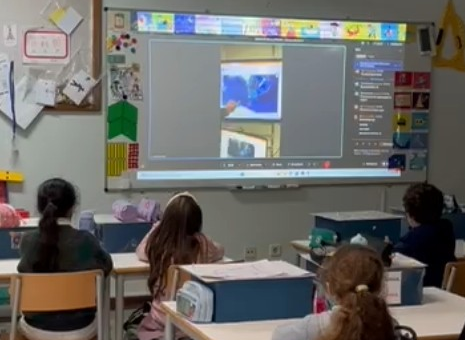
EB1JI do Parrinho School, Portugal (Credit F. Rosario)

COOKIES Blog #2 – Voyage to Antarctica – without leaving the classroom

Voyage to Antarctica – without leaving the classroom By Joline Lalime, Sea2SchoolAU EB1JI do Parrinho School, Portugal (Image Credit: F. Rosario) How much do you or your students know about Australia’s research vessel, the CSIRO research vessel (RV) Investigator? Why do scientists travel thousands of kilometres south to study the oceans around Antarctica? How does

COOKIES Blog #2 – Voyage to Antarctica – without leaving the classroom Read More »

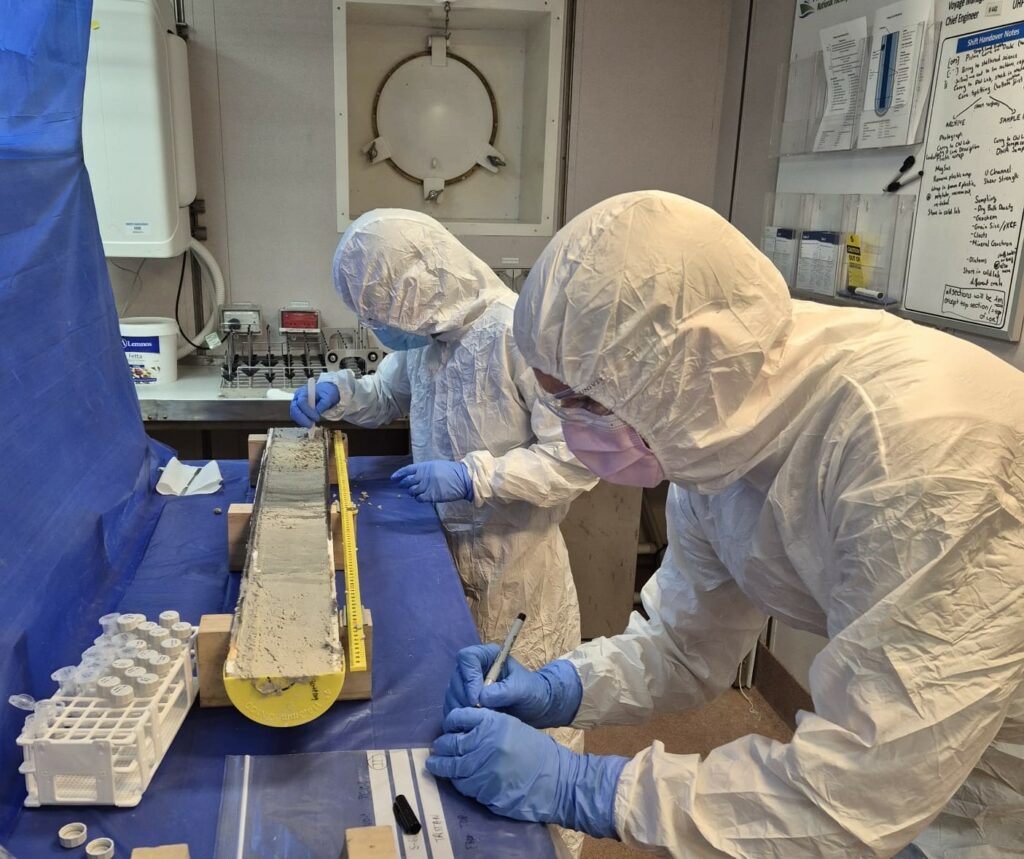
Ana Gomes, Research Fellow (back) and Dr Tristan Cordier, Senior Researcher from NORCE (Norwegian Research Centre) conducting sedaDNA sampling from a Piston Core section (Image Credit: L. Armbrecht)

COOKIES Blog #3 – What’s the big deal about sedimentary ancient DNA?

What’s the big deal about sedimentary ancient DNA? By Ana Gomes, Research Fellow, NORCE/Bjerknes Centre for Climate Research and Joline Lalime, Sea2SchoolAU Most people don’t get excited about mud – but for us, there is nothing more satisfying than a long, continuous, and well-preserved sediment core. What looks like ordinary mud is actually a layered

COOKIES Blog #3 – What’s the big deal about sedimentary ancient DNA? Read More »

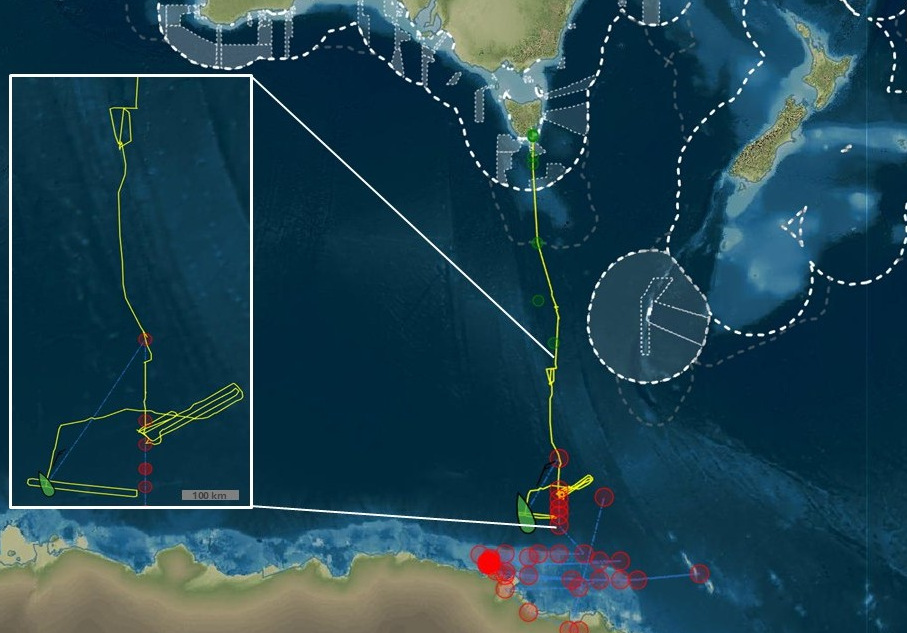
RV Investigator’s Track, COOKIES Voyage to date

COOKIES Blog #4 – Listening to the deep: how sound maps the seabed

Listening to the deep: how sound maps the seabed By Laura De Santis, Senior Scientist (National Institute of Oceanography and Applied Geophysics OGS, Trieste, Italy) and Joline Lalime, Sea2SchoolAU The seafloor in the region surrounding the Antarctic continent is not flat and uninteresting; rather, it is characterised by distinctive bedforms – wave-like features made of

COOKIES Blog #4 – Listening to the deep: how sound maps the seabed Read More »

COOKIES Blog #5 – The longest story ever pulled from the seafloor on the RV Investigator

The longest story ever pulled from the seafloor on the RV Investigator By Dr Linda Armbrecht, Australian Centre for Excellence in Antarctic Science/Institute for Marine and Antarctic Studies (University of Tasmania) and Joline Lalime, Sea2SchoolAU Sediment lying beneath the ocean floor acts like a natural archive. Layer by layer, fine grains and pieces of rock

COOKIES Blog #5 – The longest story ever pulled from the seafloor on the RV Investigator Read More »

COOKIES Blog #6 – International collaborative science at the edge of Antarctica

International collaborative science at the edge of Antarctica By Joline Lalime, Sea2SchoolAu and Dr Linda Armbrecht, ACEAS/IMAS (University of Tasmania) Research nearby the Cook Ice Shelf is only possible through strong international collaboration. This remote and poorly studied region of East Antarctica demands a wide range of expertise, technologies, and perspectives – and this voyage

COOKIES Blog #6 – International collaborative science at the edge of Antarctica Read More »

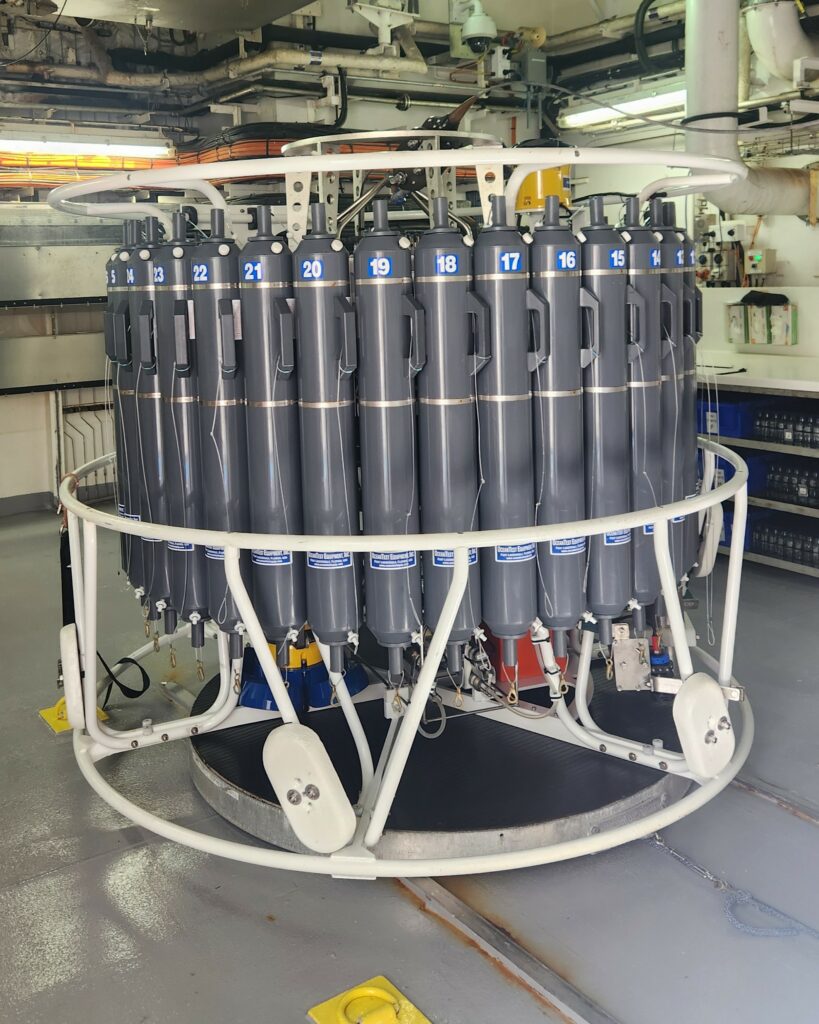
A CTD after it has been deployed – ready to be sampled by scientists. Each bottle/Niskin has been closed at a specific depth. Credit: Joline Lalime.

COOKIES Blog #7 – Global circulation and the humble CTD

Global circulation and the humble CTD By Izzy White, University of Southampton (England) and Joline Lalime, Sea2SchoolAU The world has five ocean basins: Pacific, Atlantic, Arctic, Indian, and Southern with the Atlantic and Pacific basins divided again into Northern and Southern parts. Figure 1: Diagram of the major ocean basins and their gyres. Source: https://oceaninfo.com/list/ocean-currents/

COOKIES Blog #7 – Global circulation and the humble CTD Read More »

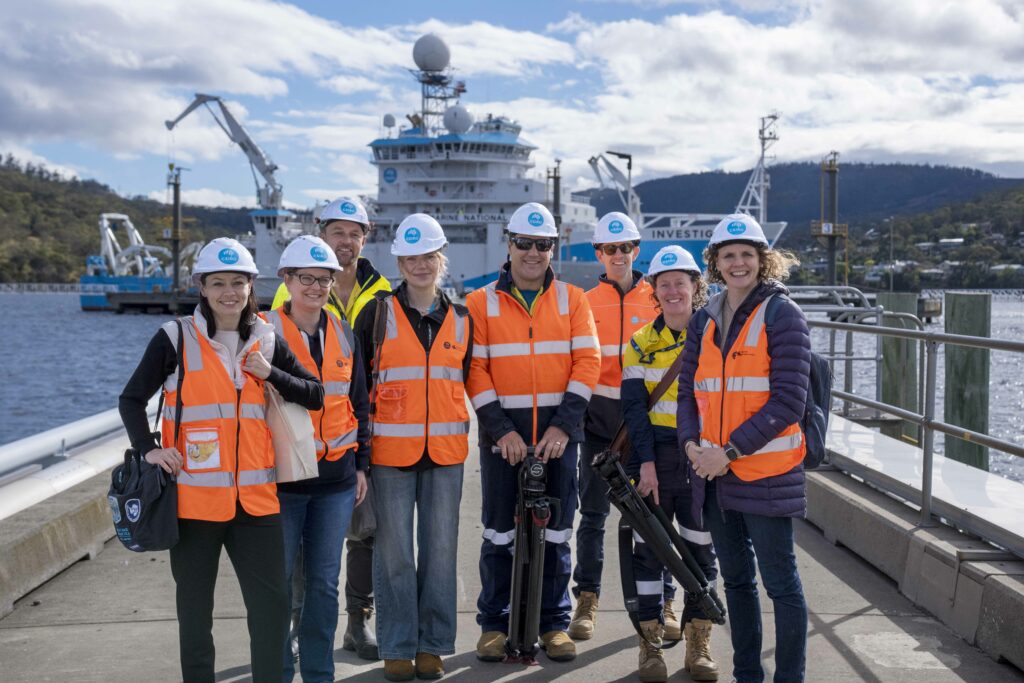
International Women and Girls in STEM (Photo 1). L–R (Back): Lucinda Duxbury, Rebecca Knight, Izzy White, Dr Amy Leventer, Dr Sally Lau, Gina Paroz, Amy Wells, Ella Pietraroia, Pavie Nanthasurasak. L–R (Front): Dr Fiorenza Torricella, Dr Amaranta Focardi, Talia Hawkes, Sarah Jessop, Dr Linda Armbrecht, Dr Laura De Santis, Joline Lalime, Ana Gomes. Seated: Dr Jan Strugnell, Dr Katharine Prata. Image credit: CSIRO-Kieran Sheehan.

COOKIES Blog #8 – Leading from the front: women shaping Antarctic science on the COOKIES voyage

Leading from the front: women shaping Antarctic science on the COOKIES voyage By Joline Lalime, Sea2SchoolAU and Dr Linda Armbrecht, ACEAS/IMAS (University of Tasmania) Antarctica, the Southern Ocean and marine expeditions were once territories where women were excluded by tradition, superstition (bad luck), and systemic barriers. Today, that history is being actively rewritten through leadership,

COOKIES Blog #8 – Leading from the front: women shaping Antarctic science on the COOKIES voyage Read More »

Microscopy image of Corethron pennatum, a phytoplankton collected from surface samples of the Southern Ocean. Image credit: A. Focardi.

COOKIES Blog #9 – The invisible engineers of the Southern Ocean: a story from a drop of seawater

The invisible engineers of the Southern Ocean: a story from a drop of seawater By Amaranta Focardi, University of Technology Sydney, and Joline Lalime, Sea2SchoolAU Did you know that a single drop of seawater can contain millions of microbes? Much like the miniature universe hidden inside a marble in Men in Black, an entire world

COOKIES Blog #9 – The invisible engineers of the Southern Ocean: a story from a drop of seawater Read More »