‘Sea ice factory’ in East Antarctica revealed as unexpected global current driver
A new study by Australian and Japanese researchers has uncovered a surprising source of deep-ocean ventilation in East Antarctica – one that could have implications for global ocean currents and climate systems.
The research, published in the Nature journal Communications Earth & Environment, was led by Dr Kaihe Yamazaki from the ARC Australian Centre for Excellence in Antarctic Science (ACEAS) and scientists from the Australian Antarctic Program Partnership (AAPP) at the University of Tasmania and CSIRO.
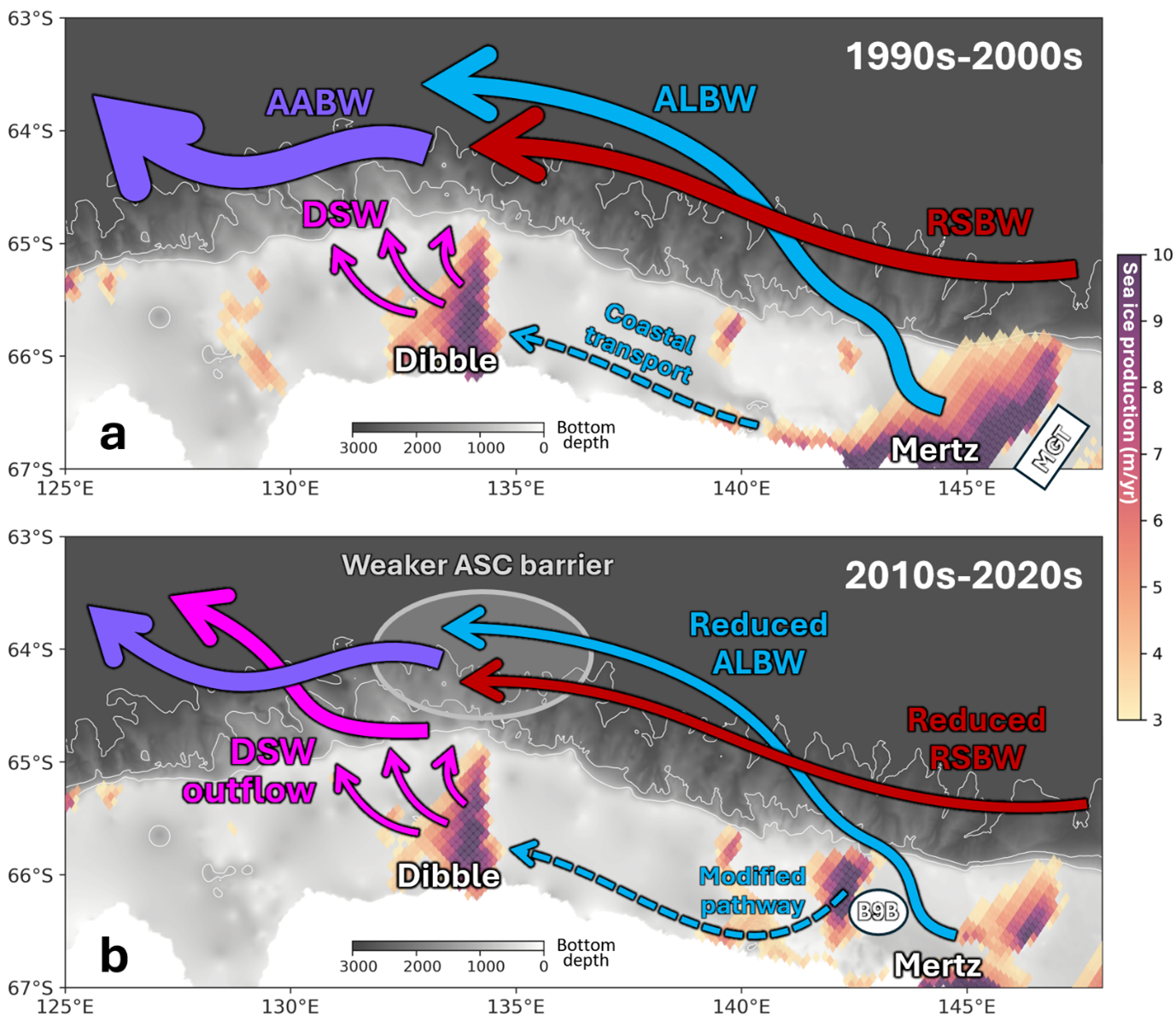
It reveals the first direct evidence of dense shelf water outflow from the Dibble Polynya, a coastal region off Wilkes Land previously overlooked in Antarctic Bottom Water (AABW) formation. AABW is critical for ventilating the deep ocean and redistributing heat and carbon, making it a cornerstone of Earth’s climate stability.
“We didn’t think this polynya was a source of Antarctic Bottom Water,” Dr Yamazaki explained. “This is the first proper observation confirming its outflow.”
What is a polynya?
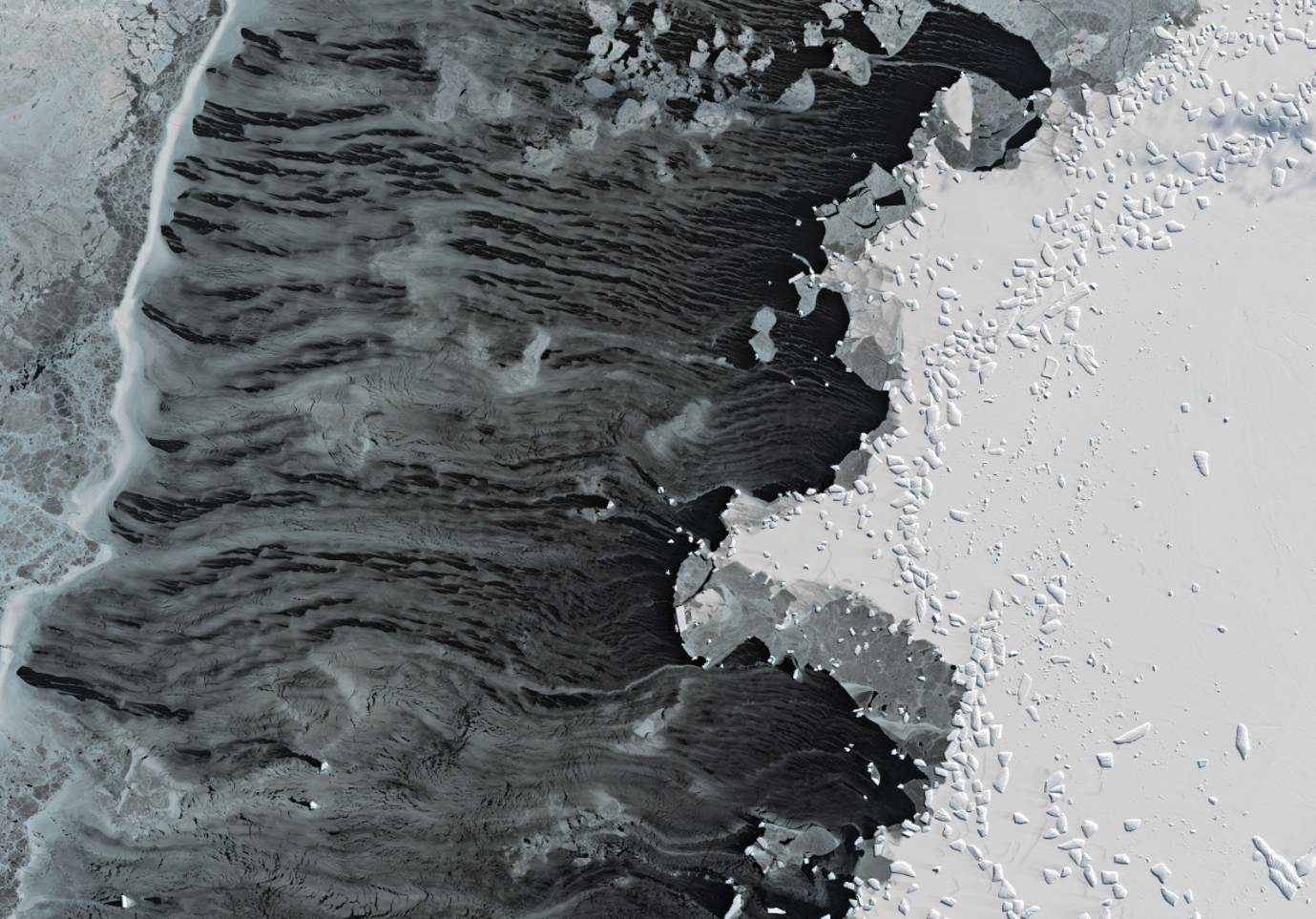
A polynya is an area of open water surrounded by sea ice, typically found in polar regions like the Arctic and Antarctic. Coastal polynyas are sustained by strong katabatic winds (cold air flowing off the Antarctic continent towards the coast) and can persist throughout winter, even when the surrounding ocean is completely ice-covered.
Polynyas are ecologically and climatically important because they provide breathing and feeding areas for marine mammals and birds, influence ocean circulation and heat exchange between the ocean and atmosphere, and play a key role in the formation of dense, cold water that drives global ocean currents.
Polynyas are known as ‘sea ice factories’ because they produce vast amounts of new ice. By continuously freezing sea water (which leaves behind dense salty brine that sinks, and cascades down the continental slope to mix with surrounding water masses), polynyas can produce very dense water, which powers the global overturning circulation.
Why is AABW important?
Antarctic Bottom Water (AABW) is the densest water mass on Earth. Formed when cold, salty water sinks off the Antarctic coast, AABW flows into the deepest parts of the global ocean, driving the Meridional Overturning Circulation (MOC) – a system that redistributes heat, carbon, and nutrients worldwide over centuries to millennia.
This process regulates Earth’s climate and supports marine ecosystems. Changes in AABW formation can affect ocean heat and carbon storage, sea life, and even global sea level by influencing the movement of warmer ocean waters that melt Antarctic ice shelves and glaciers.
“It’s all about the global balance in heat, water, and carbon. These processes directly affect the planet’s habitability and our future,” Dr Yamazaki said.
The discovery
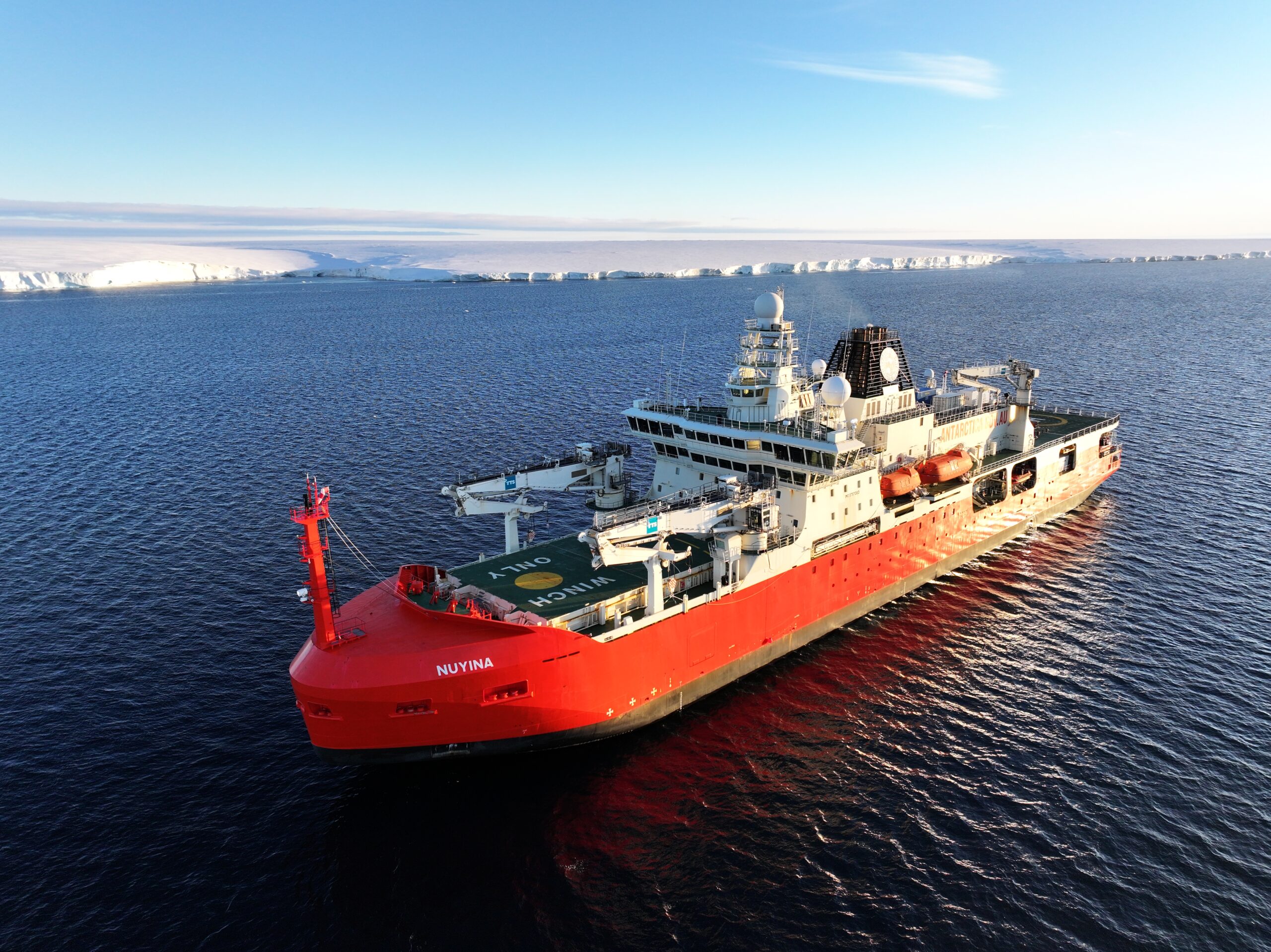
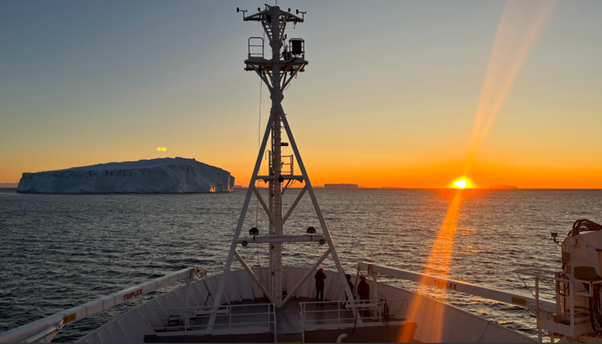
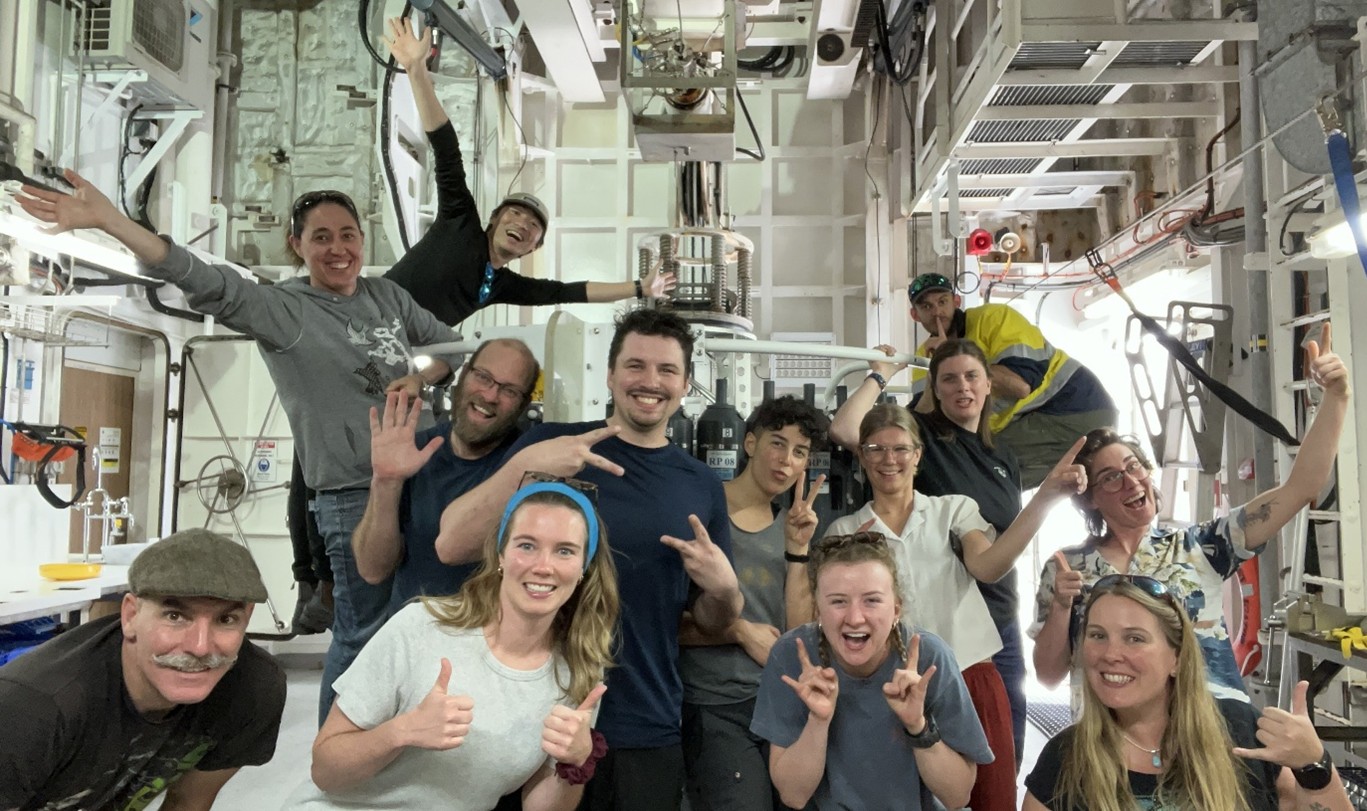
During the 2024 Multidisciplinary Investigations of the Southern Ocean (MISO) voyage on CSIRO research vessel RV Investigator, researchers deployed high-precision sensors and detected oxygen-rich water cascading downslope from the Dibble Polynya – a signal never captured before.
Chief scientist on-board the voyage, Dr Annie Foppert of AAPP, said that marine science voyages like MISO are absolutely critical for observing long-term changes in the ocean and climate system.
“Without MISO and the highly calibrated oxygen sensors we were able to use, we would not have known that the Dibble Polynya was exporting Antarctic Bottom Water,” she said.
Historical data indicates that dense shelf water has formed there for over 50 years, but only recently has it begun escaping into the deep ocean across the continental slope.
Upstream glacier collapse changed the deep circulation
Why now? The study points to the dramatic calving of the Mertz Glacier Tongue, 650 km away from the Dibble Polynya to the east, which happened in 2010. This event halved sea ice production in the nearby Mertz Polynya, reducing the formation of the densest bottom water there.
“This reduction of upstream denser bottom water weakened the slope current barrier off the Dibble Polynya,” Dr Yamazaki explained. “That dynamically allowed Dibble’s water to escape into the abyss.”
The role of a grounded iceberg
A gigantic iceberg calved from the Mertz Glacier has been grounded nearby on the continental shelf for more than 15 years. This has changed the extent of the Mertz Polynya and has introduced glacial meltwater, changing the distribution of dense shelf water there. This upstream change might also have affected the recent outflow from the Dibble Polynya.
These observations highlight how climate-driven changes in Antarctica’s icescape can drastically reshape the deep-ocean circulation.
This water is different
Unlike the classic, extremely dense water formed in major polynyas, the water flowing from Dibble is ‘not-so-dense’. While still heavy enough to sink and ventilate the abyssal ocean, it belongs to a lighter density class than traditional AABW.
This matters because lighter water ventilates shallower layers of the abyss, potentially shortening the time heat and carbon remain locked away from the atmosphere and affecting the ocean’s capacity to mitigate global heating.
“The densest variety of bottom water is reducing – probably due to climate change,” Dr Yamazaki said. “That could advantage the outflow of not-so-dense shelf water all around Antarctica, like what we observed at the Dibble Polynya.”
Global implications
This tendency toward lighter ventilation could reformulate the MOC, changing the storage and cycling of heat and carbon in the abyssal ocean, and influencing everything from climate to sea-level rise.
“Smaller or overlooked polynyas could become more important as the climate warms,” Dr Yamazaki said. “We need to know more about these processes because changes are happening faster than we expected.”
What’s next?
Dr Yamazaki stresses the urgent need for more observations – especially in winter, when most bottom water formation occurs.
“Data are totally lacking,” he said. “Observing the state of the Southern Ocean and Antarctica is critical for predicting how our planet will operate in the coming decades to centuries.”
Read the paper
Read the full paper: Emerging outflow of not-so-dense shelf water from an East Antarctic polynya by Kaihe Yamazaki, Annie Foppert, Kathryn L. Gunn, Haruhiko Kashiwase, Stephen R. Rintoul, Julia Neme, Sophie Bestley, Paul Spence, Tatsuya Isoda, Koji Matsuoka, Esmee M. van Wijk and Laura Herraiz-Borreguero.
This research was supported by a grant of sea time on RV Investigator from the CSIRO Marine National Facility which is supported by the Australian Government’s National Collaborative Research Infrastructure Strategy (NCRIS).
Subscribe to our newsletter
For more Antarctic news and stories, subscribe to our mailing list here.