Our objective is to help communities prepare for climate risks emerging from East Antarctica and the Southern Ocean. We will do this by integrating knowledge of the region’s ocean, atmosphere, cryosphere, and ecosystems.
Annual
Report
2024
Denman
Marine
Voyage
The Denman Marine Voyage (DMV) will take more than 60 scientists to the Denman Glacier region for two months in late February, 2025
Science and technical teams will work closely with the ship’s crew across 24-hour shifts and use a range of methods - including bathymetry (sea floor mapping), rock and sediment sampling, sea-glider and mooring deployments, seal tagging and physical and chemical oceanography - to learn more about the factors influencing the glacier’s melt rate and its possible contribution to higher sea levels in future
Welcome to Professor Sridhar Anandakrishnan
Welcome to Professor Sridhar Anandakrishnan ACEAS is honoured to welcome a special guest over the coming months. Professor Sridhar Anandakrishnan is with us from Pennsylvania, USA as a visiting Fulbright Scholar. His project is entitled ‘East meets West: integrating results […]
Read More about Welcome to Professor Sridhar AnandakrishnanSuccessful mooring deployment to unlock deep secrets of glacier stability
Successful mooring deployment to unlock deep secrets of glacier stability The successful deployment of a deep-water mooring line in between the Scott and Denman Glaciers will feed back critical long-term data on the area’s warming waters, giving researchers new insights […]
Read More about Successful mooring deployment to unlock deep secrets of glacier stabilityMelting at the fringes
Melting at the fringes When it comes to melting ice, the process in the oceans isn’t as straightforward as it is in a glass of water. In a new review, scientists reveal the multitude of ocean processes that contribute to […]
Read More about Melting at the fringesRevealing the Underbelly: Antarctic Under-Ice Ocean
Revealing the Underbelly: Antarctic Under-Ice Ocean The Southern Ocean plays a vital role in regulating Earth’s climate, yet its icy depths have long remained shrouded in mystery. Now, a groundbreaking study published in the Journal of Geophysical Research: Oceans (JGR […]
Read More about Revealing the Underbelly: Antarctic Under-Ice OceanBest paper awards: first round announced
Best paper awards: first round announced We are pleased to announce that the following papers have received the first of the ACEAS best paper awards: Category: Postdoctoral Research Associates Katharina Hochmuth (UTAS) on board the RV Polarstern Katharina Hochmuth (J […]
Read More about Best paper awards: first round announcedCOOKIES Blog #3 – What’s the big deal about sedimentary ancient DNA?
What’s the big deal about sedimentary ancient DNA? By Ana Gomes, Research Fellow, NORCE (Norwegian […]
Read More about COOKIES Blog #3 – What’s the big deal about sedimentary ancient DNA?COOKIES Blog #2 – Voyage to Antarctica – without leaving the classroom
Voyage to Antarctica – without leaving the classroom By Joline Lalime, Sea2SchoolAU EB1JI do Parrinho […]
Read More about COOKIES Blog #2 – Voyage to Antarctica – without leaving the classroomCOOKIES Blog #1 – Cook Ice Shelf research: why it’s important
Cook Ice Shelf research: why it’s important By Dr Linda Armbrecht, Australian Centre for Excellence […]
Read More about COOKIES Blog #1 – Cook Ice Shelf research: why it’s important‘Sea ice factory’ in East Antarctica revealed as unexpected global current driver
‘Sea ice factory’ in East Antarctica revealed as unexpected global current driver A new study […]
Read More about ‘Sea ice factory’ in East Antarctica revealed as unexpected global current driverACEAS highlights of 2025: a year of discovery, impact and urgency
ACEAS highlights of 2025: a year of discovery, impact and urgency 2025 marked a transformative […]
Read More about ACEAS highlights of 2025: a year of discovery, impact and urgency
Denman
Terrestrial
Campaign
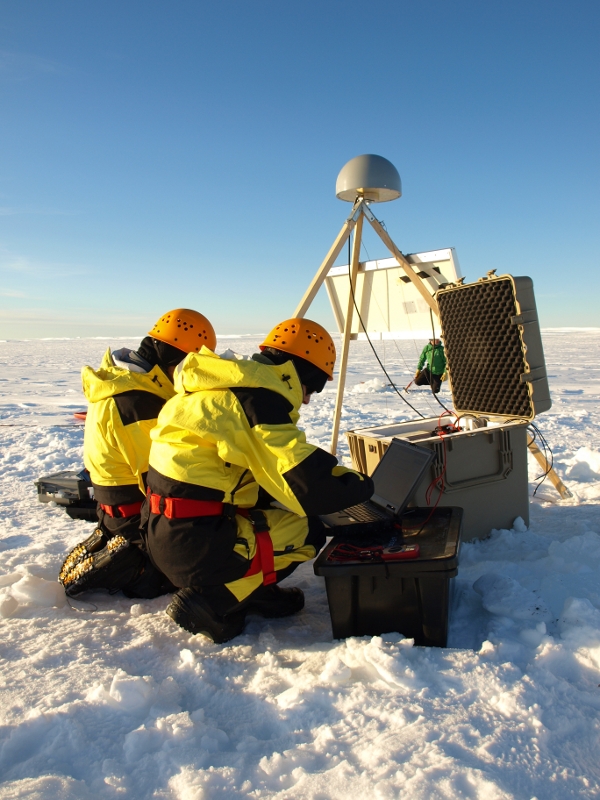
The Denman Terrestrial (land) Campaign runs from 2022 – 2025 and aims to increase our understanding of the Denman Glacier's history and stability through research projects staged from a deep field camp at Bunger Hills, about 450 kilometres from Casey research station