Our objective is to help communities prepare for climate risks emerging from East Antarctica and the Southern Ocean. We will do this by integrating knowledge of the region’s ocean, atmosphere, cryosphere, and ecosystems.
Denman
Marine
Voyage
The Denman Marine Voyage (DMV) will take more than 60 scientists to the Denman Glacier region for two months in late February, 2025
Science and technical teams will work closely with the ship’s crew across 24-hour shifts and use a range of methods - including bathymetry (sea floor mapping), rock and sediment sampling, sea-glider and mooring deployments, seal tagging and physical and chemical oceanography - to learn more about the factors influencing the glacier’s melt rate and its possible contribution to higher sea levels in future
COOKIES Blog #4 – Listening to the deep: how sound maps the seabed
Listening to the deep: how sound maps the seabed By Laura De Santis, Senior Scientist (National Institute of Oceanography and Applied Geophysics OGS, Trieste, Italy) and Joline Lalime, Sea2SchoolAU The seafloor in the region surrounding the Antarctic continent is not […]
Read More about COOKIES Blog #4 – Listening to the deep: how sound maps the seabedCOOKIES Blog #3 – What’s the big deal about sedimentary ancient DNA?
What’s the big deal about sedimentary ancient DNA? By Ana Gomes, Research Fellow, NORCE/Bjerknes Centre for Climate Research and Joline Lalime, Sea2SchoolAU Most people don’t get excited about mud – but for us, there is nothing more satisfying than a […]
Read More about COOKIES Blog #3 – What’s the big deal about sedimentary ancient DNA?COOKIES Blog #2 – Voyage to Antarctica – without leaving the classroom
Voyage to Antarctica – without leaving the classroom By Joline Lalime, Sea2SchoolAU EB1JI do Parrinho School, Portugal (Image Credit: F. Rosario) How much do you or your students know about Australia’s research vessel, the CSIRO research vessel (RV) Investigator? Why […]
Read More about COOKIES Blog #2 – Voyage to Antarctica – without leaving the classroomCOOKIES Blog #1 – Cook Ice Shelf research: why it’s important
Cook Ice Shelf research: why it’s important By Dr Linda Armbrecht, Australian Centre for Excellence in Antarctic Science / Institute for Marine and Antarctic Studies (University of Tasmania) and Joline Lalime, Sea2SchoolAU The Cook Ice Shelf sits in a remote […]
Read More about COOKIES Blog #1 – Cook Ice Shelf research: why it’s important‘Sea ice factory’ in East Antarctica revealed as unexpected global current driver
‘Sea ice factory’ in East Antarctica revealed as unexpected global current driver A new study by Australian and Japanese researchers has uncovered a surprising source of deep-ocean ventilation in East Antarctica – one that could have implications for global ocean […]
Read More about ‘Sea ice factory’ in East Antarctica revealed as unexpected global current driverThe beloved emperor penguin and Antarctic fur seal are now officially endangered. Here’s what can be done
The beloved emperor penguin and Antarctic fur seal are now officially endangered. Here’s what can […]
Read More about The beloved emperor penguin and Antarctic fur seal are now officially endangered. Here’s what can be doneWhere Antarctic science meets policy
Where Antarctic science meets policy Two polar research programs led by the University of Tasmania […]
Read More about Where Antarctic science meets policyHow elephant seals can help us understand a changing Southern Ocean
How elephant seals can help us understand a changing Southern Ocean Every year, thousands of […]
Read More about How elephant seals can help us understand a changing Southern OceanCOOKIES Blog #14 – COOKIES wrap up: 55 Days in the Southern Ocean
COOKIES wrap up: 55 Days in the Southern Ocean By Dr Linda Armbrecht, Australian Centre […]
Read More about COOKIES Blog #14 – COOKIES wrap up: 55 Days in the Southern OceanTasmania unites for Antarctic science
ACEAS Director Professor Matt King. Image credit: Peter W Allen UTAS. Tasmania unites for Antarctic […]
Read More about Tasmania unites for Antarctic science
Denman
Terrestrial
Campaign
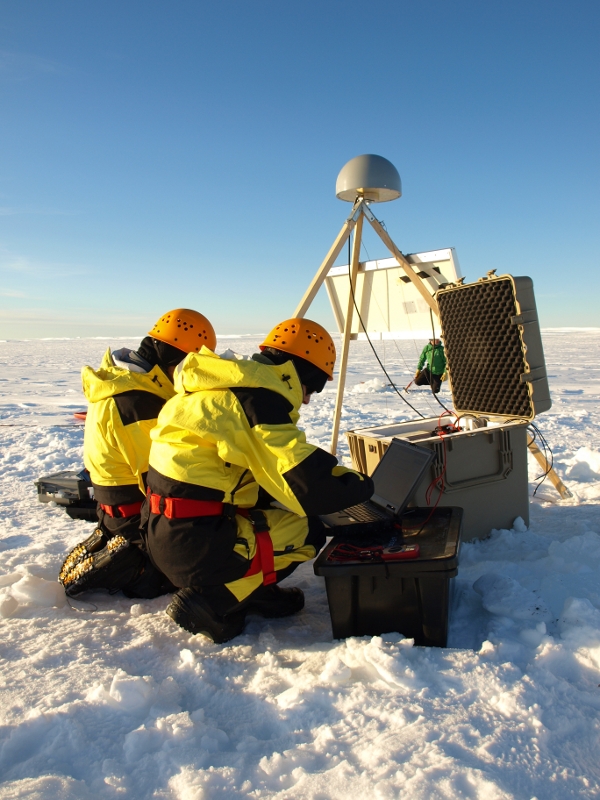
The Denman Terrestrial (land) Campaign runs from 2022 – 2025 and aims to increase our understanding of the Denman Glacier's history and stability through research projects staged from a deep field camp at Bunger Hills, about 450 kilometres from Casey research station