What’s the big deal about sedimentary ancient DNA?
By Ana Gomes, Research Fellow, NORCE (Norwegian Research Centre) and Joline Lalime, Sea2SchoolAU
Most people don’t get excited about mud – but for us, there is nothing more satisfying than a long, continuous, and well-preserved sediment core. What looks like ordinary mud is actually a layered archive of the ocean’s past. Sediment is made up of tiny particles of rock, minerals, organic matter, and microscopic remains that are transported by water and ice before settling on the seafloor. Over time, these layers slowly build up, recording environmental and biological changes much like pages in a history book.
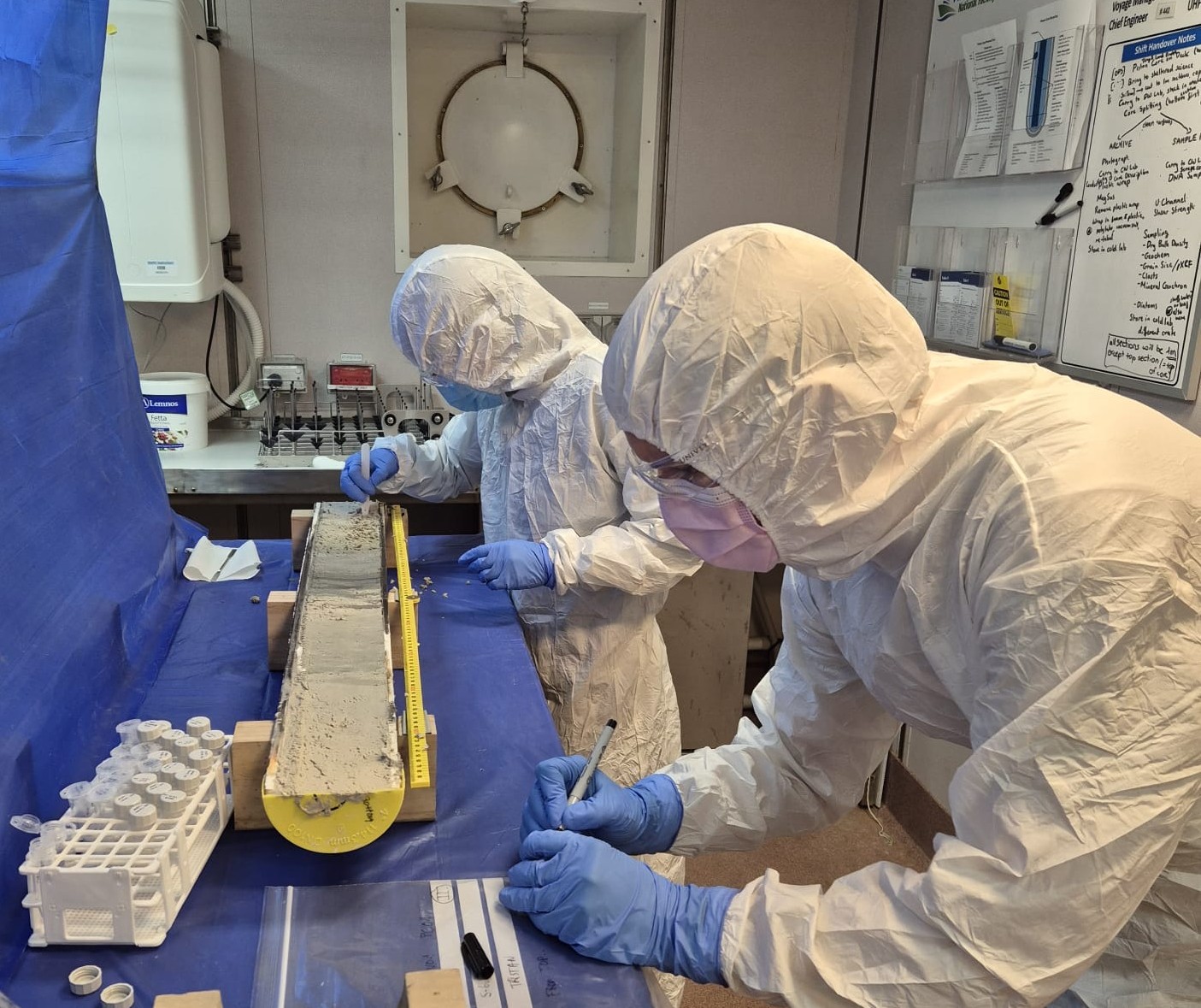
To access sediment buried deep beneath the ocean floor, we use specialised coring equipment, including multi-corers, Kasten corers, and piston corers. This equipment works a bit like giant apple corers, plunging vertically into the seabed and extracting long cylinders of sediment. Collecting these cores requires many hours of coordinated teamwork between the ship’s crew, CSIRO technical staff, and researchers on board. When the cores are brought back to the surface, they reveal a timeline of the past, sometimes stretching back thousands or even millions of years.
Each scoop of sediment we collect from the core section contains tiny, often degraded fragments of sedimentary ancient DNA, known as sedaDNA. This genetic material comes from organisms that once lived in the water column or on the seafloor – including plankton, algae, bacteria, and animals. Although the DNA is degraded and invisible to the naked eye, it still carries valuable information about past marine life.
Providing a molecular record of past marine ecosystems, sedaDNA allows us to investigate how life in the oceans responded to environmental and climate changes over thousands (even millions!) of years. By analysing sedaDNA, we can reconstruct shifts in biodiversity, track the appearance or disappearance of species, and examine how ecosystems changed during periods of warming, cooling, or altered ocean circulation. This approach gives us a far more complete picture of the past than traditional methods alone, such as fossil identification or chemical analysis of sediments, which may miss soft-bodied or microscopic organisms that do not leave physical traces behind.
Working with sedaDNA requires highly controlled and careful handling procedures. Ancient DNA is fragile and easily overwhelmed by modern DNA, which is more abundant and intact. To avoid contamination and protect the ancient genetic signal, it’s important that we work in a separate clean lab. We wear full protective clothing, including masks, gloves, safety glasses, and full-body suits, and all tools and work surfaces are thoroughly sterilised using bleach.
Is it messy work? YES! But a bucket full of mud is never just mud. It holds clues about how oceans and marine life responded to past environmental shifts. We are especially interested in past periods of warming and cooling that offer valuable insights into how today’s marine ecosystems may respond to ongoing and future climate change.
Join us on the expedition
The IMAS-led research on the expedition will be showcased through blogs released through the Australian Centre for Excellence in Antarctic Science and can be followed on social media at Sea2SchoolAu Facebook, Instagram, LinkedIn and the CSIRO Voyage (IN2026_V01) Page.
This voyage is supported by the Australian Research Council Special Research Initiatives Australian Centre for Excellence in Antarctic Science (Project Number SR200100008), the Australian Research Council's Discovery Projects funding scheme (DP250100886), the COOKIES GEOTRACES process study GIpr13, Horizon Europe European Research Council (ERC) Frontier Research Synergy Grants; the Italian National Antarctic Program (CNR:DSSTTA) and Securing Antarctica’s Environmental Future (SAEF) (Project Number SR200100005) and by a grant of sea time on RV Investigator from the CSIRO Marine National Facility (MNF).
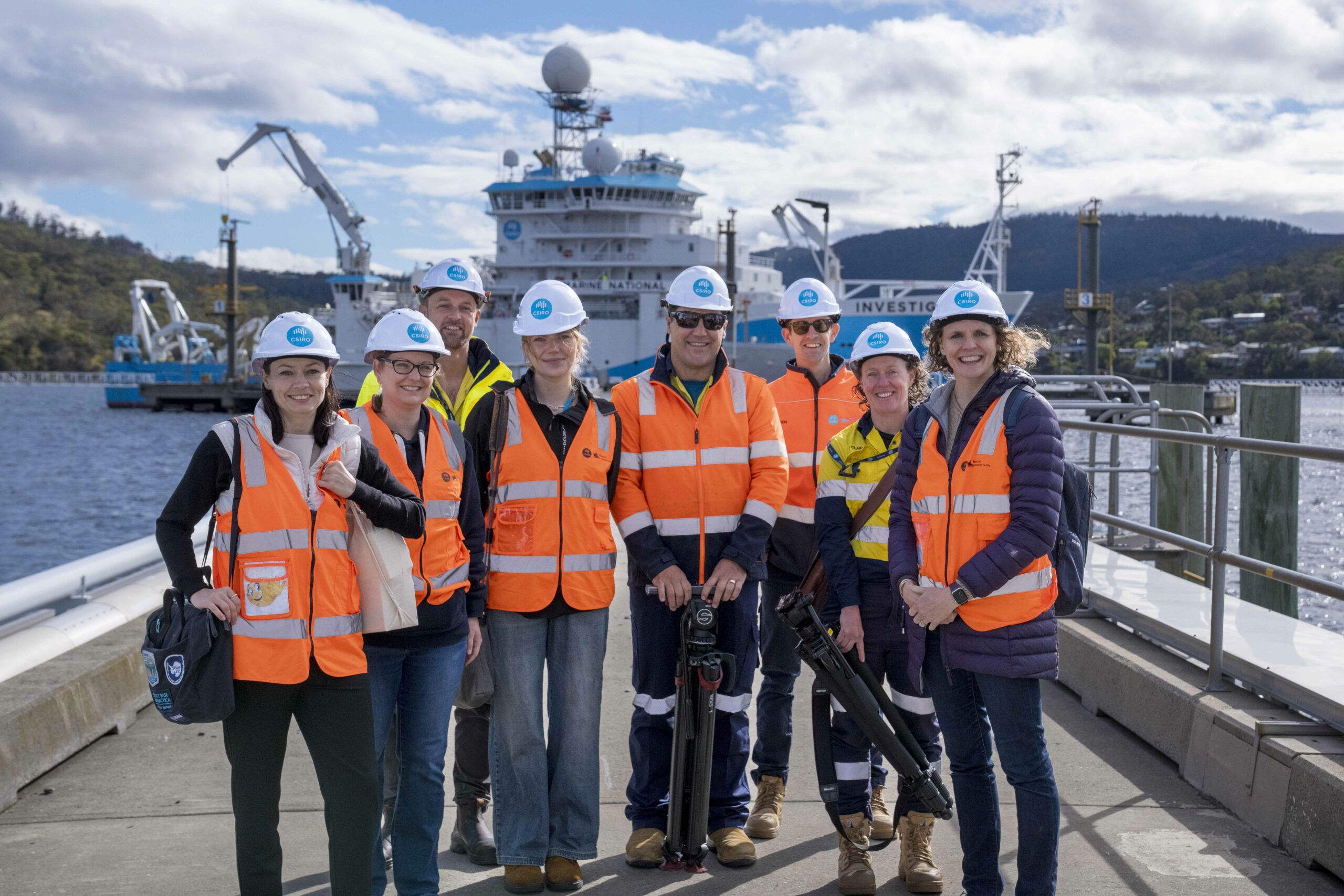
Top header image: ACEAS/IMAS scientists and CSIRO staff during COOKIES voyage preparations in Hobart (Image Credit: CSIRO/Fraser Johnston)