ACEAS highlights of 2025: a year of discovery, impact and urgency
2025 marked a transformative year for the Australian Centre for Excellence in Antarctic Science (ACEAS), with groundbreaking fieldwork, influential publications, and growing global recognition of its scientific leadership. As the world grapples with accelerating climate risks, ACEAS’s research continues to illuminate the critical role of East Antarctica and the Southern Ocean in shaping Australia’s and the planet’s future.
Denman Marine Voyage: a landmark expedition
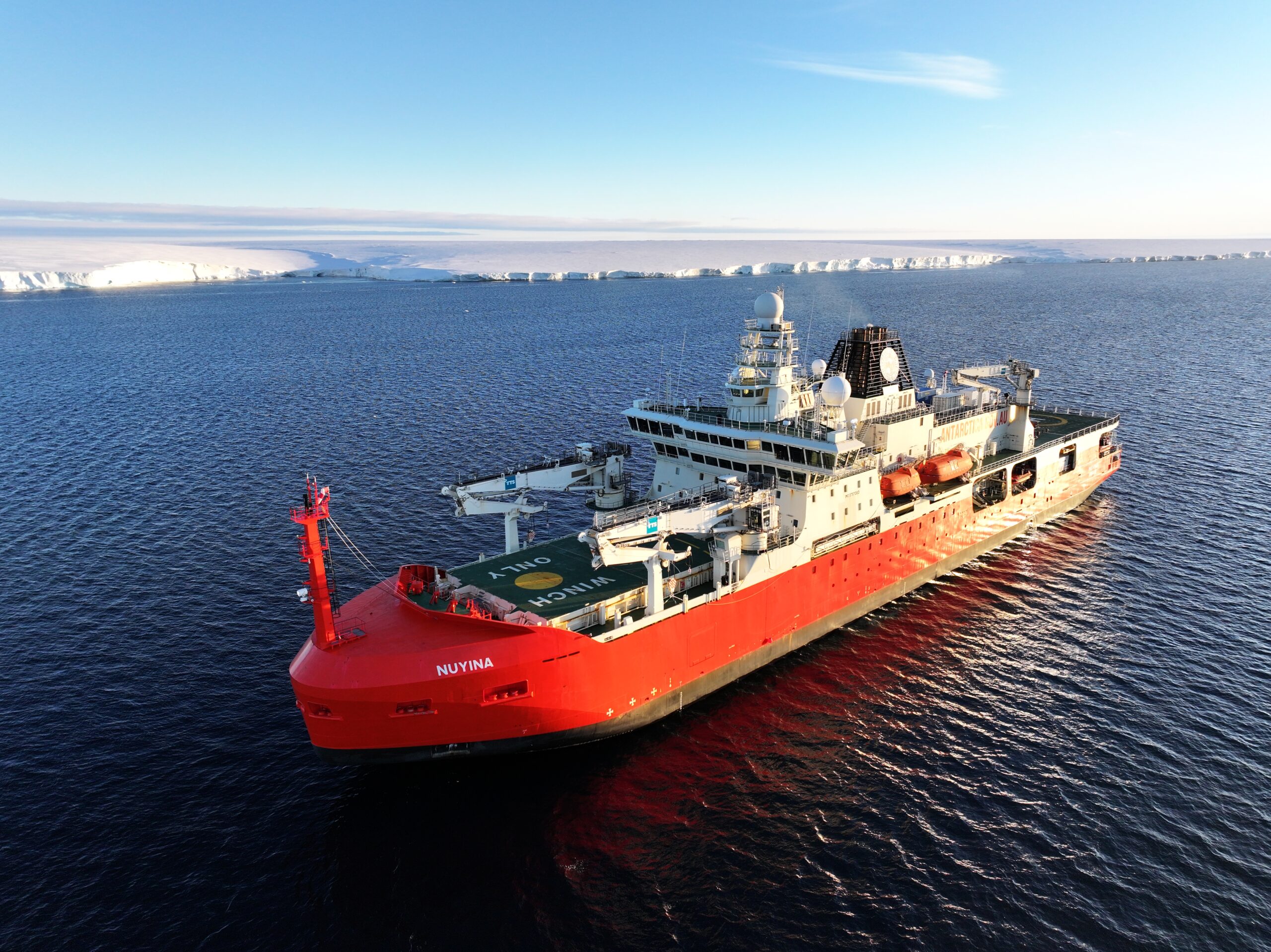
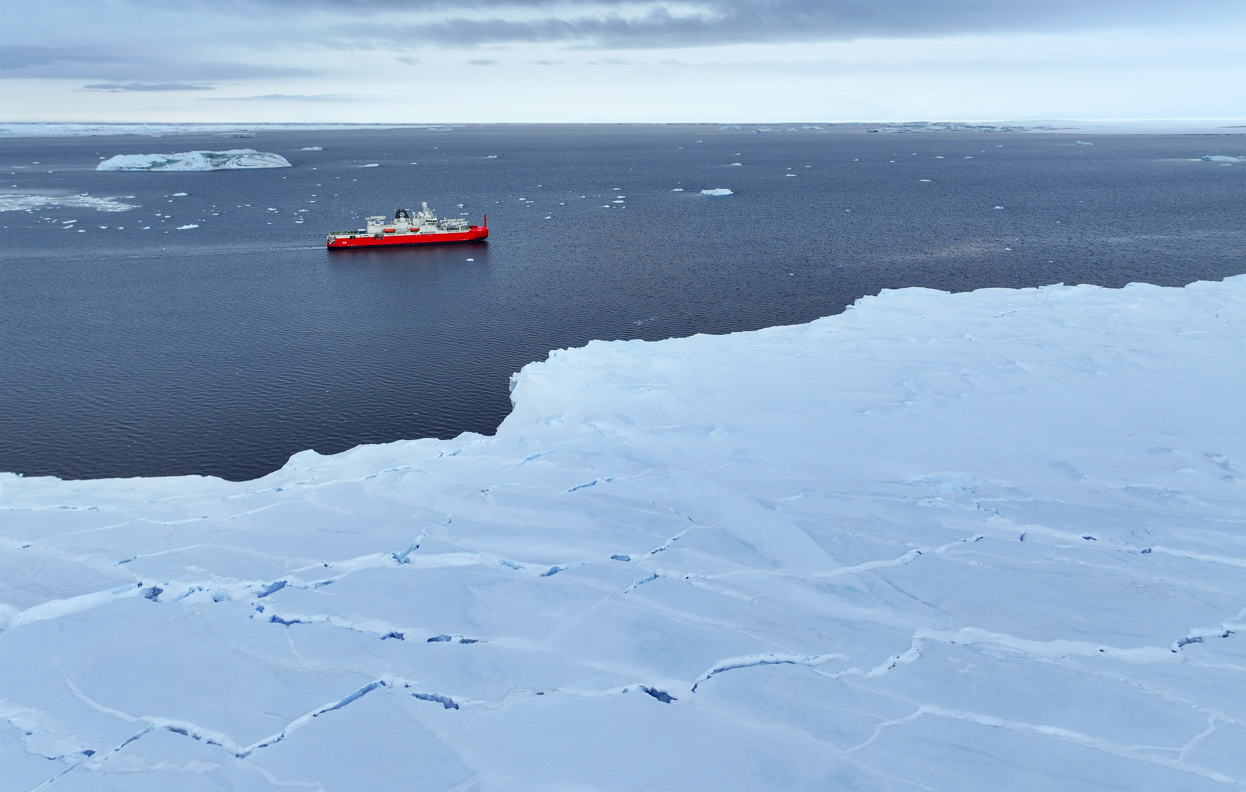
In February, ACEAS co-led the Denman Marine Voyage (DMV) aboard the RSV Nuyina – bringing together over 60 scientists in a multi-institutional collaboration with the Australian Antarctic Program, Australian Antarctic Program Partnership and Securing Antarctica’s Environmental Future. The voyage deployed sea-gliders, moorings, sediment corers, and seal tags to study the ocean’s role in melting the Denman Glacier – one of the most vulnerable ice masses on Earth. If fully melted, Denman could raise global sea levels by 1.5 metres.
This marine campaign complemented the Denman Terrestrial Campaign (DTC) – which concluded its final summer season in early 2025. Together, these efforts represent one of the most comprehensive investigations of ice–ocean interactions in Australian Antarctic Territory.
Globally significant research outputs
This year also saw ACEAS researchers lead and contribute to multiple globally significant research projects.
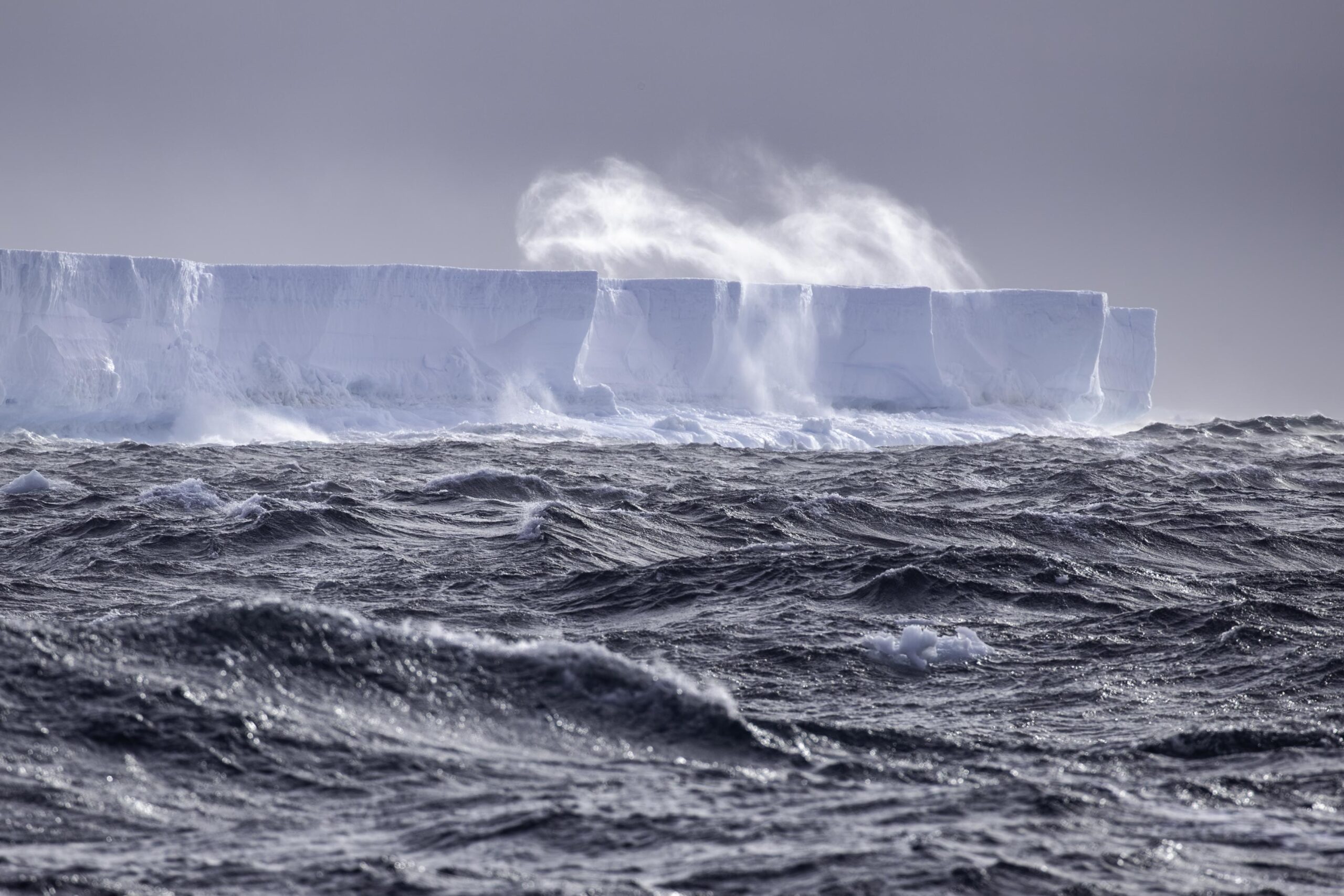
In March 2025, Dr Taimoor Sohail (UniMelb) and collaborators published a significant study in Environmental Research Letters showing that under a high emissions scenario the Antarctic Circumpolar Current (ACC) – the world’s strongest ocean current – could slow by up to 20% by 2050 due to freshwater influx from melting Antarctic ice. The ACC is a critical part of the global ocean ‘conveyor belt’ – connecting the Pacific, Atlantic, and Indian Oceans. It regulates climate, transports heat and carbon, and acts as a barrier protecting Antarctica from invasive species. Sohail’s team used high-resolution simulations run on Australia’s Gadi supercomputer to resolve small-scale processes that had previously eluded climate models.
In April, a study led by Chen Zhao (UTAS), and published in Nature Communications, revealed that vast hidden networks of lakes and streams beneath the Antarctic ice sheet – known as subglacial water – may dramatically accelerate ice flow into the ocean. Their simulations show that accounting for evolving subglacial water pressure could triple projected ice discharge compared with conventional models, potentially adding more than two metres to global sea-level rise by 2300.
In August, ACEAS's former Deputy Director, Professor Nerilie Abram (now Chief Scientist for the Australian Antarctic Division), led a landmark study and meta-analysis published in Nature titled Emerging evidence of abrupt changes in the Antarctic environment. This research revealed that Antarctica is undergoing rapid, unexpected and interconnected shifts in ice, ocean, atmosphere and ecosystems, challenging assumptions of long-term stability. The findings underscore the urgency of updating climate models and policies to account for these abrupt changes, which could accelerate global sea-level rise, set off irreversible tipping points, and disrupt ecosystems globally. Co-authors included ACEAS Deputy Director, Professor Matthew England (UNSW) and colleagues from across the Australian Antarctic science community.
And in December, multiple ACEAS researchers contributed to a significant study led by Dr Ariaan Purich (SAEF/Monash) which revealed that the Southern Annular Mode (SAM) – the Southern Hemisphere’s most influential climate driver – has reached its most positive state in more than 1000 years. A persistent positive state would have long-term consequences for Antarctica and the Southern Ocean, with cascading impacts on Australia's rainfall, weather and climate systems. ACEAS co-authors included: Dr Danielle Udy (UTAS), ACEAS Deputy Director Professor Matthew England (UNSW), Associate Professor Laurie Menviel (UNSW), Dr Amelie Meyer (UTAS), Associate Professor Paul Spence (UTAS) and Professor Pete Strutton (UTAS).
All of this was alongside ACEAS researchers publishing over 111 peer-reviewed research papers (as per ACEAS affiliation listed in Scopus), with diverse topics spanning from subglacial water dynamics and ocean eddies to Antarctic marine viruses and air–sea gas exchanges. The breadth and depth of this work underscore ACEAS’s role in advancing our global understanding of Antarctic and Southern Ocean science.
ACEAS researchers selected for IPCC authorship
Several ACEAS Chief and Partner Investigators were selected as authors for the Intergovernmental Panel on Climate Change (IPCC) Seventh Assessment Report (AR7) Working Group 1 report – reinforcing the Centre’s influence on international climate science and policy.
These include: ACEAS Chief Investigator, Associate Professor Laurie Menviel from UNSW (Chapter 8, Lead Author), former ACEAS Deputy Director Professor Nerilie Abram (Chapter 1 Coordinating Lead Author), and ACEAS Partner Investigator, Professor Tamsin Edwards from King’s College London (Chapter 6, Coordinating Lead Author).
ACEAS contributes to Australia’s National Climate Risk Assessment
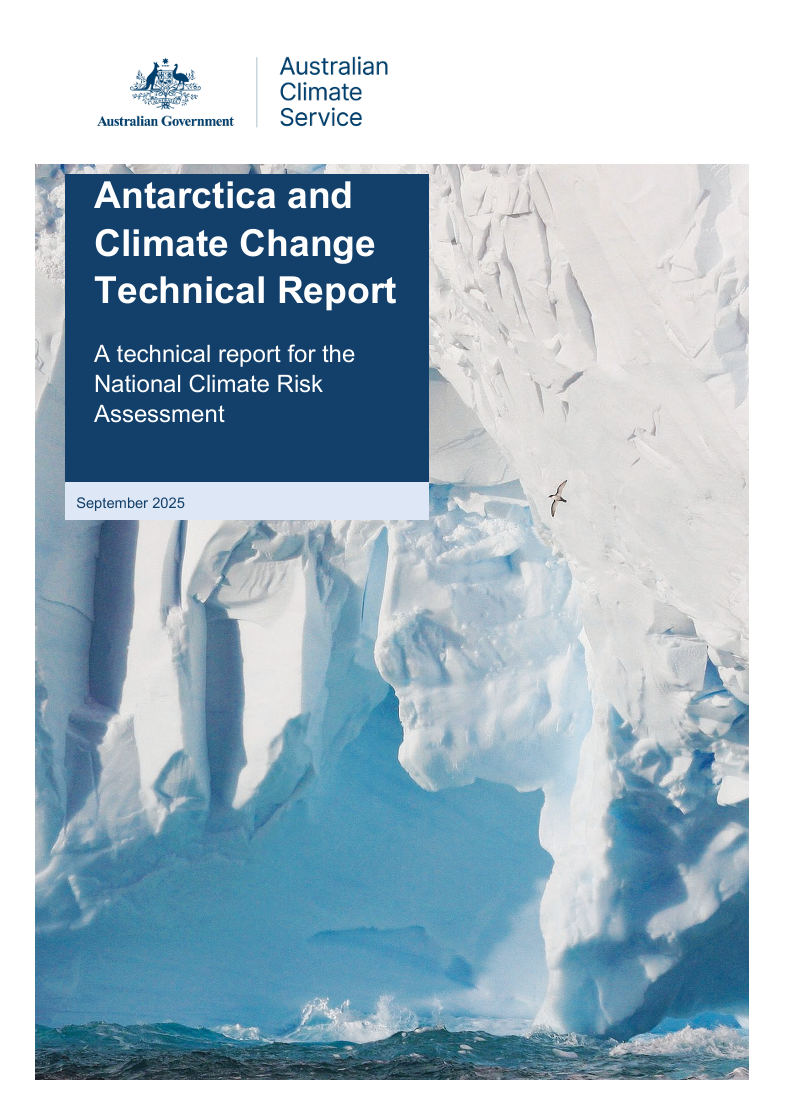
ACEAS researchers also helped shape the inaugural National Climate Risk Assessment (NCRA), with multiple authors contributing to the chapter on Antarctica, including ACEAS Director Professor Matt King (UTAS), ACEAS Deputy Director Professor Matt England (UNSW), Dr Danielle Udy (UTAS), Dr Tessa Vance (UTAS), Dr Chen Zhao (UTAS) and Professor Poul Christoffersen (UTAS). The chapter synthesised cutting-edge Antarctic and Southern Ocean science to guide national responses and inform Australia’s understanding of climate risks emerging from the polar south.
FishMIP: advancing marine ecosystem modelling for a changing climate
In June 2025, ACEAS co-hosted the FishMIP Regional Modelling Workshop in Hobart – bringing together marine ecosystem researchers from across the globe to tackle one of the most urgent challenges in climate science: how to project the future of fisheries and marine ecosystems under rapid environmental change.
Led by Professor Julia Blanchard (IMAS/UTAS), and supported by ACEAS and the Australian Antarctic Program Partnership, key outcomes included the launch of FishMIP 2.0 – a new modelling framework that incorporates fishing and climate impact trajectories to better detect and project ecosystem changes.
ACEAS delivers extensive training for Early Career Researchers
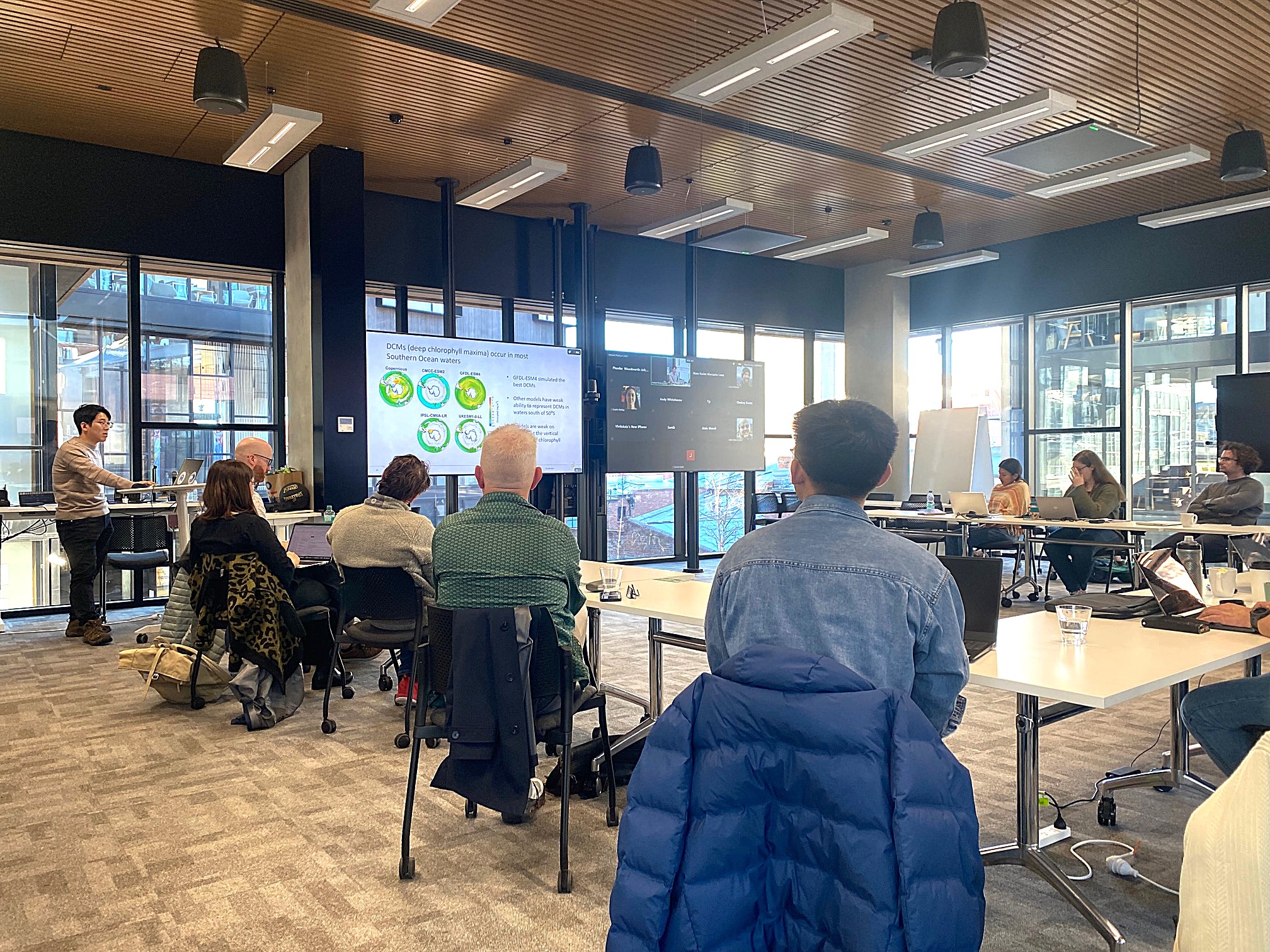
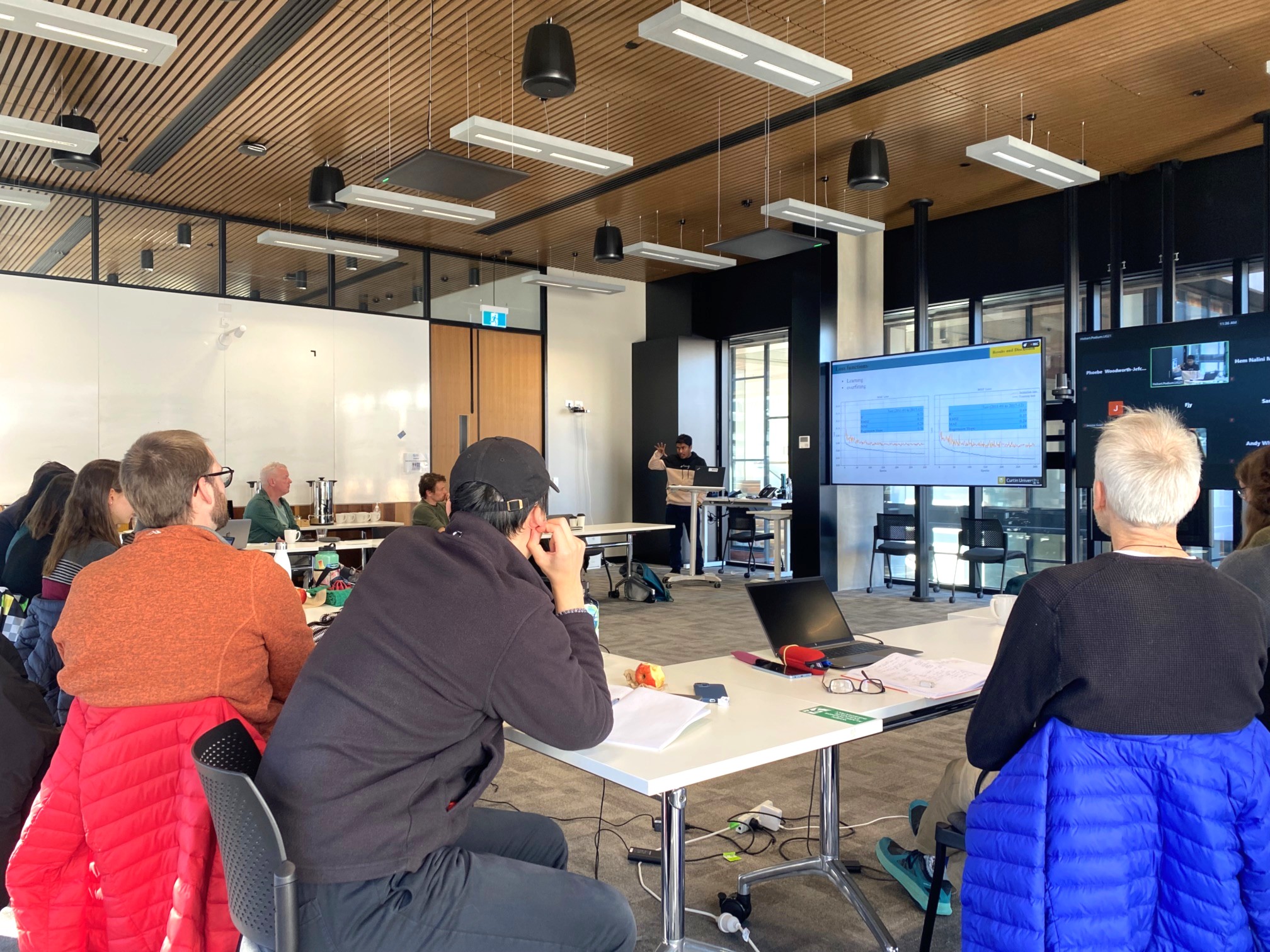
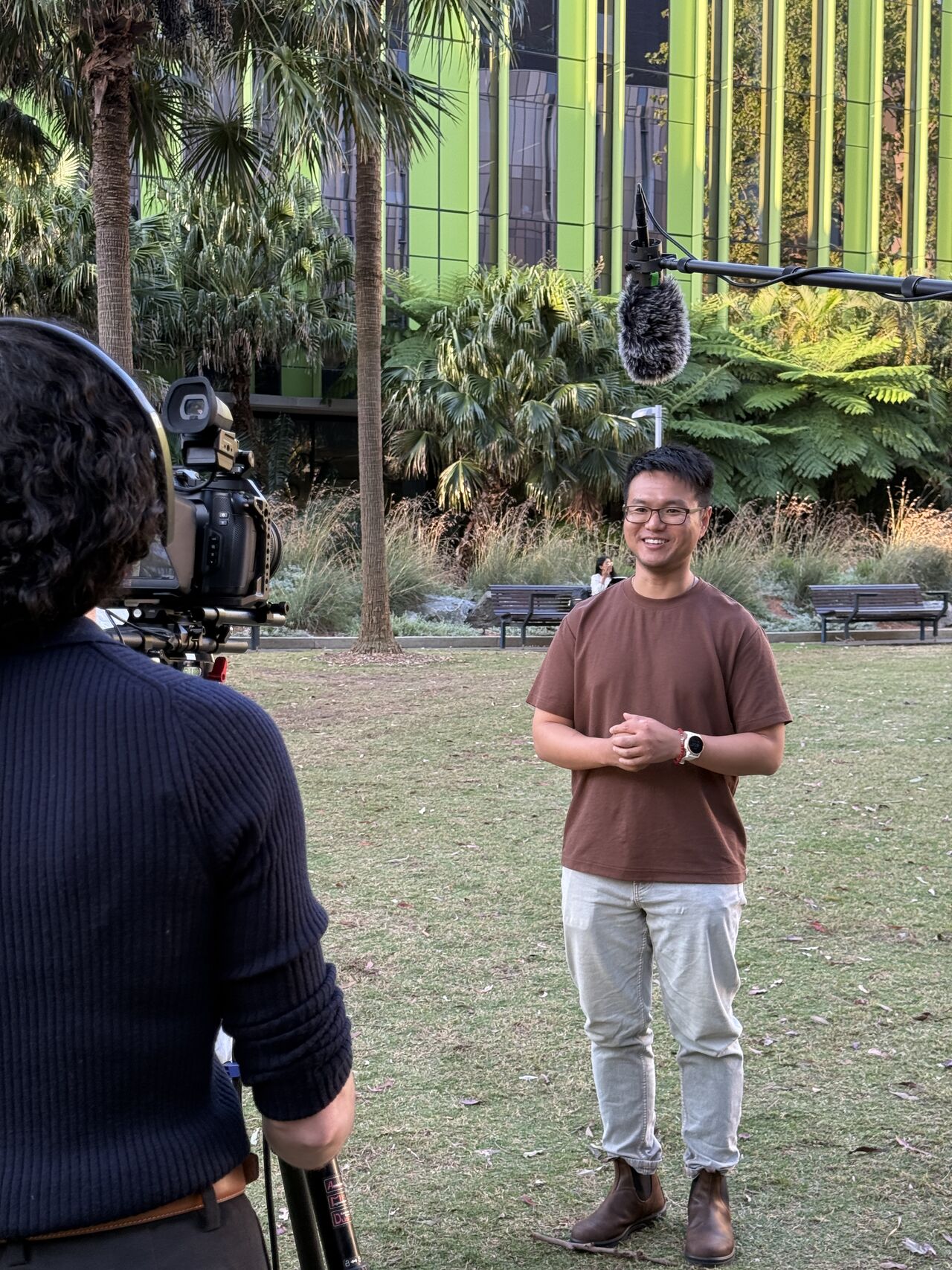
ACEAS takes its commitment to developing the skills and leadership capabilities of the next generation of Australian Antarctic scientists seriously – and 2025 was no exception. Throughout the year, Early Career Researchers gained valuable experience through a range of forums and specialised workshops. These included the ACEAS Winter School and Research Forum, as well as training sessions on identifying research funding opportunities, public speaking, careers in industry and government, on-camera media training, and one-on-one sessions to enhance their science communication writing for non-expert audiences.
More than 140 researchers gather for ACEAS Research Forum 2025
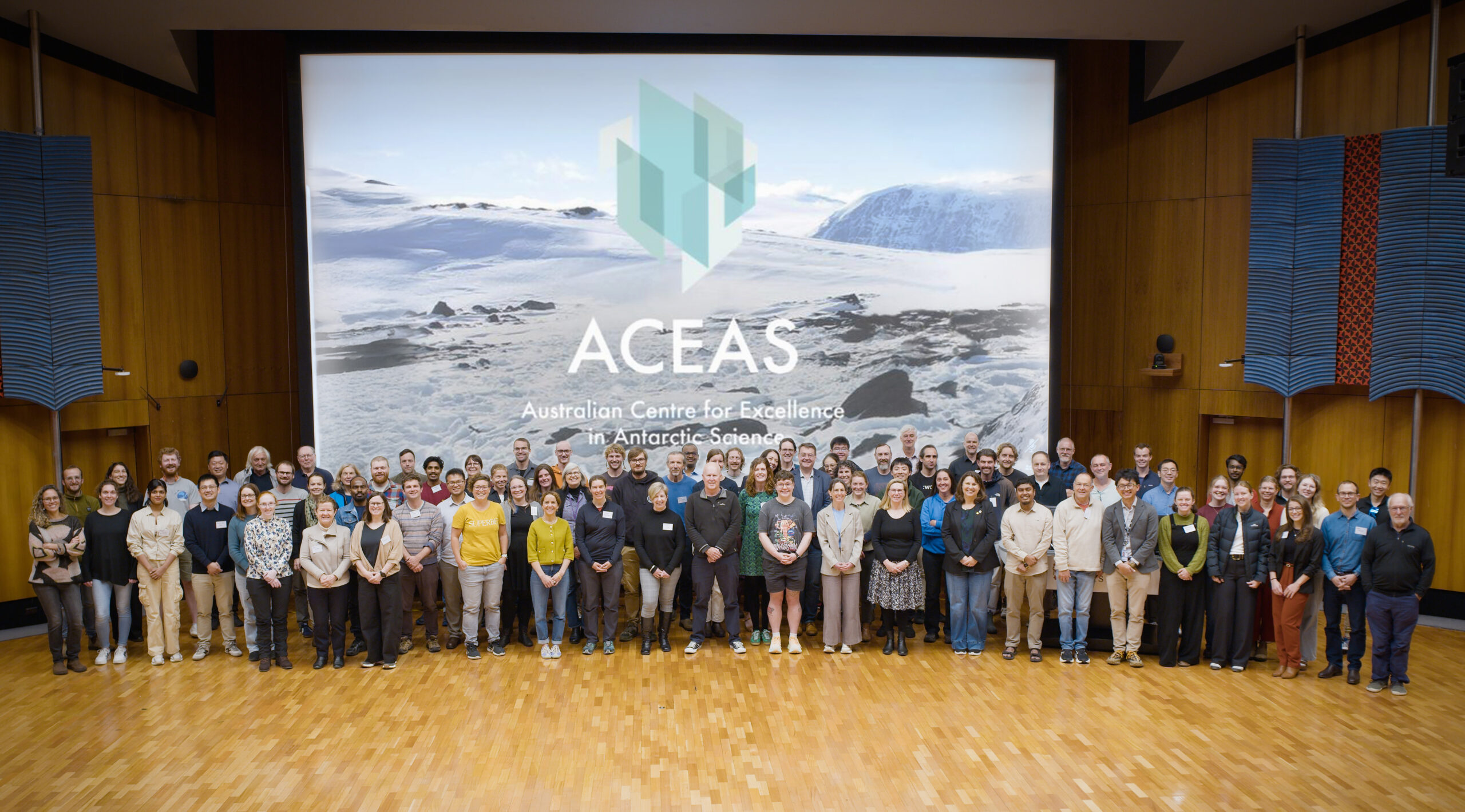
In early November, more than 140 ACEAS researchers from across Australia gathered in Hobart ACEAS Research Forum, held at the University of Tasmania’s Sandy Bay campus. The three-day event showcased the breadth and depth of ACEAS’s interdisciplinary research aimed at understanding the climate risks emerging from Antarctica and the Southern Ocean, with keynote addresses, science sessions, poster presentations and collaborative discussions spanning the Earth–Ice–Ocean–Atmosphere system.
New Policy Briefings and a new Explainer series
ACEAS bolstered the availability of high-quality, accessible science with the launch of a new Explainer series, and published new Policy Briefings to help break down complex science and support better decision making.
- In July, ACEAS published the first issue of our new Explainer series, titled Why Antarctica Matter to Australia.
- In September, a Policy Briefing based on the globally significant study by ACEAS former Deputy Director, Professor Nerilie Abram (now Chief Scientist for the Australian Antarctic Division) on Abrupt changes in the Antarctic environment was developed.
- Later in September ACEAS/AAPP undertook a joint mailout of the Abrupt Change, Why Antarctica Matters to Australia and Opening the Floodgates briefings to more than 400 Australian parliamentarians, NGOs and journalists.
- In late October, ACEAS published and released a specialist Antarctic Fur Seals Explainer to coincide with the annual meeting of the Commission for the Conservation of Antarctic Marine Living Resources (CCAMLR) talks, held in Hobart. The Explainer was distributed to numerous stakeholders during CCAMLR, reaching them at a critical moment and helping provide robust science to inform international decision-making.
- In early November, ACEAS distributed the Abrupt Change and Why Antarctica Matters to Australia briefings to 140 attendees at the ACEAS Research Forum. This complemented the in-person keynote and briefing provided by Professor Nerilie Abram, to all attendees.
- In mid-November, ACEAS published a new Explainer on the Meridional Overturning Circulation (MOC). This was distributed, along with other briefings, to more than 70 senior public servants at a showcase of Antarctic and Southern Ocean research held at the Shine Dome in Canberra.
- In late November, ACEAS Deputy Director Professor Mathew England (UNSW) presented as part of a panel of Australian scientists, including Professor Nerilie Abram, to the COP30 Cryosphere Pavilion on the Abrupt Change.

ACEAS goes to the heart of decision making in Canberra
In late November, ACEAS travelled to Canberra for two important events with Australian decision makers.
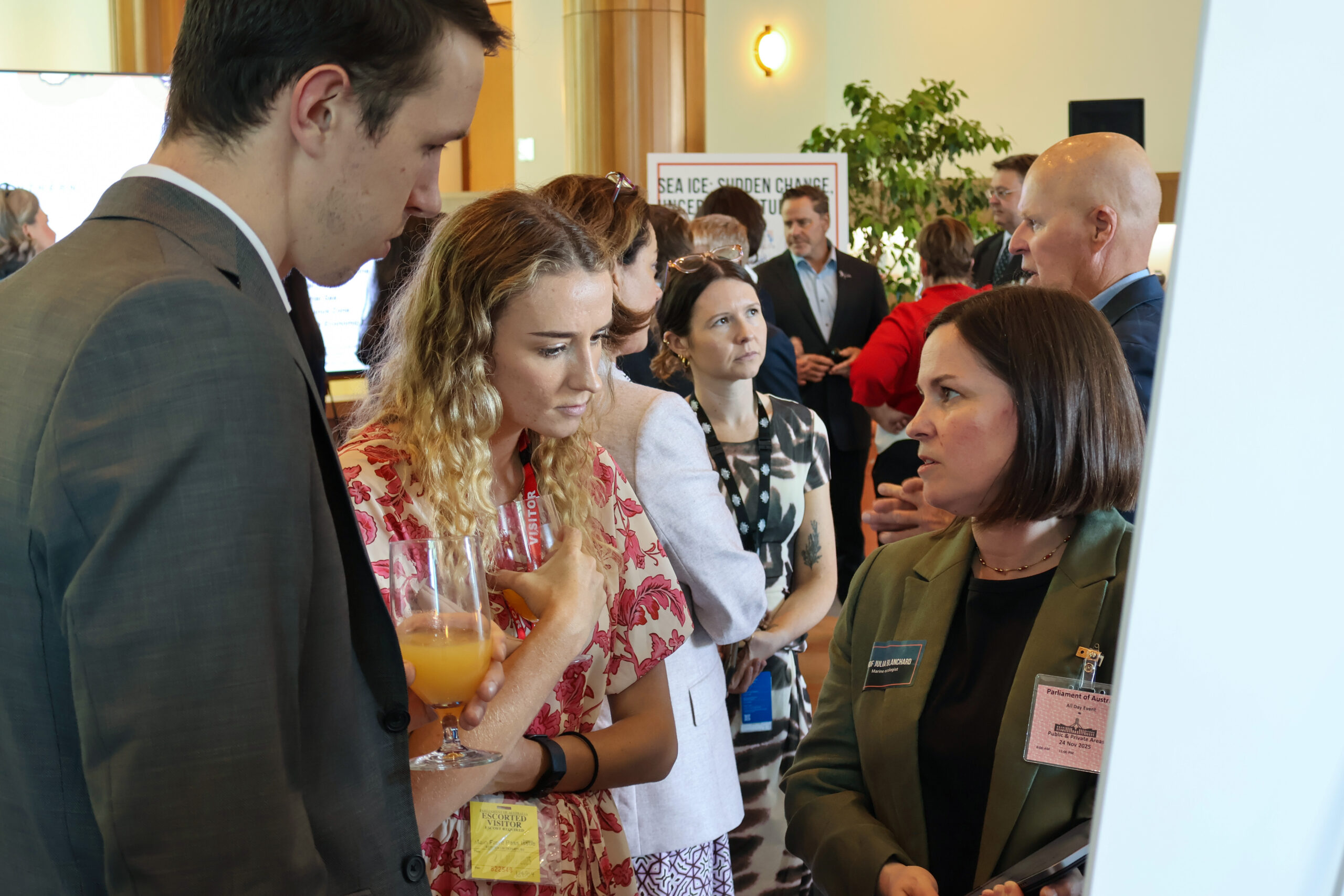
At Parliament House on Monday 24 November, ACEAS scientists were delighted to join colleagues from the Australian Antarctic Program Partnership and Securing Antarctica's Environmental Future for a university-led Antarctic science reception hosted by the Parliamentary Friends of the Antarctic. Co-chaired by Senators Richard Dowling, Jonathon Duniam, and Peter Whish-Wilson, the event brought together federal parliamentarians and scientists to hear the latest insights and research about Antarctic and Southern Ocean science, all undertaken as part of the Australian Antarctic Program.
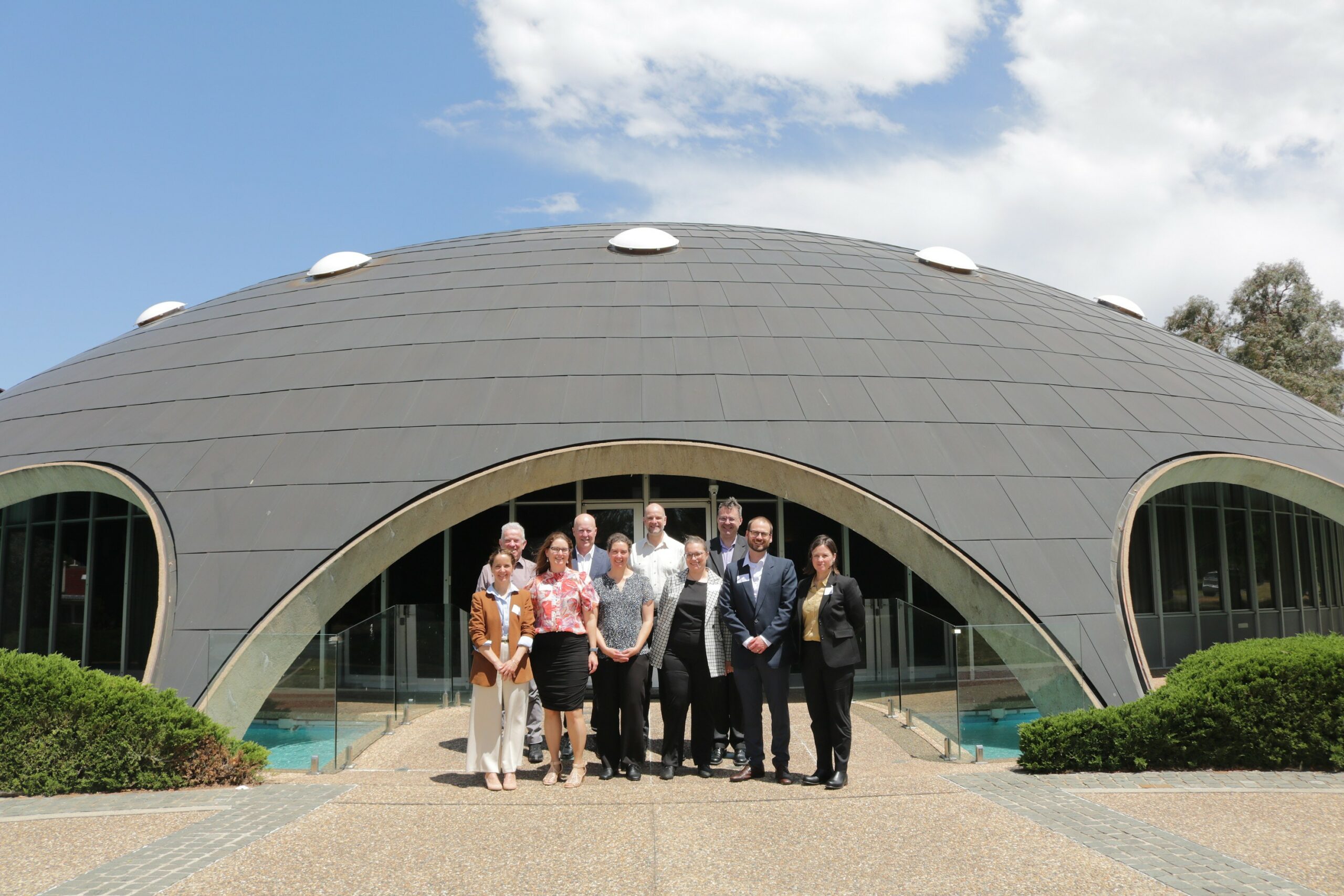
At the Shine Dome on Tuesday 25 November, more than 70 attendees from government, research and policy sectors came together for the ACEAS Showcase to explore how Antarctic science underpins Australia’s national capabilities and informs decisions that matter for generations to come.

Looking ahead
As ACEAS prepares for 2026, the urgency of its mission has never been clearer. From the depths of the Southern Ocean to the heights of Antarctic ice sheets, ACEAS scientists are committed to helping communities prepare for the climate risks emerging from East Antarctica and the Southern Ocean. We sincerely thank everyone who has supported ACEAS over this significant year and we hope to continue the work in 2026 and beyond.
We'll leave you with ACEAS's latest video to learn more about the work of the Centre and why Antarctic science matters to Australia and the world.
Subscribe to our newsletter
For more Antarctic news and stories, subscribe to our mailing list here.