International collaborative science at the edge of Antarctica
By Joline Lalime, Sea2SchoolAu and Dr Linda Armbrecht, ACEAS/IMAS (University of Tasmania)
Research nearby the Cook Ice Shelf is only possible through strong international collaboration. This remote and poorly studied region of East Antarctica demands a wide range of expertise, technologies, and perspectives – and this voyage brings them together in a single, coordinated effort.
The Cook Ice Shelf is a critical part of the Antarctic system, draining a large portion of the Wilkes Subglacial Basin ice and showing signs of vulnerability to climate change. Understanding how ice stability, ocean circulation, ecosystems, and past climates interact here requires scientists from many disciplines and countries working side by side, as well as a skilled crew and support team.
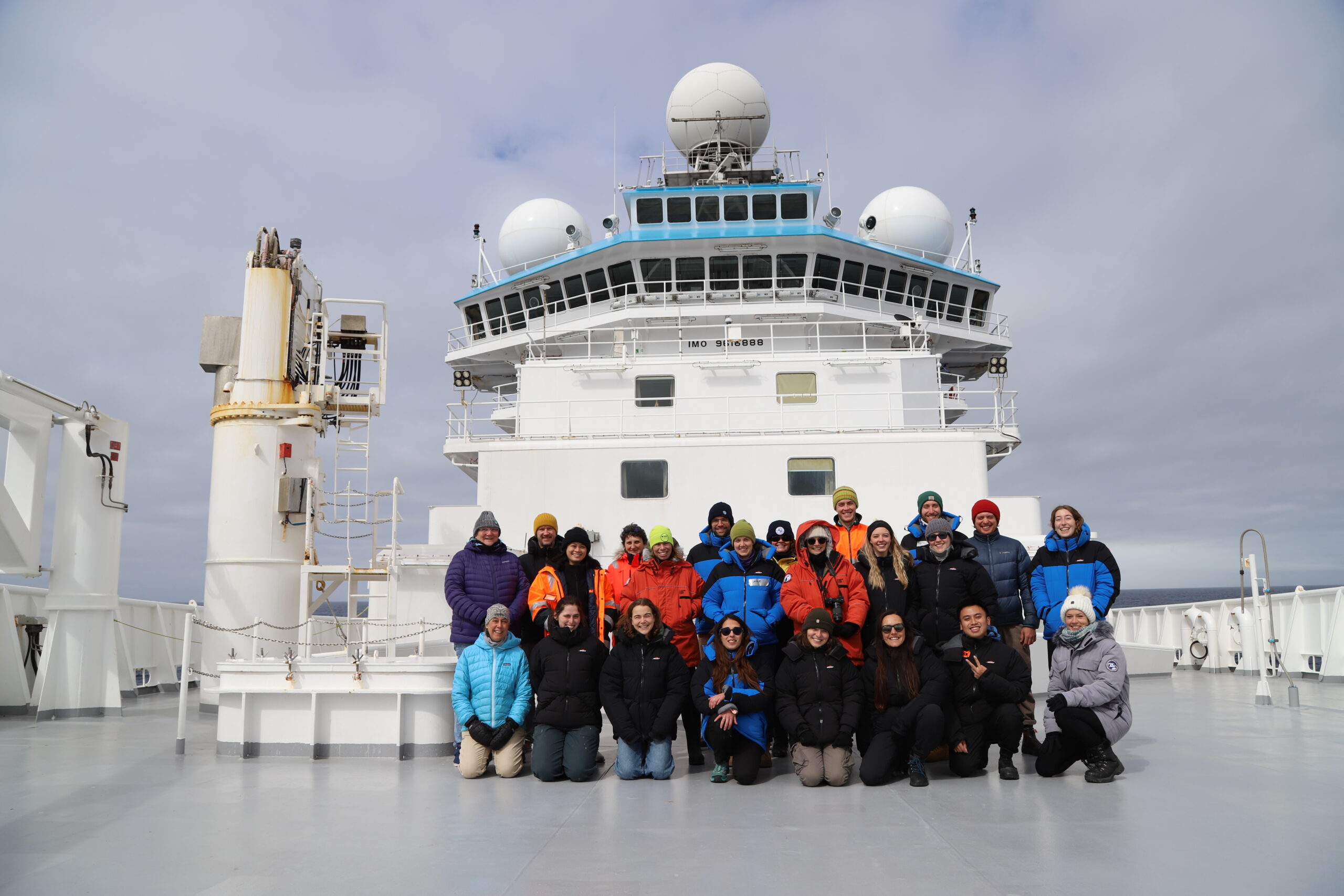
A large part of the scientific team is based in Australia. Scientists from the Institute for Marine and Antarctic Studies and the Australian Centre for Excellence in Antarctic Science at the University of Tasmania in Hobart contribute expertise in ancient DNA, trace metals, seafloor imagery, and geophysics. Onboard, this includes Dr Linda Armbrecht (Chief Scientist), Dr Jan Jansen (Principal Investigator, PI), postdoctoral researcher Dr Luca Magri, and students Lucinda Duxbury, Talia Hawkes, Sarah Jessop, Noah Menner, Timothy Nugroho, and Amy Wells. Additional Australian expertise comes from the University of Technology Sydney, with Dr Amaranta Focardi (PI) focusing on DNA studies, specifically of phytoplankton and their role as the basis of the ocean food web. Dr Jan Strugnell (PI), and postdocs Dr Sally Lau, and Dr Katharine Prata from James Cook University in Townsville contribute population genetics expertise. Gina Paroz, from the Australian Antarctic Division (AAD) specialises in environmental DNA.
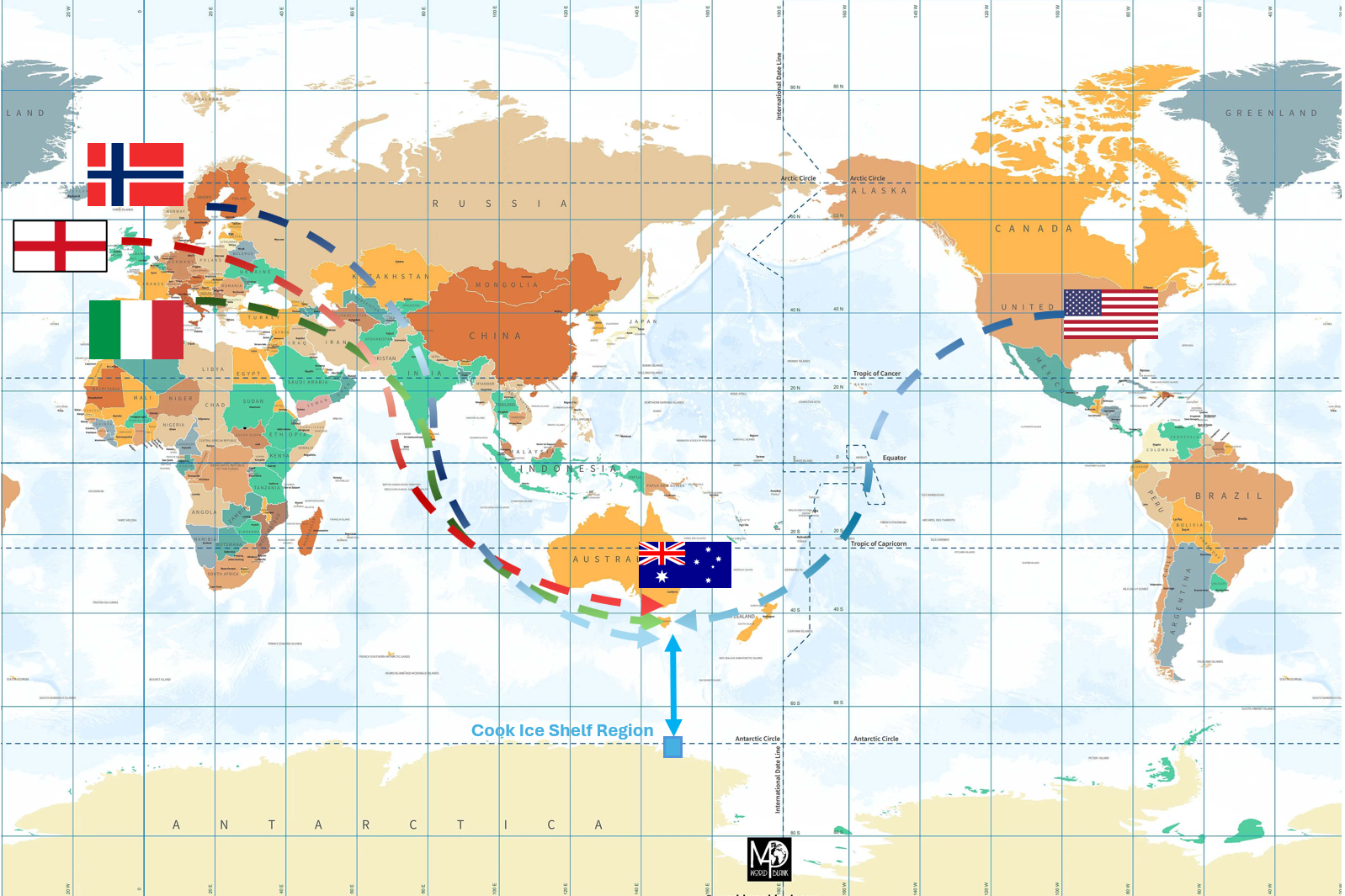
The voyage also includes scientists from Europe and the United States. From Norway’s Research Centre – NORCE, Dr Tristan Cordier and student, Ana Gomes contribute ancient DNA expertise. Italian researchers Dr Laura De Santis from the OGS (National Institute of Oceanography and Applied Geophysics), Dr Fiorenza Torricella from the National Research Council – Institute of Polar Science, and Dr Luca Zurli from the University of Siena, contribute expertise in geomorphology, diatoms, and sedimentology.
From the United States, Dr Amy Leventer from Colgate University brings expertise in microfossils and past climate reconstruction and is on her 30th Antarctic voyage. Students Izzy White from the University of Southampton contributes knowledge and skills in physical oceanography and Rebecca Knight from the University of Exeter in sedimentology are both from England.
The onboard scientists are supported by a group of experts on shore, including the PIs A/Prof Taryn Noble (IMAS/ACEAS), A/Prof. Nicole Hill (IMAS/ACEAS), Dr Leonie Suter (AAD), Dr Alix Post (Geoscience Australia), Dr Jan Lieser (Bureau of Meteorology) and Dr Alessandro Silvano (University of Southampton).
International collaboration extends beyond science with Outreach being led by Joline Lalime from Sea2SchoolAU based north of Brisbane, Queensland. Through live ship-to-shore broadcasts and digital engagement, students and communities around the world can follow the voyage in real time.
The CSIRO Marine National Facility (MNF) technical team, including Voyage Manager Claire Grubb, provides leadership, research program management, and coordination between the science team, the MNF science and technical staff, and the crew of CSIRO research vessel (RV) Investigator. The MNF technical team provides specialist support in areas such as information technology (IT), seafloor mapping, and water analysis. The vessel’s crew, led by Master Sam Edwards, is responsible for the safe operation of RV Investigator and the deployment of scientific equipment in support of the research program.
No single country or discipline can answer the complex questions posed by the Cook Ice Shelf region. By combining skills, technology, and global perspectives, this international team can better understand Antarctica’s past, present, and future – and how changes here affect the entire planet.
Join us on the expedition
The IMAS-led research on the expedition will be showcased through blogs released through the Australian Centre for Excellence in Antarctic Science and can be followed on social media at Sea2SchoolAu Facebook, Instagram, LinkedIn and the CSIRO Voyage (IN2026_V01) Page.
This voyage is supported by the Australian Research Council Special Research Initiatives Australian Centre for Excellence in Antarctic Science (Project Number SR200100008), the Australian Research Council's Discovery Projects funding scheme (DP250100886), the COOKIES GEOTRACES process study GIpr13, Horizon Europe European Research Council (ERC) Frontier Research Synergy Grants, OGS – Istituto Nazionale di Oceanografia e di Geofisica Sperimentale, Securing Antarctica’s Environmental Future (SAEF) (Project Number SR200100005) and by a grant of sea time on RV Investigator from the CSIRO Marine National Facility (MNF).
Top header image: ACEAS/IMAS scientists and CSIRO staff during COOKIES voyage preparations in Hobart (Image Credit: CSIRO/Fraser Johnston)


