The longest story ever pulled from the seafloor on the RV Investigator
By Dr Linda Armbrecht, Australian Centre for Excellence in Antarctic Science/Institute for Marine and Antarctic Studies (University of Tasmania) and Joline Lalime, Sea2SchoolAU
Sediment lying beneath the ocean floor acts like a natural archive. Layer by layer, fine grains and pieces of rock that were once part of the landscape, and remnants of once living organisms – like shells, bones and organic matter – settle and preserve, building a timeline that scientists can read to reconstruct past climates, ocean conditions and ecosystem change. These clues to the past may be in the form of fossils, DNA, mineral deposits (magnetic signals) or chemical signals.
To access these records, ships, such as CSIRO research vessel (RV) Investigator, deploy specialised coring systems designed to recover intact columns of seabed. Operating much like oversized apple corers, these systems plunge into the seafloor and extract long, layers of sediment.
Three of the most widely used methods are the multi-corer, the Kasten corer and the piston corer. Each targets different depths and sediment types, and together they provide a continuous window from the very surface to sediments thousands to millions of years old.
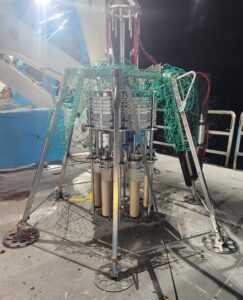
The multi-corer is used to collect the most delicate and undisturbed sediments at the seafloor surface, as well as a sample of the water immediately above the seafloor. It consists of six short core tubes (60cm) mounted on a frame that is carefully lowered to the seabed. When it lands, the tubes gently penetrate the upper layers, capturing the sediment-water interface exactly as it exists on the ocean floor. This thin seafloor surface section is critical for studying modern biological activity, recently deposited particles, microplastics, and chemical gradients. Because the sediments are soft and easily disturbed, the multi-corer is designed to minimise compression and preserve the layering in near-perfect condition.
For deeper sampling of soft sediments, scientists use the Kasten corer. Named after the German word for 'box,' it is a large stainless steel, square-shaped barrel that penetrates the seabed under approximately 1 tonne of weight. On RV Investigator, a Kasten core can recover up to 4-metre-long sediment sections while maintaining the structure of layers. These cores are especially valuable for studying changes over hundreds of thousands of years, including shifts in ocean productivity, ice-rafted debris, and sediment transported by bottom currents. The square profile also helps keep loose material in place, preventing mixing of layers.
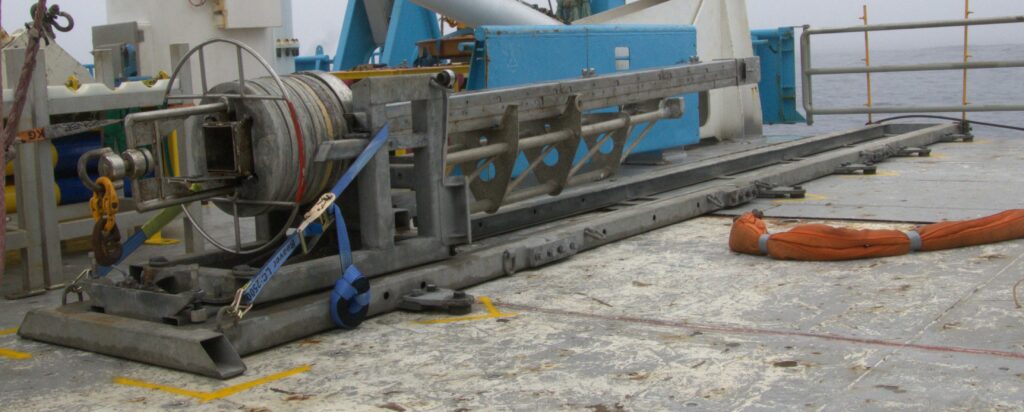
The piston corer is a specialised, heavy-duty marine sediment sampling tool used to reach even further back in time. It is deployed with a trigger mechanism and a free-falling barrel that can drive deep into the seabed. The number of 4.8 metre cylindrical barrels added to the piston corer determines the length of core the researchers have evaluated is possible at each site, usually up to around 20 metres. A piston inside the barrel creates suction as the corer penetrates, allowing sediment to slide smoothly into the liner with minimal disturbance. These longer records are used to examine ancient environmental conditions, glacial cycles, volcanic ash layers, and major shifts in Earth’s climate system. Because the piston corer samples such depth, it often reveals sediments deposited thousands to millions of years ago.
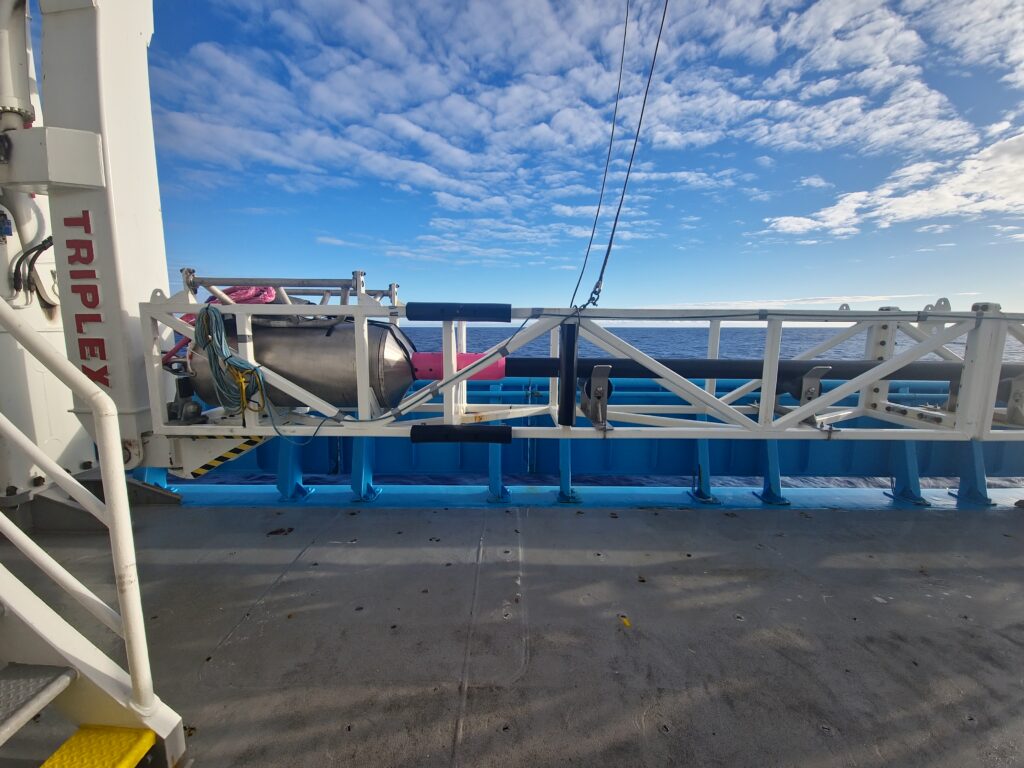
Together, these three coring systems form a complementary toolkit. The multi-corer captures the present, the Kasten corer recovers recent geological history, and the piston corer unlocks deep time events in Earth’s past. By combining information from all three, scientists can build continuous environmental stories from the modern ocean back through past ice ages and beyond – one sediment layer at a time.
As outlined in an earlier blog, on RV Investigator detailed multi-beam sonar mapping of the seafloor and what lies beneath it provides the foundational context for all subsequent observations and sampling, especially coring. These highly detailed, real-time, three-dimensional representations of the seafloor and subfloor guide where and how the scientists determine a suitable coring site.
Over several days in mid-January 2026, the science team aboard RV Investigator carefully studied the seafloor mapping at a site they called ‘TS27’ in 3650m water depth, which showed all the characteristics of a good coring site. This site was then sampled sequentially, first, with a multi-corer, then with a Kasten corer and, finally, with a 24m long piston core. Together, the expert CSIRO technical staff and the lead scientific team assessed the site and determined that the detailed procedure that had been developed and trialled for the four-barrel system was suitable for the longer five-barrel system. Excitement was high as it was assembled by the CSIRO technical staff. Deploying and recovering it took around three hours – which seemed like an eternity when waiting to see if this would extract a record-length core. The team’s expertise, careful planning, and real-world experience demonstrated that the approach was both sound and effective.
Retrieved on Saturday 17 January at 10:30am, it was found to be filled with treasures of the deep, having successfully extracted the longest core sample in the history of RV Investigator’s voyages at 20.5 metres!!
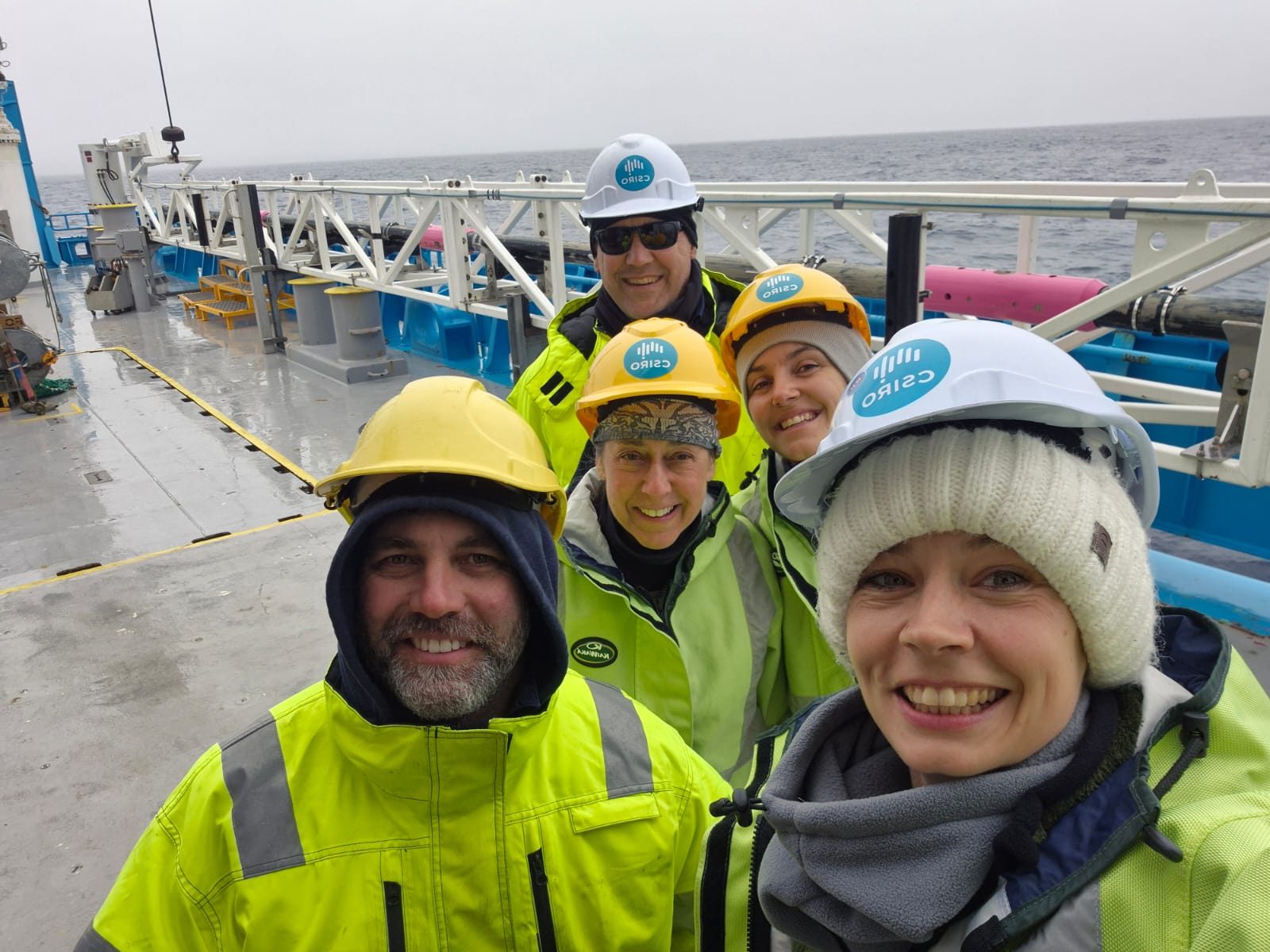
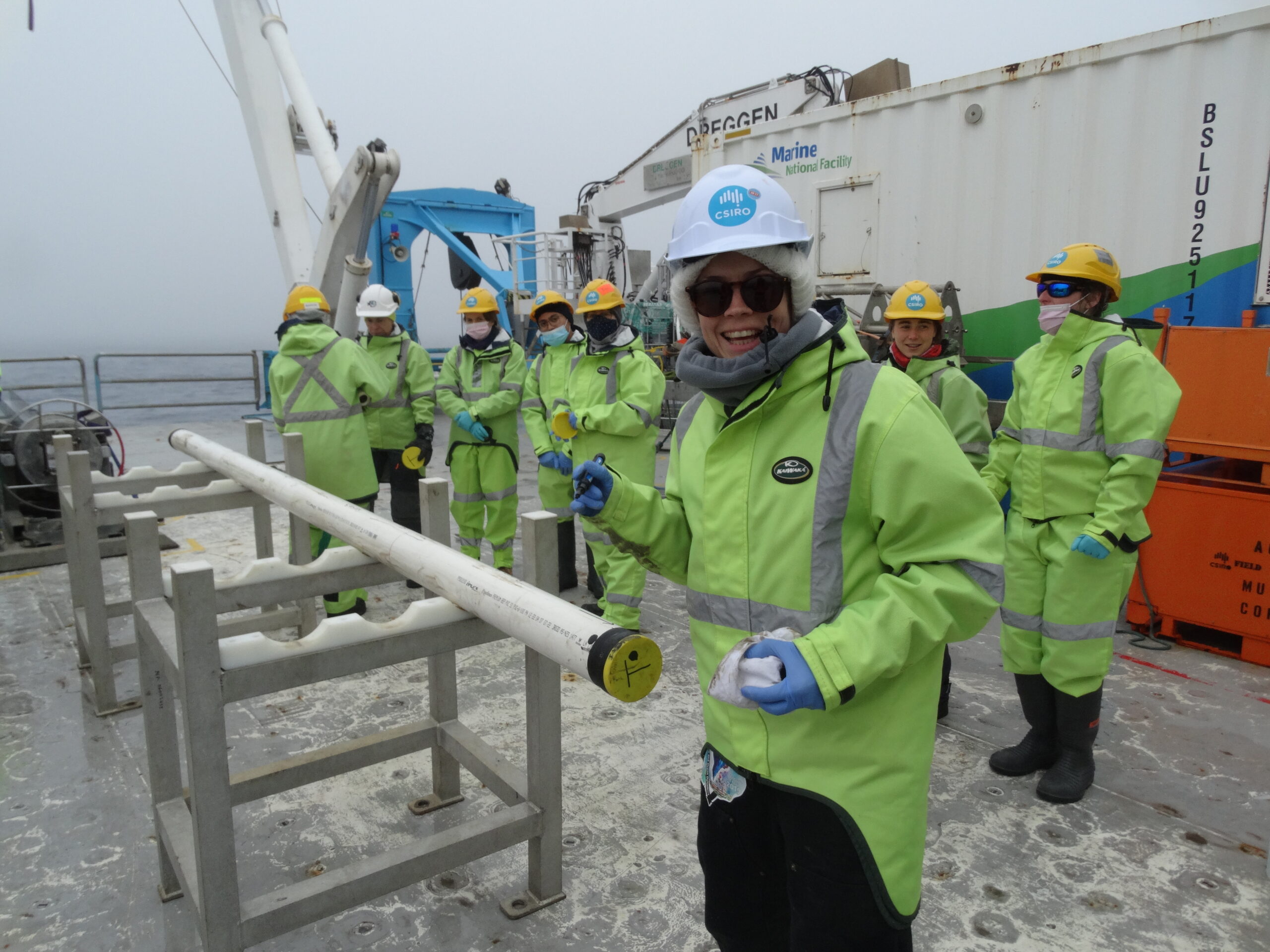
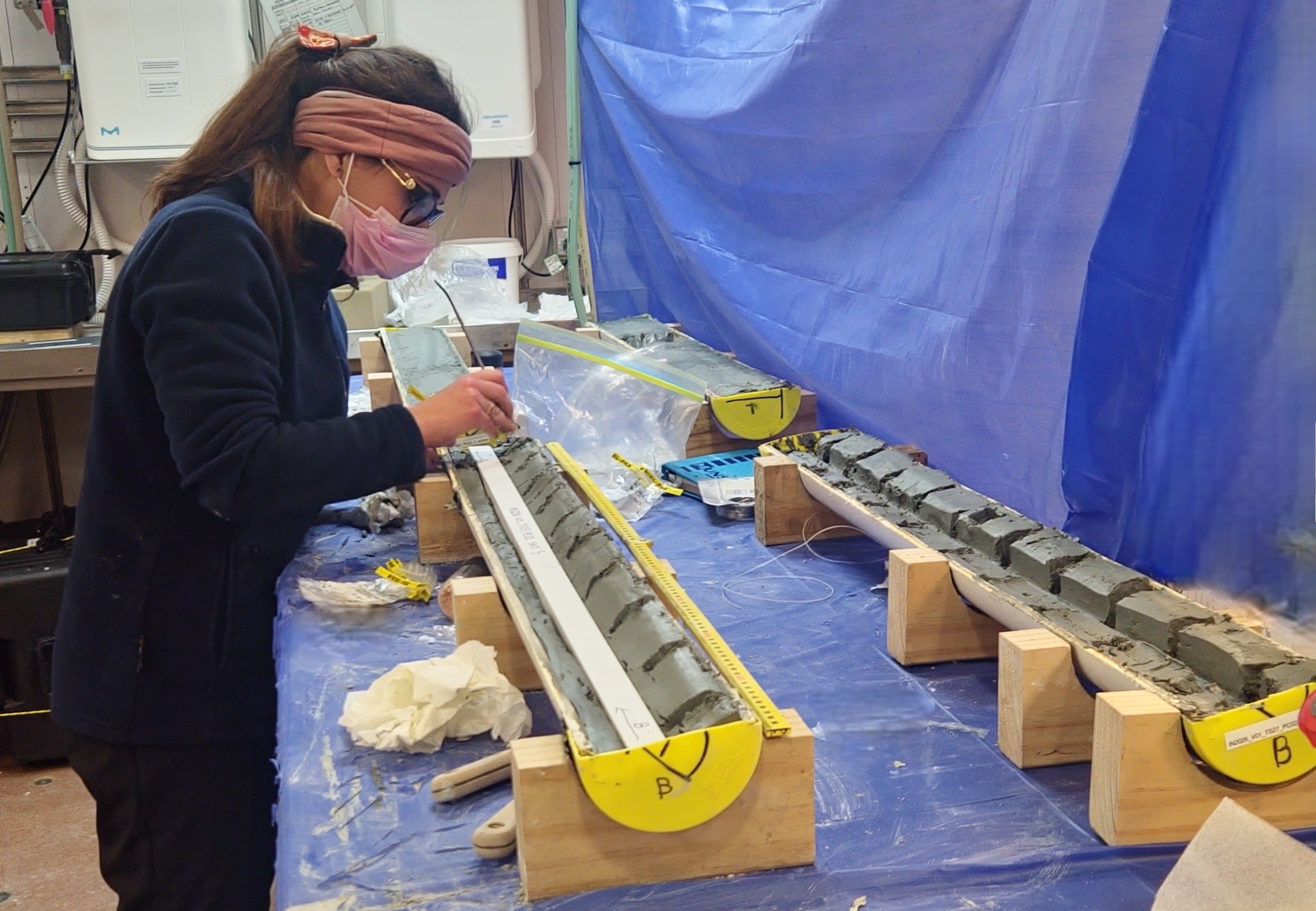
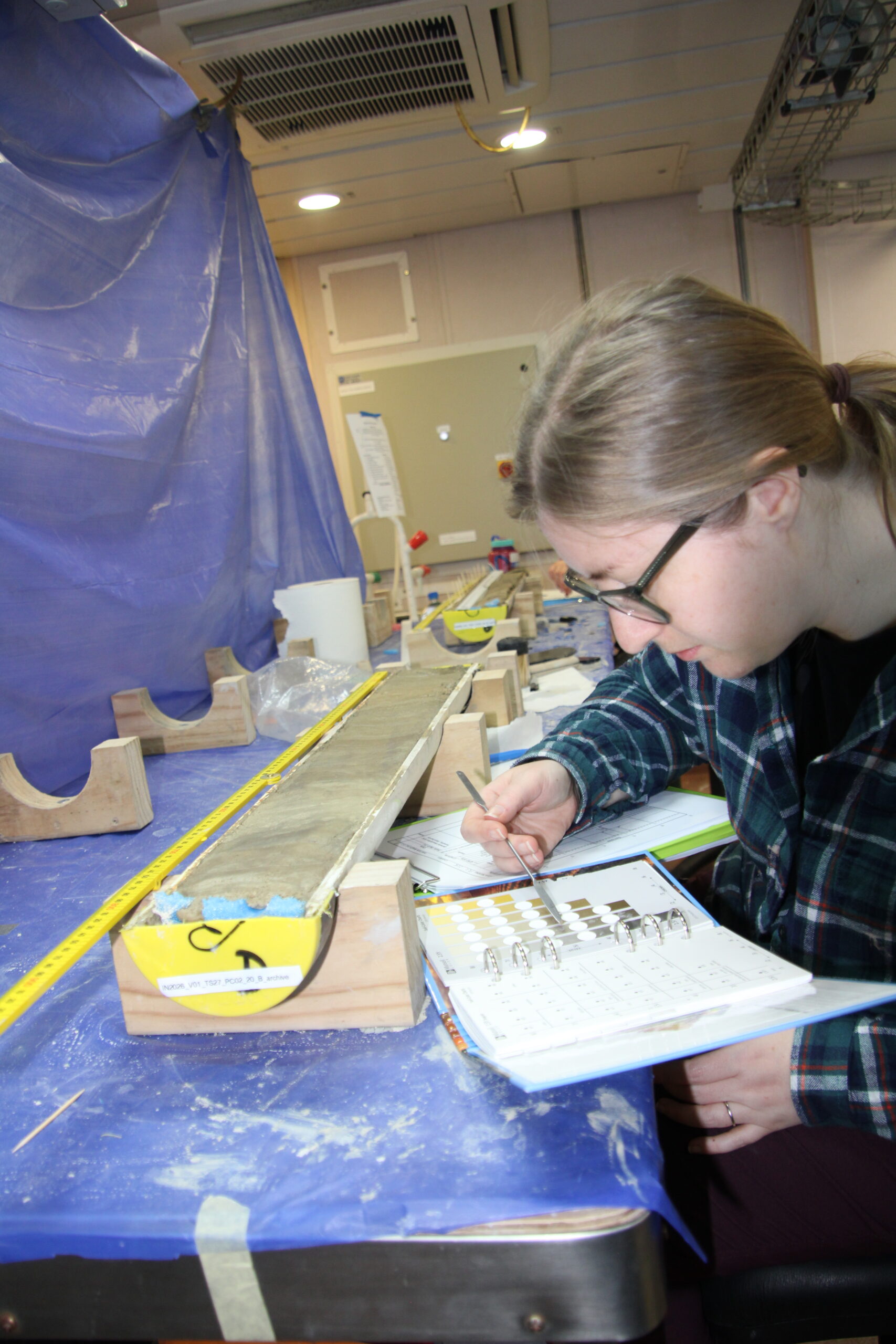
The COOKIES team were very excited and began processing the core sections immediately, taking samples including for ancient DNA (aDNA) analyses as indicators of ecosystem change, amounts of organic versus non-organic matter indicating warmer or colder periods, and geochemistry as indicators of past environmental conditions. The age of the sediment is determined with high precision after the voyage using a combination of methods. However, initial identification of tiny (microscopic) shells from phytoplankton organisms (diatoms) that lived during known times indicates that the bottom of the core is at least two million years of age. Both the record length and extraordinary age of the sediment are significant milestones for the COOKIES team and Chief Scientist, Dr Linda Armbrecht, marking an exceptional beginning to an already extraordinary expedition.
Join us on the expedition
The IMAS-led research on the expedition will be showcased through blogs released through the Australian Centre for Excellence in Antarctic Science and can be followed on social media at Sea2SchoolAu Facebook, Instagram, LinkedIn and the CSIRO Voyage (IN2026_V01) Page.
This voyage is supported by the Australian Research Council Special Research Initiatives Australian Centre for Excellence in Antarctic Science (Project Number SR200100008), the Australian Research Council's Discovery Projects funding scheme (DP250100886), the COOKIES GEOTRACES process study GIpr13, Horizon Europe European Research Council (ERC) Frontier Research Synergy Grants, OGS – Istituto Nazionale di Oceanografia e di Geofisica Sperimentale, Securing Antarctica’s Environmental Future (SAEF) (Project Number SR200100005) and by a grant of sea time on RV Investigator from the CSIRO Marine National Facility (MNF).
Top header image: ACEAS/IMAS scientists and CSIRO staff during COOKIES voyage preparations in Hobart (Image Credit: CSIRO/Fraser Johnston)


