Voyage to Antarctica – without leaving the classroom
By Joline Lalime, Sea2SchoolAU
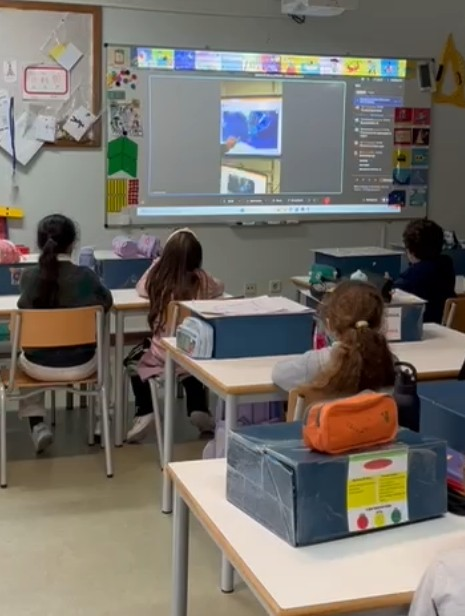
How much do you or your students know about Australia’s research vessel, the CSIRO research vessel (RV) Investigator? Why do scientists travel thousands of kilometres south to study the oceans around Antarctica? How does that research connect directly to Australia’s climate, oceans, and future?
On most days aboard the RV Investigator, the horizon is a shifting line of ocean and sky. In the lab onboard, researchers analyse seafloor imagery and decide when to deploy sophisticated equipment to collect sediment, water and ocean organisms to uncover the many mysteries held by the ocean. Thousands of nautical miles away, curious students are asking questions – why does research in the Antarctic matter, how is this connected to their own lives, what is it like to live and work on a research vessel?
Bringing the science from the ship in real-time to the classroom is the connection provided by Sea2SchoolAU.
Sea2SchoolAU is coordinated by marine educator Joline Lalime, a qualified Queensland high school teacher in Marine Science with master’s degrees in marine conservation. The program was established during planning for the 2022 CANYONS voyage to allow researchers to focus on science while a dedicated educator delivered structured outreach from the ship.
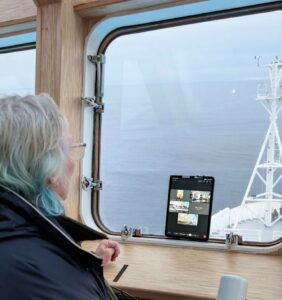
The model is simple but effective. Live ship-to-classroom sessions provide students the opportunity to meet researchers, explore how Antarctic science connects to curriculum topics and everyday life, see research equipment in action, and experience life on a research vessel. Educational social media further extends that learning beyond the classroom. For students, it is a rare window into Antarctic science as it happens. For teachers, it is a practical way to connect curriculum concepts to real research.
During the CANYONS voyage, Sea2SchoolAU delivered 41 live sessions to 73 classes across 25 schools and one university, reaching more than 1,500 students across five countries. Recognising the constraints of school timetables, sessions were scheduled to fit to each teacher’s lesson timing, a practical detail increasing accessibility for teachers.
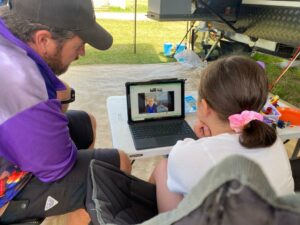
Some moments stand out – a student touring Australia with her family; a primary class inquiring about the animals and their adaptations; a secondary class connecting sediment layers to climate change in real time.
During the COOKIES voyage, the Sea2SchoolAU Outreach Program will once again bring Antarctica into classrooms and communities across multiple countries. While we can’t invite you aboard in person, modern satellite and internet technology allows us to open the ship virtually – offering live, ship-to-shore experiences direct from the Southern Ocean.
Register your interest
Teachers can book 50min live sessions during January and up to February 20, 2026. To register interest email sea2schoolAU@gmail.com providing the school name, teacher name, year level, number of students and two preferred dates and times. Sessions are delivered via WebEx, with no specialised software required.
Join us ‘on board’ the RV Investigator for Antarctic science in action. It may be cold, windy, and sometimes a little rough down here but the insights gained reach far beyond the Southern Ocean.
Join us on the expedition
The research on the expedition will be showcased through blogs released through the Australian Centre for Excellence in Antarctic Science and can be followed on social media at Sea2SchoolAU Facebook, Instagram, LinkedIn and the CSIRO Voyage (IN2026_V01) Page.
This voyage is supported by the Australian Research Council Special Research Initiatives Australian Centre for Excellence in Antarctic Science (Project Number SR200100008), the Australian Research Council's Discovery Projects funding scheme (DP250100886), the COOKIES GEOTRACES process study GIpr13, Horizon Europe European Research Council (ERC) Frontier Research Synergy Grants, OGS – Istituto Nazionale di Oceanografia e di Geofisica Sperimentale, Securing Antarctica’s Environmental Future (SAEF) (Project Number SR200100005) and by a grant of sea time on RV Investigator from the CSIRO Marine National Facility (MNF).
Top header image: ACEAS/IMAS scientists and CSIRO staff during COOKIES voyage preparations in Hobart (Image Credit: CSIRO/Fraser Johnston)


