ACEAS scientists contribute to UN-backed report warning of long-term impacts from climate overshoot
Two ACEAS Chief Investigators, Professor Matthew England and Dr Chen Zhao, are co-authors of a major new United Nations-backed report warning that exceeding the Paris Agreement's 1.5°C warming target, even temporarily, could trigger irreversible changes across Earth's frozen regions, with consequences lasting centuries to millennia.
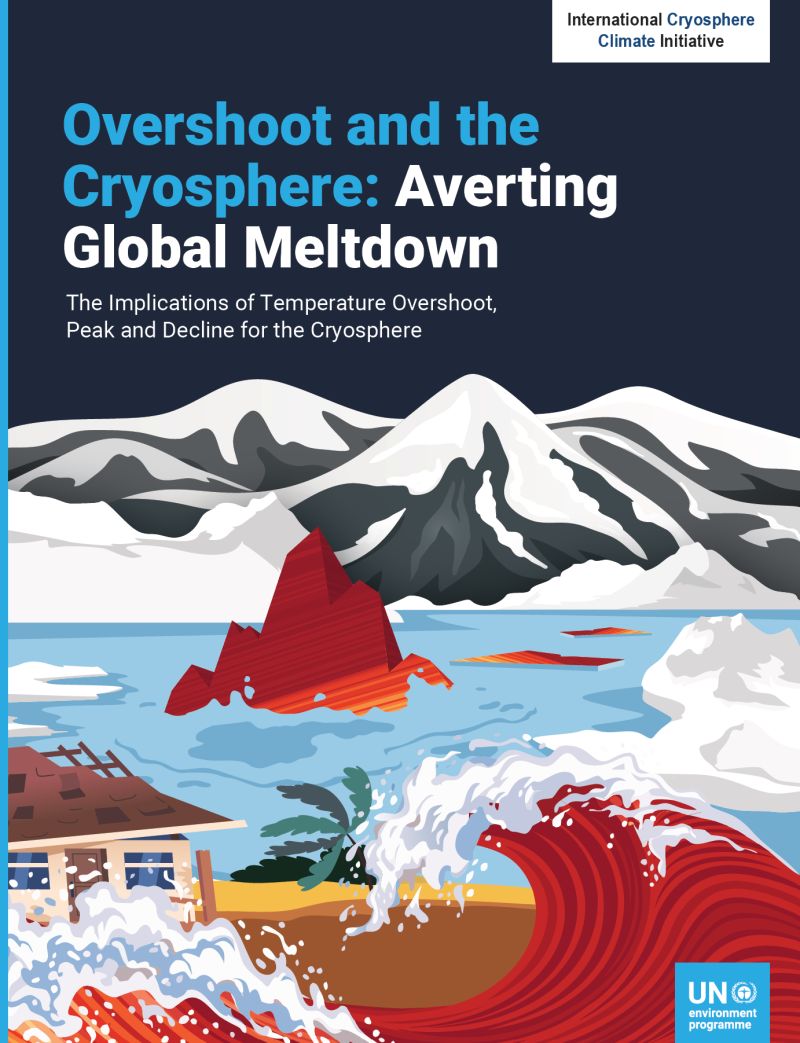
The report, Overshoot and the Cryosphere: Averting Global Meltdown, was produced jointly by the International Cryosphere Climate Initiative (ICCI) and the United Nations Environment Programme (UNEP). It brings together the expertise of more than 80 leading international scientists and examines how rising temperatures are affecting ice sheets, glaciers, sea ice, permafrost and polar oceans.
Professor Matthew England, from the University of New South Wales, contributed to the chapter on polar oceans, while Dr Chen Zhao, from the University of Tasmania, contributed to the report's chapter on polar ice sheets. Fellow ACEAS Chief Investigator Professor Matt King from the University of Tasmania also played a key role as a reviewer of the report.
The report arrives ahead of COP31 and provides stark evidence that while some climate impacts can be slowed through rapid emissions reductions, many changes to the cryosphere, Earth's frozen places, are effectively irreversible on human timescales. It warns that every fraction of a degree of warming matters and that overshooting 1.5°C increases the risk of crossing critical tipping points in the climate system.
Global consequences from the world's frozen regions
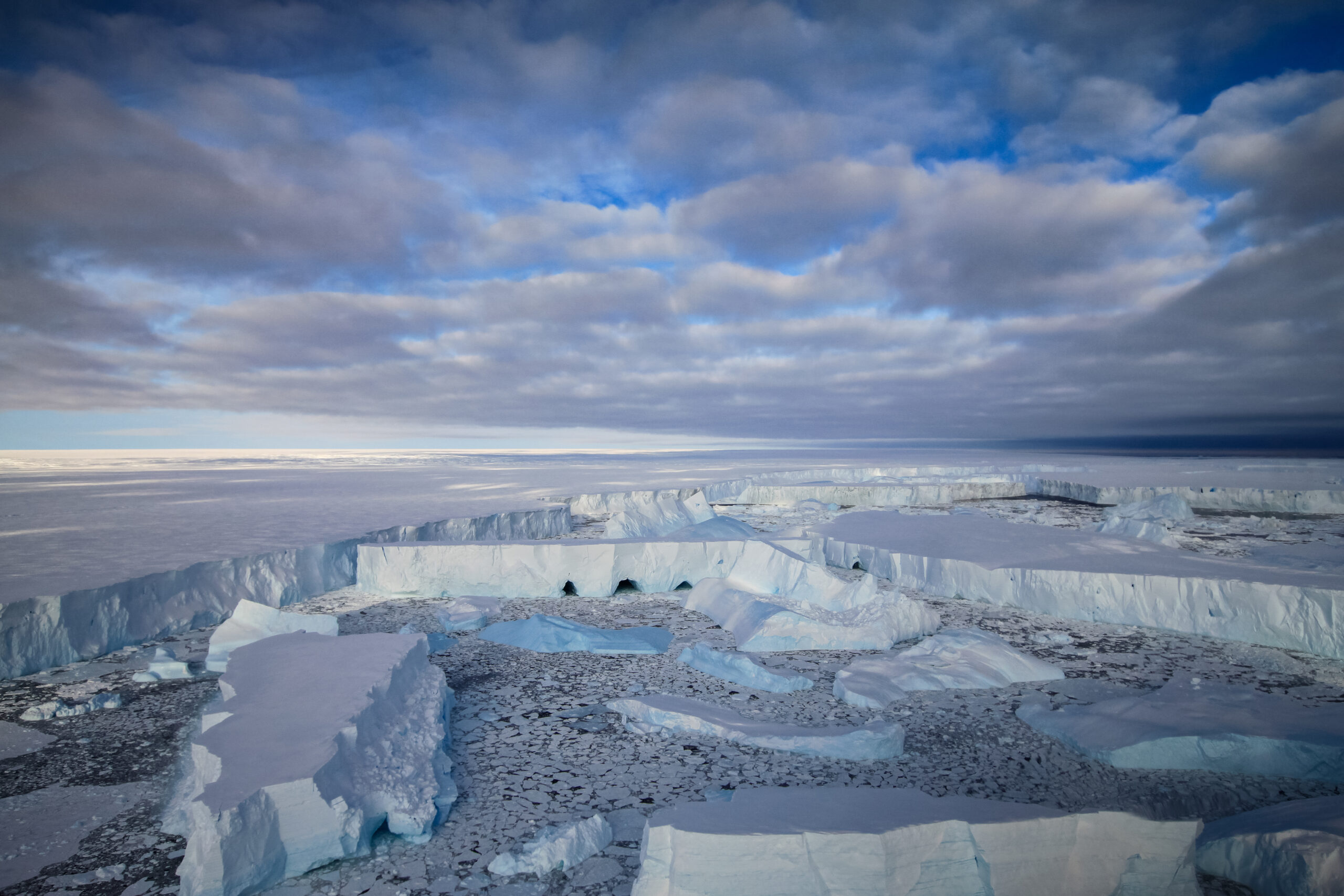
The cryosphere encompasses Earth's ice sheets, glaciers, sea ice, snow cover and permafrost. The report concludes that exceeding 1.5°C, even temporarily, would accelerate sea-level rise, increase the risk of glacier collapse and permafrost thaw, disrupt ocean circulation systems, and place growing pressure on ecosystems and communities worldwide.
Among its findings, the report notes that polar ice sheets are already melting around six times faster than they were in the 1990s, while the Arctic and Southern oceans are experiencing rapid changes in temperature, chemistry and circulation.
The report also argues that temporarily exceeding 1.5°C should not be viewed as acceptable or manageable, but as a warning that stronger climate action is urgently needed to minimise the scale and duration of any overshoot.
Antarctic science helping inform global decisions
ACEAS Director Professor Jo Whittaker from the University of Tasmania said the report highlighted the critical role Antarctic and Southern Ocean science plays in understanding and responding to climate change.
"The cryosphere may seem remote to many people, but what happens in Antarctica, the Arctic and the world's mountain regions affect every nation on Earth," Professor Whittaker said.
"This report draws together some of the world's leading expertise to show that even temporary overshoot of climate targets carries serious and long-lasting consequences. The decisions made this decade will shape the future of coastlines, oceans, ecosystems and communities for generations to come."
Professor Whittaker said ACEAS researchers were making important contributions to global efforts to understand how Earth's frozen environments are changing and what those changes mean for society.
"We're proud to see ACEAS Chief Investigators Professor Matthew England and Dr Chen Zhao contribute their expertise to this significant UN-backed assessment, alongside Professor Matt King's role as a reviewer."
"Evidence-based science is essential to help governments, industries and communities prepare for changes that are already underway and to limit future impacts."
Australian expertise at the forefront
The report's polar ice sheet chapter, co-authored by Dr Chen Zhao, examines how warming could accelerate ice loss from Antarctica and Greenland, contributing to long-term sea-level rise that may continue for centuries even if temperatures later stabilise.
Meanwhile, the polar oceans chapter, co-authored by Professor Matthew England, highlights how warming and freshening of the Arctic and Southern oceans could alter ocean circulation patterns, increase ocean acidification and disrupt marine ecosystems.
ACEAS would like to acknowledge the important contributions of other Australian Antarctic and Southern Ocean researchers to the report, including: co-authors Dr Levan Tielidze from Securing Antarctica's Environmental Future/Monash University and Dr Ed Doddridge from the Australian Antarctic Program Partnership/University of Tasmania, and reviewer Dr Will Hobbs from the Australian Antarctic Program Partnership/University of Tasmania.
Together, the report's findings reinforce a central message: while some level of climate overshoot now appears unavoidable, limiting both the magnitude and duration of that overshoot remains critical for reducing long-term risks from cryosphere loss.
More about the report
Overshoot and the Cryosphere: Averting Global Meltdown was coordinated by the International Cryosphere Climate Initiative in partnership with the United Nations Environment Programme. The report was prepared by more than 80 international experts and released ahead of COP31, which commences in Türkiye today.
A jointly released report, State of the Cryosphere 2026: The Cost of Overshoot, highlights the substantial benefits of limiting global warming as much as possible. Drawing on the latest cryosphere science, the report shows that keeping global warming below 1.5°C, and as close as possible to 1°C, or even below, would significantly reduce risks associated with sea-level rise, glacier loss, permafrost thaw and changes to snow and ice systems, while helping to protect communities, infrastructure, water resources and ecosystems. The report concludes that every fraction of a degree matters, with stronger climate action today offering opportunities to avoid some of the most severe and long-lasting impacts on Earth's frozen regions.
READ THE REPORT: Overshoot and the Cryosphere: Averting Global Meltdown
Stay connected
For more Antarctic news and stories, subscribe to our mailing list here.